How Much Do Owner Operators Make Expedited Freight?
Get a clearer view of expedited freight income before you commit your truck, equipment, and working hours to a carrier model. Owner-operator revenue can look strong on paper, but take-home results depend on expenses, equipment, lane choices, deadhead miles, and how consistently a carrier supports your operation. Expedited work can also require rapid turnarounds and 24/7/365 availability, so the earning opportunity must be weighed against the operating demands.
How much do owner operators make expedited freight? Industry estimates commonly place annual gross revenue between $180,000 and $350,000 or more. With net income often falling between $60,000 and $120,000 after fuel, maintenance, insurance, and other business costs. Your actual result depends on your vehicle, operating arrangement, utilization, and ability to control unpaid miles. These figures are market benchmarks, not a guaranteed rate from Load One.
Load One operates as an asset-based, full-service expedite carrier across North America, with a fleet-supported model for owner-operators. That distinction matters because reliable freight access, transparent communication, real-time shipment visibility, and operational support can affect both productivity and business risk. Load One also brings more than 400 years of combined transportation-management experience to time-critical freight operations. For broader context on business structures, review our guide to expedited owner-operator earnings. Then, start with the numbers that separate gross revenue from the income you can actually keep.
How Much Do Owner-Operators Make in Expedited Freight?
Owner-operators in expedited freight may generate $180,000 to $350,000 or more in annual gross revenue. After fuel, maintenance, insurance, and other operating costs, typical net income is closer to $60,000 to $120,000. Actual results depend on equipment, authority, utilization, lanes, and business expenses.
Gross revenue is the money a truck or van produces before the business pays its bills. Net income is what remains after those costs. That distinction matters when comparing an expedited opportunity with an employee driving job.
For context, the U.S. Bureau of Labor Statistics reports a mean annual wage of $55,990 for heavy and tractor-trailer truck drivers. That figure covers many driving roles and does not measure owner-operator profit directly. Review the BLS wage data for the broader employment comparison.
How does authority affect expedited freight revenue?
Independent owner-operators running under their own authority generally report higher gross revenue potential, often $220,000 to $350,000 or more annually. They also manage more responsibilities, including customer acquisition, compliance, billing, and insurance.
Leased owner-operators typically report gross revenue between $180,000 and $250,000. Leasing can reduce some administrative demands, but the carrier agreement, settlement terms, costs, and available freight determine the actual outcome. These ranges are industry benchmarks, not guaranteed earnings. See the source ranges for owner-operator revenue and expenses.
Is an expedited owner-operator a high earner?
An expedited owner-operator can be a high earner when the business maintains strong utilization and controls costs. Gross revenue alone does not determine success. Fuel, repairs, insurance, deadhead miles, financing, and unpaid waiting time can significantly reduce take-home income.
Expedited freight also demands rapid response and dependable availability. Drivers should compare the full operating model, not just the top-line settlement. The right carrier relationship can influence freight consistency, support, and long-term profitability.
Next, the equipment segment helps explain why earnings differ between Sprinter vans, straight trucks, solo operators, and teams.
Average Owner-Operator Earnings in Sprinter Van and Straight Truck Segments
Sprinter van and straight truck owner-operators can earn different gross revenues because equipment capacity, load size, operating costs, and available lanes vary. Industry examples place solo expedited operators working through a carrier network at roughly $180,000 to $280,000 in annual revenue. After expenses, many owner-operators may retain about $60,000 to $120,000.
Many expedited operators use Sprinter vans or small box trucks rather than tractor-trailers. That equipment supports time-critical shipments that do not require a full-size trailer. The tradeoff is a different revenue scale. A straight truck can generally handle larger or heavier shipments, while a Sprinter van may access smaller shipments and more flexible delivery locations.
- Sprinter van: Lower equipment and capacity levels can mean lower gross revenue per load. The model may fit smaller expedited shipments and operators who value maneuverability.
- Straight truck: More cargo space can support larger shipments and broader freight opportunities. Higher capacity also brings greater fuel, maintenance, and equipment obligations.
- Solo operation: A solo owner-operator working through a carrier network may generate approximately $180,000 to $280,000 in annual revenue. Actual results depend on utilization, lanes, costs, and the compensation structure.
- Team operation: Teams can keep equipment moving for longer periods. One carrier example places team revenue at approximately $320,000 to $460,000 annually, although two-person operations also carry additional labor and living costs.
These figures describe gross revenue, not personal income. Industry estimates place typical owner-operator net income after expenses at $60,000 to $120,000 per year. The difference comes from fuel, maintenance, insurance, taxes, downtime, and other business costs. Equipment choice should therefore match the freight available and the operator’s plan for keeping each vehicle productive.
Before choosing a segment, review expected miles, deadhead exposure, maintenance reserves, and the carrier’s freight network. Load One’s guidance on staying profitable as an owner-operator can help you evaluate the business beyond a quoted gross figure.
| Segment | Typical Annual Gross Revenue | Key Considerations |
|---|---|---|
| Sprinter van | Lower gross per load | Flexible deliveries, smaller shipments, lower equipment cost |
| Straight truck | Higher capacity loads | More cargo space, greater fuel and maintenance costs |
| Solo operation | Roughly $180,000 to $280,000 | One driver, utilization depends on dispatch and lanes |
| Team operation | Roughly $320,000 to $460,000 | Two drivers, equipment runs longer, added labor costs |
These are gross revenue benchmarks, not guarantees. Actual income depends on expenses, utilization, and the compensation model in place.
What Expenses Reduce Your Gross Owner-Operator Income?
Fuel, maintenance, insurance, and unpaid deadhead miles can reduce gross revenue substantially. Fuel alone may cost $45,000 to $75,000 each year, while maintenance and repairs may add $10,000 to $20,000. Your actual take-home income depends on miles, equipment, lanes, utilization, and how consistently the truck stays loaded.
For expedited freight operators, the largest expense categories usually include:
- Fuel: Fuel may run about $0.60 to $0.80 per mile. At high annual mileage, that cost becomes one of the largest deductions from gross revenue. Industry cost estimates place annual fuel spending between $45,000 and $75,000.
- Maintenance and repairs: Tires, preventive service, brakes, fluids, and unexpected repairs require a dedicated reserve. Annual maintenance and repair costs are commonly estimated at $10,000 to $20,000.
- Insurance: Commercial auto liability, cargo coverage, physical damage, and other required policies affect your operating margin. Premiums vary by equipment, operating history, coverage limits, and carrier arrangement.
- Deadhead miles: Miles driven without revenue-producing freight still consume fuel, tires, maintenance, and driver time. Managing deadhead is a key profitability measure, especially when expedited loads require rapid repositioning.
Other deductions can include truck payments, permits, tolls, taxes, registration, accounting, communications, and parking. Review every expense by cost per loaded mile and cost per total mile. That distinction shows whether a load looks profitable only because unpaid miles were excluded.
How much should an owner-operator budget for expenses?
Budget conservatively and separate fixed costs from variable costs. Start with fuel, maintenance, insurance, truck payments, and taxes, then add a reserve for repairs and slower weeks. Track total expenses against loaded and deadhead miles each month. This gives you a practical net-income target instead of relying on gross revenue alone.
How Does Lane Selection Affect Your Earnings in Expedited Freight?
Lane selection affects take-home pay by determining how often your truck carries revenue-producing freight, how far it travels empty, and how efficiently each day is used. Expedited work can require 60 to 70 hour weeks, so a strong lane plan matters. The goal is profitable utilization, not simply more miles.
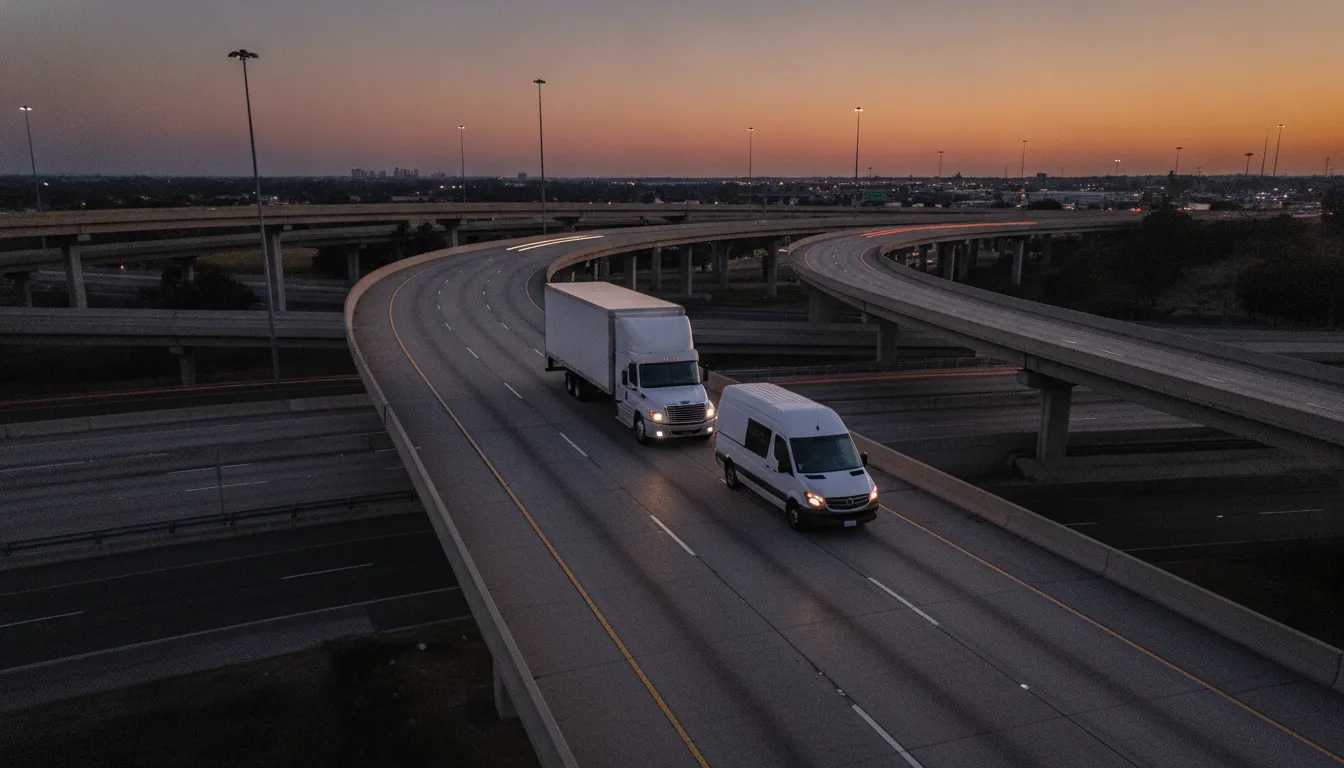
- Prioritize lanes with reliable reload potential. A long outbound load may look attractive, but the return plan can determine its real value. Before accepting a lane, consider whether freight commonly moves from the destination and whether your carrier can help identify the next opportunity. Fewer empty miles protect revenue and reduce fuel costs. Deadhead miles are a key owner-operator expense, so evaluate the full trip rather than the loaded segment alone. Choosing an expedited freight carrier should include questions about lane coverage, reload support, and dispatch communication.
- Match equipment to specialized demand. Specialized transport can justify higher revenue per load than standard van truckload freight when the shipment requires the right equipment, timing, or handling capability. Review the requirements of your vehicle before committing to a lane. A load that fits your equipment and operating capacity can produce better utilization than a higher-mileage load that creates delays or extra costs. The supporting research notes that specialized transport is one factor that can influence revenue per load.
- Measure profit per working hour, not just miles. Expedited freight often involves urgent pickups, waiting time, and tight delivery windows. Track loaded miles, deadhead miles, total time committed, fuel, tolls, and other trip expenses. This shows whether a lane is improving your actual return. A route with fewer miles may outperform a longer route when it offers faster reloads and less unpaid time.
- Review lane performance regularly. Compare completed trips by revenue, utilization, deadhead percentage, and time away from home. Keep the lanes that consistently support productive miles and dependable freight. Adjust when seasonal demand, shipper patterns, or equipment needs change. Consistent review helps turn lane selection into an operating decision instead of a guess.
For owner-operators asking how much do owner operators make expedited freight, lane discipline is a major part of the answer. Gross revenue matters, but efficient routes and productive time determine how much remains after operating expenses.
What Load One Pays Owner-Operators and How the Model Works
Load One does not publish a fixed owner-operator pay rate. Compensation depends on equipment, lanes, shipment requirements, availability, and operating costs. The practical question is how effectively a carrier partner helps you keep the truck moving while controlling expenses. Industry estimates place gross owner-operator revenue in the $180,000 to $350,000 or higher range, before costs and taxes. Market estimates vary widely, so treat them as planning benchmarks, not a Load One guarantee.
Load One is an asset-based, time-critical carrier serving customers across North America. Its fleet-supported model combines company assets with qualified owner-operator capacity. That structure supports urgent freight, production uptime, and rapid emergency response. Owner-operators can operate within a network built for expedited work rather than relying only on isolated spot opportunities.
How does Load One support owner-operators?
Expedited freight requires fast decisions, dependable communication, and capacity outside standard business hours. Load One operates 24/7/365 to support time-sensitive shipments. Its team brings more than 400 years of combined transportation management experience. Real-time shipment visibility and transparent communication help drivers and customers understand shipment status, next steps, and delivery expectations.
This fleet-supported approach can help owner-operators protect gross revenue within the broader market range while managing fuel, maintenance, insurance, and downtime. It does not remove business costs or guarantee a specific income. Instead, the value comes from operational support, shipment coordination, and access to work aligned with time-critical transportation.
Why partner with Load One as an owner-operator?
Owner-operators choose a carrier partner for more than a rate. They also evaluate freight consistency, dispatch support, communication, equipment fit, and how efficiently each mile can produce revenue. Load One’s asset-based operation gives owner-operators a fleet-supported environment with North American coverage and expedited transportation expertise. Review additional strategies for maximizing income per mile before comparing opportunities.
Frequently Asked Questions
What type of freight pays the most for owner-operators?
Specialized, time-critical, and team-operated freight can produce higher gross revenue because customers pay for speed, equipment, and availability. Actual results depend on equipment, lane selection, utilization, operating costs, and the carrier relationship. Treat revenue ranges as planning benchmarks, not guaranteed pay.
How much can you make as a Sprinter van or small box truck owner-operator?
Sprinter van and small box truck earnings vary widely by freight type, operating area, and load consistency. These vehicles serve a different market than tractor-trailers, so compare expected revenue with fuel, insurance, maintenance, and downtime before choosing equipment. Expedited work may also require extended availability and fast turnarounds.
What is the typical annual revenue for a solo owner-operator?
Industry estimates place solo owner-operator gross revenue around $180,000 to $280,000 annually in some carrier networks, while broader owner-operator estimates range from $180,000 to $350,000 or more. These are gross figures before expenses, not take-home pay. Sources: Schneider Owner-Operators and TruckClub.
What expenses should an owner-operator factor into earnings?
Budget for fuel, maintenance, repairs, insurance, permits, taxes, financing, tolls, and unpaid deadhead miles. One industry estimate places annual fuel costs at $45,000 to $75,000 and maintenance and repairs at $10,000 to $20,000. Source: TruckClub.
Ready to Explore Load One Owner-Operator Opportunities?
Your earning potential depends on your equipment, expenses, lanes, and available work. The right carrier relationship can help you evaluate those factors before you commit. To get started and learn about open owner-operator opportunities, share your equipment type and operating goals with the Load One recruiting team.