

Next Day Freight Delivery Without Air Freight Costs
Get control of time-critical freight before a missed delivery threatens production uptime. For many short-to-medium range shipments, next day freight delivery can provide the speed operations teams need without the higher cost of air freight.
Next day freight delivery uses expedited ground transportation to move critical shipments on a defined schedule, often between manufacturing, distribution, and supplier locations. It can be a cost-effective air alternative when distance, timing, and shipment requirements fit the ground network. Asset-based capacity also gives logistics leaders more control than a broker-only model. The right plan protects delivery performance while limiting avoidable transportation expense.
This approach matters when a late part can interrupt a production schedule, create premium handling costs, or force a facility to hold excess inventory. Just-in-Time manufacturing depends on precise, time-critical logistics. Reliable planning and execution can reduce lead-time variability and help teams respond to disruptions before they become line-stoppages.
Ground expedite is not the right choice for every lane. Air freight may be necessary when distance or timing leaves too little room for surface transit. The decision should consider the shipment’s origin, destination, ready time, delivery deadline, product requirements, and the operational cost of delay. It should also account for visibility and communication throughout the move.
Load One provides same-day, next-day, and two-day ground expedite options across North America. Its full-service, asset-based approach supports time-critical freight with dedicated capacity and logistics coordination. Review Expedited Freight: The Complete Guide before comparing available modes. The first step is understanding what next-day ground delivery includes and when it can meet a production-critical deadline.
What Is Next-Day Freight Delivery?
Next-day freight delivery is a time-critical ground expedite service for shipments that must arrive faster than standard freight allows. Depending on the route and shipment requirements, ground expedite can provide same-day, next-day, or two-day delivery options. It supports manufacturers, distributors, and logistics teams managing urgent parts, materials, and finished goods.
The service is built around a defined delivery commitment rather than a standard transit estimate. A transportation provider reviews the origin, destination, freight characteristics, pickup window, and delivery deadline. The carrier then selects the equipment, route, and operating plan needed to meet the requirement. This approach helps transportation managers respond to shortages, production changes, missed connections, and other time-sensitive events.
Ground expedite is often a cost-effective alternative to air freight for short-to-medium-range shipments. It provides speed without automatically moving freight into an air network. The right choice depends on the required arrival time, route, shipment size, handling needs, and available budget. A careful mode decision can protect production uptime while controlling total transportation expense.
How does asset-based capacity support next-day delivery?
Capacity is a critical part of any next-day plan. Load One uses an asset-based transportation model, which helps guarantee capacity and distinguish the company from freight brokers that depend primarily on third-party networks. Direct control over transportation resources can improve response time, communication, and consistency when a shipment cannot wait for the next standard dispatch.
Load One Transportation & Logistics is the largest privately held full-service expedite carrier in the United States. Founded in 2003 and headquartered in Taylor, Michigan, Load One serves customers across North America. Its focus includes automotive, general manufacturing, and heavy equipment industries where delivery delays can affect production schedules.
For shippers evaluating this option, expedited freight solutions can address urgent freight needs with direct planning and time-critical execution. The provider should also maintain clear shipment visibility and communication throughout transit. These controls help logistics teams confirm progress, manage exceptions, and make informed decisions before a delay affects the customer or production line.
When Ground Expedite Is Faster Than Air Freight
Air freight is not always the fastest option for a short or medium-range shipment. Ground expedite can match air transit times when the route is direct and the carrier controls the movement from pickup through delivery. It can also avoid delays that occur before an aircraft leaves the airport.
Airport freight must meet acceptance cutoffs. It may require gate handling, terminal transfers, security processing, and consolidation with other shipments. Each handoff adds another scheduling point. A dedicated expedited vehicle can collect the freight and move it directly to the destination, reducing handling between origin and consignee.
Why route details matter more than mode labels
Mode selection should begin with the required delivery time, route distance, shipment characteristics, and available capacity. Ground expedite is often a cost-effective alternative to air freight for time-sensitive, short-to-medium-range shipments. The choice between air and ground usually reflects the balance between speed and budget.
For example, a direct ground move may support next-day delivery between nearby manufacturing regions without waiting for an airport cutoff. It may also provide more control for freight that requires specialized equipment, careful handling, or delivery to a facility away from major airports. The carrier can plan the route around the receiving window instead of coordinating multiple airport schedules.
Review the operational differences in air charter vs ground expedite before selecting a mode. The best option depends on the complete lane, not the perceived speed of the aircraft alone.
Where expedited networks add value
Expedited transportation is now part of modern logistics network design. Research from the U.S. Department of Transportation examines intermodal networks that include expedited transportation services. These networks help companies respond to urgent demand while improving how freight moves across a broader supply chain. See the Expedited Freight: The Complete Guide for a wider view of planning and service options.
Ground expedite also supports production continuity. In automotive and other manufacturing environments, a delayed component can interrupt a tightly timed operation. A reliable expedited ground plan can reduce lead-time variability and support rapid recovery when standard freight is too slow or a shipment is disrupted.
When air freight remains the right choice
Air is appropriate when the ground route is physically too slow to meet the required delivery window. It may be necessary for long distances, international urgency, or materials needed immediately at the destination. The decision should account for every stage of transit, including pickup, airport processing, flight availability, final-mile delivery, and the consequences of missing the deadline.
Use ground expedite when a direct route can meet the commitment with fewer handoffs. Use air when the required speed cannot be achieved on the road. Clear transit planning and real-time shipment visibility make that decision more reliable.
Calculating Next-Day Freight Costs vs Production Stoppage Risk
The lowest freight quote is not always the lowest total cost. Transportation managers should compare the shipment charge with the operational cost of delay. This matters in just-in-time manufacturing, where a missing component can interrupt production and create downstream costs. Precise, time-critical logistics help reduce that exposure.
Ground expedite usually costs more upfront than traditional shipping. However, it can protect production uptime, avoid late-delivery penalties, and reduce lost sales. For short-to-medium range shipments, it can also provide a more cost-effective alternative to air freight. The right choice depends on the required delivery time, shipment details, route, and the financial risk of waiting.
| Option | Upfront cost | Speed | Reliability factors | Downtime risk |
|---|---|---|---|---|
| Ground expedite | Higher than traditional shipping, with quote-based pricing | Same-day, next-day, or two-day service, depending on the route | Direct movement, planned dispatch, and capacity confirmation | Lower when the service meets the production deadline |
| Air freight | Often higher than ground for comparable urgent shipments | Very fast when the route, flight schedule, and handling window align | Depends on flight availability, transfers, handling, and final-mile delivery | Lower when ground transit cannot meet the required deadline |
| Production stoppage | Potentially includes idle labor, recovery work, penalties, and lost sales | No freight transit. Recovery begins only when the missing material arrives | Exposure grows when inventory, transit status, or recovery options are unclear | Highest when a critical part or material is unavailable |
Use the table as a decision framework, not a rate card. Freight pricing changes with distance, dimensions, weight, pickup timing, equipment, and service requirements. Load One provides quote-based pricing after reviewing those details. A practical comparison should calculate the cost of each viable mode against the expected cost of delay.
Visibility also affects the decision. Clear order status and transit information help teams act before a shortage becomes a line stoppage. Research on expedited supply chains connects planning, lead-time visibility, and disruption response with stronger operational resilience. Freight mode selection is therefore a total-cost decision, not simply a choice between road and air. Learn more about production downtime costs before approving an urgent shipment.
How Load One Executes Next-Day Ground Deliveries
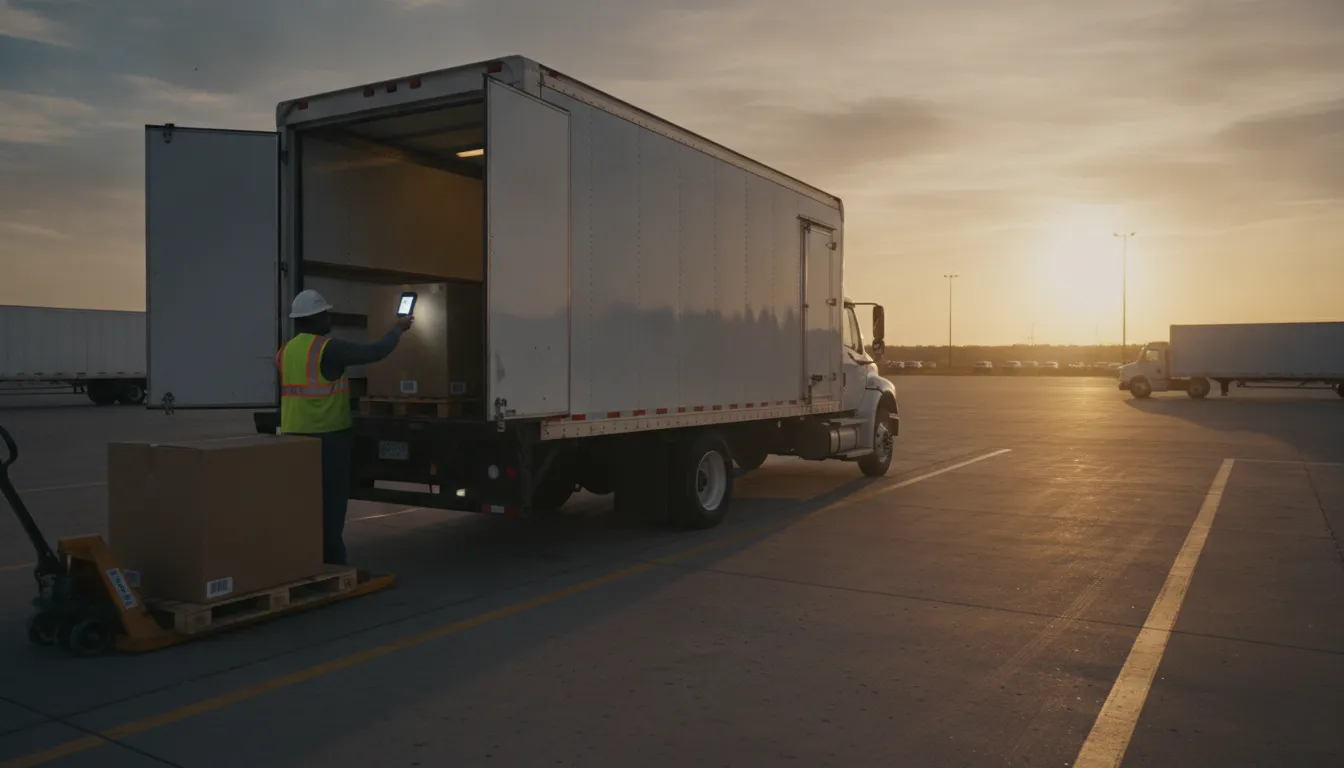
Next-day freight delivery depends on decisions made before a truck moves. Load One coordinates pickup, equipment, routing, driver coverage, tracking, and delivery requirements through one operating team. That structure helps transportation managers protect production schedules when standard transit is too slow.
Dispatch coverage operates 24/7/365. For emergency shipments, Load One commits to a 90-minute pickup response. The team confirms the shipment details, identifies the right equipment, and assigns capacity based on the freight, origin, destination, and required delivery window. Shippers can request expedited freight solutions for same-day, next-day, or two-day requirements.
Capacity comes from assets and qualified partners
Load One combines a company-owned fleet with more than 70 partner carriers. This asset-based model supports dependable capacity while extending coverage across North America. It also gives the operations team more control than a broker-only model that depends entirely on third-party availability.
For longer next-day moves, team drivers can keep freight moving through non-stop transit. That approach reduces unnecessary dwell time between pickup and delivery. It is especially useful when automotive, manufacturing, or heavy equipment operations cannot absorb a missed production window.
Visibility continues from pickup through delivery
Load One uses GPS and satellite tracking to monitor shipments in transit. Real-time visibility helps the operations team identify route issues early and keep stakeholders informed. AI-supported route optimization helps evaluate available routes and adjust plans when conditions change.
In-house EDI supports the exchange of shipment and status data with connected customer systems. Shippers can also use the MyFreight portal to review shipment information and tracking updates. Clear status information supports better receiving coordination and reduces avoidable uncertainty for dock teams and planners.

Experience and coverage support critical freight
Load One brings more than 400 years of combined transportation-management experience to time-critical freight decisions. That experience helps the team assess practical options instead of treating every shipment as a standard move. Coverage includes North American transportation and specialized cross-border support when freight moves through the United States and Mexico.
Load One also carries $6 million in liability coverage and $250,000 in standard cargo insurance. Coverage requirements can vary by shipment, so shippers should confirm the details when requesting a quote. Together, responsive dispatch, controlled capacity, continuous tracking, and experienced planning create a dependable process for next-day delivery.
Next-Day Freight Checklist for Shippers
Next-day freight succeeds when the shipment plan is complete before the truck is dispatched. Use this checklist to reduce avoidable delays, improve handoffs, and protect production schedules.
- Confirm the freight class, dimensions, and weight. Record the commodity, packaging, piece count, total weight, length, width, and height. Accurate details support equipment selection, space planning, and a dependable quote. Note any loading restrictions, liftgate needs, temperature requirements, or special handling instructions.
- Define the pickup window and delivery deadline. State when the freight will be ready, when the dock can release it, and when the receiving location can unload it. Use a specific date and time zone. Also provide the consequences of a late arrival, such as a production-line risk or missed customer commitment. Clear logistics planning and execution are central to reliable expedited transportation. Research on expedited shipments and supply chain disruption supports this planning approach.
- Secure real-time transit visibility. Identify who will monitor the shipment and how status updates will be shared. Confirm tracking access, milestone alerts, and the escalation contact before pickup. Visibility into orders in transit helps teams respond when conditions change. It also gives shippers a factual basis for communicating with plants, customers, and carriers.
- Align every team handoff. Manufacturers should name an owner at shipping, transportation, receiving, and production. Share the shipment number, delivery instructions, appointment details, and escalation path with each person. A handoff plan prevents information gaps between shifts and facilities. It is especially important when a missed delivery could interrupt a just-in-time operation.
- Review buffer inventory assumptions. Next-day shipping can support lean inventory by reducing the amount of material that must remain on site as a buffer. Review that decision with operations and purchasing. Confirm which parts can move on an expedited schedule, which items still require local safety stock, and what recovery plan applies if transit conditions change. The goal is controlled inventory reduction, not unmanaged exposure.
- Request a dedicated quote. Send the complete shipment profile, timing, route, handling requirements, visibility expectations, and handoff contacts to the transportation provider. Ask for a solution built around the actual deadline rather than a generic service level. For additional planning guidance, review this shipper’s guide to expedited ground shipping. Pricing for time-critical freight is quote-based, so complete information helps the provider recommend the right equipment and service.
Before tendering the shipment, have the shipping and receiving teams repeat the pickup and delivery details. That final check catches discrepancies while there is still time to correct them.
Why Choose Ground Expedite Over Air Freight
Air freight can solve urgent delivery requirements, but it is not the only option for next-day shipments. Ground expedite often provides a more cost-effective choice on short-to-medium range lanes. The right decision depends on distance, delivery timing, shipment characteristics, capacity, and the operational cost of delay. Transportation managers should compare the full supply chain impact, not only the freight charge.
Ground expedite can reduce transportation spend while maintaining a next-day service commitment. It is especially useful when a shipment must move quickly within North America, but the lane does not require aircraft speed. This approach supports the balance between speed and budget that defines many time-critical freight decisions. Research on transport mode selection also recognizes that air and road choices influence total supply chain cost, including inventory and service impacts. Review the supply chain cost considerations behind freight mode selection.
When does ground expedite provide better value?
Ground expedite provides value when the delivery window is urgent, the route is geographically practical, and the shipment can move directly with limited handling. An asset-based transportation model adds another layer of control. Load One’s model is designed to provide guaranteed capacity, unlike a broker that depends entirely on third-party availability. That distinction matters when a production part, replacement component, or other critical shipment cannot wait for a truck to become available.
Reliable capacity also improves planning. Shippers can establish a repeatable service plan for common lanes instead of treating every urgent shipment as a separate exception. Visibility and transparent communication help teams monitor the shipment and respond quickly if conditions change. This reduces uncertainty for operations leaders who are managing tight production schedules.
How does ground expedite support North American coverage?
Ground expedite is not limited to a single domestic corridor. Load One provides time-critical and expedited transportation management across North America. That coverage includes specialized expertise for US-Mexico cross-border logistics and the Laredo region. A cross-border shipment requires more than a fast truck. It requires coordinated planning, accurate documentation, border expertise, and communication across the shipment lifecycle.
Load One combines an asset-based approach with full-service transportation capabilities. This supports automotive, general manufacturing, and heavy equipment operations that need dependable movement across domestic and cross-border lanes. Teams can use one logistics partner for ground expedite and related requirements instead of coordinating disconnected providers. Learn more in the Expedited Freight: The Complete Guide.
Can next-day delivery reduce buffer inventory?
Reliable next-day transit can also affect inventory strategy. When materials arrive predictably, facilities may reduce the amount of emergency or safety stock held on site. This does not mean removing all inventory protection. It means using dependable expedited capacity as part of a broader lean supply chain plan. Research on disruption planning connects expedited shipments with lower lead-time risk and reduced reliance on buffer inventory.
For manufacturers, that flexibility can protect production uptime without tying up unnecessary capital in excess stock. Load One is the largest privately held full-service expedite carrier in the United States. Its focus is Superior Shipping Solutions for time-critical freight. When ground expedite meets the service requirement, it delivers the speed, capacity, coverage, and control operations need.
Frequently Asked Questions
What is next day freight delivery?
Next day freight delivery is a ground expedite service that moves time-critical freight from pickup to destination within the next day. It is designed for shipments that cannot wait for standard transit but may not require air freight. Ground expedite can also support same-day and two-day delivery needs, depending on the lane, freight, and pickup schedule.
How much does next day freight delivery cost compared to air?
Pricing depends on distance, freight dimensions, equipment, urgency, pickup timing, and delivery requirements. Ground expedite is often a cost-effective alternative to air freight for short-to-medium-range shipments. Request a shipment-specific quote rather than relying on a fixed rate. The right comparison also includes downtime, missed production schedules, and other costs tied to delayed delivery.
Is next day freight delivery reliable for critical shipments?
It can be highly reliable when the shipment is planned against a realistic transit window and handled by a carrier with dependable capacity. An asset-based model can provide more direct control over equipment and execution than a broker-only network. Real-time shipment visibility and clear communication also help teams respond quickly if conditions change.
How should shippers plan a next-day freight delivery?
Start with the exact pickup and delivery addresses, required appointment times, freight dimensions, weight, commodity, and equipment needs. Share those details early so the carrier can confirm capacity and build the route. Establish one point of contact, tracking expectations, and a contingency plan. For cross-border freight, include customs and documentation requirements before dispatch.
Ready to Plan Your Next-Day Freight Delivery?
When a shipment needs speed without defaulting to air freight, a tailored ground expedite plan can help balance delivery requirements and transportation costs. Share your shipment details, timing, and route with the Load One team. We can review the requirements and identify an appropriate next-day option for your operation. Clear shipment details also support better planning before dispatch and reduce avoidable handoff delays.