
Expedited Freight Rates: What Shippers Should Know
Get a clearer cost picture before an urgent shipment becomes a production problem. A rate cannot be evaluated from distance alone. Delivery commitment, equipment, cargo requirements, border needs, and the level of control required all shape the quote.
Get a Quote for time-critical freight from Load One.
Expedited freight rates are custom quote outputs based on the shipment, lane, urgency, equipment, and service requirements, not universal prices or fixed rates per mile. The right comparison is the total transportation cost against the operational risk of a missed delivery.
Load One supports time-critical ground movements with dedicated vehicles and direct routing, alongside broader transportation resources when the shipment calls for them. A useful quote starts with accurate shipment details and a realistic delivery requirement.
Those inputs help transportation teams choose the right service level without paying for capability they do not need. The pricing model begins with the shipment itself and the execution required to move it.
How Expedited Freight Pricing Works
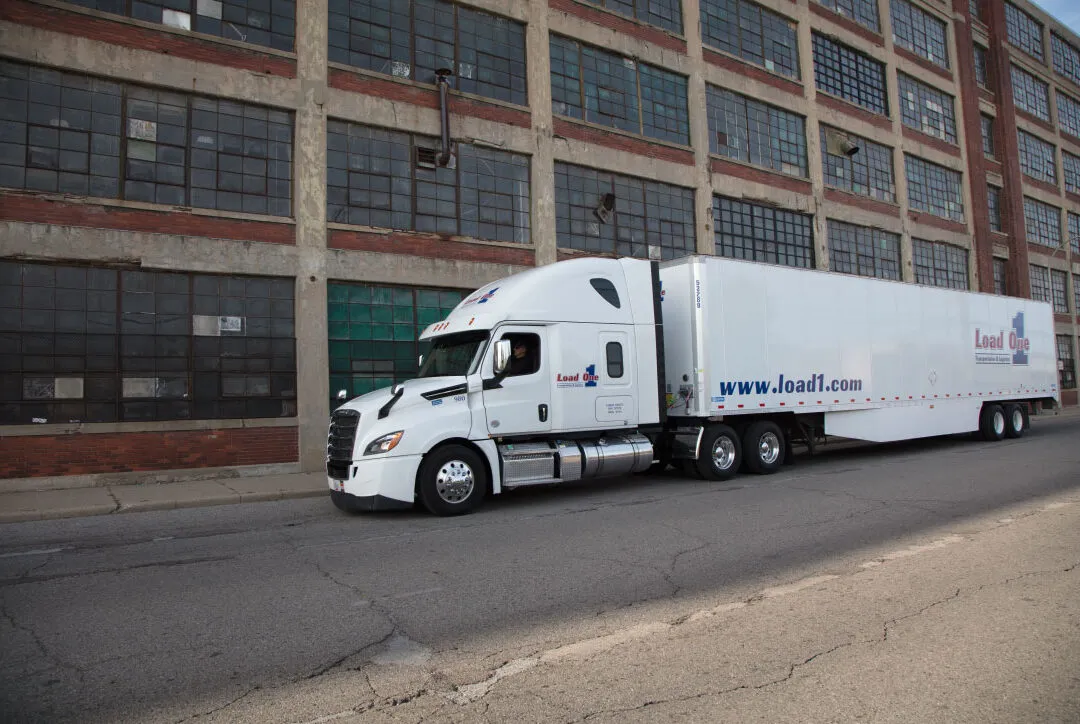
Expedited freight rates are custom quote outputs, not fixed prices. The final quote reflects the shipment’s origin, destination, required delivery window, cargo details, equipment, handling needs, and service model. A same-day direct move requires a different operating plan than a scheduled two-day shipment with consolidation options.
Standard scheduled freight generally moves within planned pickup and delivery windows, often allowing more flexibility in routing, equipment assignment, and consolidation. Dedicated or direct expedited movement prioritizes the shipment’s timeline. Ground expedite uses a dedicated vehicle and direct routing for time-critical freight, which can reduce stops and transfers when the shipment requires that level of control.
Load One offers same-day, next-day, and two-day ground expedite options with 24/7/365 support. The right option depends on the production or delivery deadline, lane conditions, shipment requirements, and available equipment. Equipment may range from sprinter vans and cargo vans to straight trucks and 53-foot tractor-trailers. Specialized requirements, such as temperature control, a liftgate, HAZMAT compliance, or a flatbed, also affect the quote.
For a broader overview of service models and planning considerations, review the complete expedited freight guide. When requesting a quote, provide the operational details that determine the service plan. Load One can evaluate its asset-based fleet, partner-carrier capacity, and 3PL resources to match the shipment with an appropriate solution.
What Factors Affect Expedited Freight Rates?
Expedited freight rates are based on the shipment and service required, not a universal price list. Urgency, route, equipment, cargo dimensions, weight, handling, capacity, and visibility needs all influence the quote. The best option balances the delivery commitment with safe execution, operational control, and the risk of a delay.
Several details shape the final service recommendation:
- Urgency and delivery commitment: A same-day request requires a different operating plan than a next-day or two-day delivery. The tighter the timeline, the more likely the shipment will need immediate dispatch, direct routing, and equipment reserved for that move. A longer expedited window may allow scheduled pickup times or consolidation when those choices still meet the delivery requirement.
- Equipment fit: Load One can evaluate cargo vans, sprinter vans, straight trucks, and 53-foot tractor-trailers for different shipment profiles. Choosing the smallest suitable vehicle can avoid an unnecessary capacity mismatch. Choosing equipment that is too small can create rework, delays, or a second vehicle requirement. Access at the pickup and delivery locations also matters.
- Cargo dimensions and weight: Provide the length, width, height, total weight, piece count, pallet count, and packaging details. A dense shipment may fit by volume but exceed a vehicle’s weight limit. Long, tall, fragile, or irregular freight can reduce equipment choices and affect loading, securement, and route planning.
- Special handling and compliance: Temperature-sensitive freight, HAZMAT, oversized cargo, and freight requiring a liftgate or loading assistance need additional planning. Flatbeds, Conestoga trailers, weather-protected equipment, temperature-controlled units, and HAZMAT-compliant vehicles may be appropriate when standard equipment cannot safely handle the shipment.
- Dedicated versus consolidated service: Dedicated transportation keeps the vehicle focused on one shipment and can reduce stops or transfers. That control is useful for line-down parts, emergency replenishment, and strict delivery commitments. When timing allows, a consolidated option may combine compatible freight on a planned route. The choice depends on the required delivery window, cargo compatibility, and available routing.
- Capacity and lane conditions: Origin, destination, pickup time, seasonal demand, equipment availability, and the possibility of a return load can change the practical options. Cross-border shipments add documentation, customs, and border coordination considerations. Load One combines an asset-based fleet with 70+ partner carriers to support capacity flexibility across the United States, Canada, and Mexico.
- Visibility and communication: Real-time GPS and satellite tracking, event notifications, mobile updates, and delivery confirmation help teams manage time-critical freight. These capabilities do not replace the transportation plan, but they give logistics teams earlier notice when conditions change and a clearer record of progress.
Share complete shipment details before requesting a quote. Include the origin, destination, ready time, required delivery time, dimensions, weight, handling requirements, service expectations, and any border or compliance needs. Load One can then compare ground expedite options and other appropriate solutions without selecting equipment by guesswork.
Why Do Expedited Freight Rates Vary by Lane and Urgency?
Expedited freight rates depend on the work required to move a specific shipment from its origin to its destination within a defined window. Distance matters, but it is only one part of the quote. Pickup timing, delivery requirements, equipment, available capacity, border coordination, and the difference between direct and scheduled movement can all change the service plan and total cost.
A short lane with a difficult pickup window may require more coordination than a longer shipment that can move during a flexible period. The most accurate quote starts with the actual operating conditions, not a generic per-mile estimate.
How do distance and lane capacity affect the quote?
Distance influences driver planning, transit time, fuel use, and equipment availability. However, the same mileage can produce different pricing depending on the lane. A route with strong outbound and return demand may offer more capacity than a remote origin or destination where a vehicle must reposition after delivery.
Origin and destination capacity also affect how quickly a provider can secure the right vehicle. Load One combines its asset-based fleet with a network of more than 70 partner carriers. That model can expand options when the required equipment or lane capacity is not immediately available, while still supporting direct operational coordination.
Vehicle fit is another lane-specific consideration. A shipment may need a sprinter van, cargo van, straight truck, or 53-foot tractor-trailer based on its dimensions, weight, quantity, and handling requirements. Temperature control, a liftgate, HAZMAT compliance, a flatbed, or a Conestoga trailer can add further planning requirements. Review the available ground expedite options when selecting a service level.
Why do pickup and delivery windows change expedited freight rates?
Urgency changes the operating plan. Same-day freight generally requires a dedicated vehicle and direct routing, with no planned stops or transfers en route. That approach prioritizes speed and control. Next-day service may provide more scheduling flexibility while still meeting a defined delivery requirement. For context, see Load One’s next-day delivery without air costs.
Two-day expedite can allow scheduled pickup windows and consolidation when practical. This service tier may use capacity differently from an emergency direct movement. The important question is not whether a shipment is simply labeled expedited. It is whether the requested pickup and delivery windows require dedicated, direct, scheduled, or multimodal execution.
What changes for US-Mexico-Canada shipments?
Cross-border freight requires coordination beyond linehaul distance. Documentation, customs processes, handoffs, border timing, and the operating requirements at both ends can affect the plan. A shipment moving through Mexico, the United States, or Canada may need additional visibility and exception management to protect its delivery window.
Load One serves all 48 contiguous states, Canada, and Mexico. Its Laredo, Texas facility supports cross-border operations and can be relevant to shipments moving between the United States and Mexico. Include the border crossing, required delivery appointment, customs status, and any handoff details when requesting a quote. Those details help the provider evaluate a realistic service tier instead of pricing an incomplete movement.
For that reason, expedited freight rates should be compared alongside execution requirements. A direct same-day movement, a scheduled two-day option, and a coordinated cross-border shipment are different operating plans. Give the provider complete lane and timing details so the quote reflects the service your production schedule actually needs.
What Information Gets You an Accurate Expedited Freight Quote?
Accurate expedited freight rates depend on complete shipment information. Your origin, destination, deadline, cargo profile, equipment needs, handling requirements, border details, and contact information help the provider match the right service. Clear inputs reduce rework, prevent avoidable assumptions, and support a practical recommendation for protecting production timelines.
- Origin and destination: Provide complete pickup and delivery addresses, including dock, plant, warehouse, or job-site details. The lane affects routing, distance, capacity, border planning, and the available service options.
- Required delivery deadline: State when the freight must arrive, not only when it can be picked up. Explain whether the need is same-day, next-day, or two-day. A firm deadline helps determine whether direct ground service is suitable or whether air freight or charter should be considered.
- Cargo dimensions and weight: List length, width, height, total weight, piece count, and whether the shipment can be stacked. These details influence vehicle selection, loading space, securement, and handling.
- Equipment and handling requirements: Identify liftgate needs, temperature control, HAZMAT classification, flatbed requirements, weather protection, loading limitations, or special packaging. Equipment can range from vans to larger trucks, so accuracy matters.
- Border and service requirements: For U.S.-Mexico or U.S.-Canada shipments, include customs status, documentation, broker details, and crossing expectations. Also specify whether you need dedicated, consolidated, tracked, or coordinated transportation.
- Contact details: Include the responsible contact at pickup and delivery, plus the best person for quote questions. Fast clarification supports faster planning when the shipment is time-critical.
Load One can review these requirements across its transportation services, combining asset-based capacity, partner-carrier resources, and logistics support to develop a shipment-specific recommendation.
How Should You Compare Freight Cost With Downtime Risk?
Compare the quoted freight cost with the operational exposure created by a missed delivery window. Review the shipment’s urgency, equipment needs, lane, and service level alongside the consequences of delayed production. For some automotive operations, daily production value may exceed one million dollars. That figure is audience context, not a universal downtime calculation.
The right decision is not always the lowest transportation charge. Ground expedite can cost more upfront than traditional shipping because it may use dedicated equipment and direct routing. However, a properly matched service can help reduce exposure to line stoppages, late-delivery penalties, lost sales, and other disruption costs. The comparison should be based on the specific shipment and deadline.
| Freight cost considerations | Operational risk considerations |
|---|---|
| Urgency, required delivery window, lane distance, and service level | How much production time is exposed if the shipment misses the window |
| Vehicle capacity, dimensions, weight, handling, and specialized equipment | Whether the cargo is a production component, replacement part, or other critical input |
| Dedicated direct routing versus a service model that allows scheduled consolidation | Potential line stoppage, missed customer commitments, penalties, or lost sales |
| Cross-border requirements, documentation, and border timing for U.S.-Mexico-Canada movements | Customs or handoff uncertainty that could affect the required production schedule |
Use the comparison to select the least costly service that still meets the actual operating requirement. Real-time tracking, event notifications, and delivery confirmation can also improve response when conditions change.
For a broader view of the business impact, review the cost of production downtime before requesting a quote.
Frequently Asked Questions
How much do expedited freight rates usually cost?
There is no universal expedited freight price. A quote reflects the lane, required delivery window, shipment size and weight. Equipment and handling needs also matter. The provider will also consider whether the move is dedicated or can use a scheduled service. Request a shipment-specific quote instead of relying on a general rate range.
Are expedited freight rates calculated per mile?
Distance influences the quote, but a per-mile figure alone does not describe the full cost. Vehicle availability, direct routing, urgency, border requirements, and special handling can change the final rate. The time required to secure capacity can also affect the quote. Compare the complete service and delivery commitment for the lane.
What factors affect expedited freight rates?
Urgency is a major factor. Same-day direct service typically requires different planning from a two-day move. Cargo dimensions, weight, loading conditions and equipment requirements affect the quote. Pickup and delivery access, cross-border documentation, and dedicated versus consolidated routing also matter.
What information is needed to get an expedited freight quote?
Provide the origin, destination, pickup and delivery deadlines, dimensions, weight, piece count, and commodity. Include equipment or handling requirements, border details, and the requested service type. Include a reliable contact so the transportation team can clarify constraints and recommend a workable option.
Get Started With a Time-Critical Freight Quote
Clear shipment details help your transportation team evaluate the right service approach for the lane, timing, equipment, and handling requirements. Load One can review those needs and prepare a custom quote for your expedited freight request.
Get a Quote for time-critical freight from Load One.