
Cross Border Shipping Checklist for US-Mexico Freight
Cross-border shipping between the United States and Mexico is a high-stakes, time-sensitive operation. Unexpected delays at major land gateways can stall automotive assembly lines within hours, resulting in substantial financial penalties for original equipment manufacturers (OEMs). To protect production schedules and keep supply chains moving, logistics leaders must move beyond standard freight brokerage and implement a structured, asset-backed cross-border shipping strategy that covers every phase of the trade corridor.
Ready to protect your production schedule? logistics management services.
Cross Border Shipping: What is Cross-Border Shipping and How Does It Work?
Cross-border shipping is the process of transporting commercial freight across international boundaries under strict customs regulations. For US-Mexico trade, successful execution requires synchronized coordination between shippers, carriers, and customs brokers, driven by pre-filed digital documentation, real-time vehicle tracking, and specialized expedited transport to prevent costly supply chain delays. For domestic legs that require a ground response, Load One’s expedited freight solutions can support a coordinated shipping plan.
Moving commercial cargo through the legal and physical barriers of trade requires a deep understanding of the transport chain. Shippers must align their operational workflows with customs regulations on both sides of the border to ensure that transit times remain predictable. This comprehensive guide outlines the essential steps, documents, and strategies required to build a resilient, high-performance cross-border shipping program.
Defining Cross-Border Freight
Cross-border shipping connects major manufacturing hubs across North America, facilitating the movement of critical industrial commodities, consumer electronics, and automotive parts. Unlike domestic logistics, international freight transit involves strict regulatory oversight, mandatory security checks, and complex equipment handoffs. For supply chain professionals, managing this trade lane requires high-capacity transport solutions, reliable equipment, and clear communication channels between dispatchers and drivers.
To maintain peak operational efficiency, shippers must select transportation providers with dedicated asset-based fleets. Having direct control over physical assets ensures that trucks are available when demand spikes, particularly in highly competitive industrial sectors. This level of direct control minimizes the risk of capacity shortages at the border and provides predictable transit times for time-critical cargo.
The Role of the USMCA Agreement
The United States-Mexico-Canada Agreement (USMCA) serves as the primary trade framework governing North American logistics. By establishing preferential tariff treatments, the USMCA significantly reduces import duties and transaction costs for eligible goods manufactured within the region. However, securing these cost savings requires strict adherence to origin compliance rules, which dictate that commodities must meet specific regional value content thresholds.
To claim preferential tariff treatment, shippers must provide a valid certificate of origin at the time of customs entry. Under the USMCA, this process is streamlined through a certification of origin that requires nine specific data elements, including information on the certifier, exporter, producer, importer, and a detailed description of the goods. Maintaining accurate compliance records is essential to prevent costly customs audits and ensure that import duties are minimized.
The Shipping Workflow
The standard cross-border shipping workflow is a multi-stage process that begins at the shipper’s origin dock and ends at the receiver’s final destination. Shippers must determine whether to move cargo via ground expedite, standard truckload, or air charter based on the urgency and value of the shipment. Once the transport mode is selected, the shipper coordinates with their carrier and customs broker to prepare and pre-file all required customs documentation.
As the freight approaches the border, it is routed through a primary inland gateway, such as the World Trade Bridge or Colombia-Solidarity Bridge in Laredo, Texas. Here, the cargo undergoes mandatory clearance inspections by both U.S. and Mexican customs authorities. Once cleared, the freight is authorized to complete its transit, utilizing real-time tracking systems to monitor the vehicle’s progress and ensure that delivery deadlines are met.
How Does the US-Mexico Cross-Border Logistics Process Work?
The US-Mexico cross-border logistics process governs the physical transit and legal clearance of freight between both nations. Shippers must select between direct through-trailer shipping or transloading at border gateways like Laredo, coordinate customs brokers for pre-cleared entry, and leverage real-time visibility to manage exceptions and maintain production uptime.
Understanding the physical and operational mechanics of border transit is essential to managing international freight costs. The transfer of cargo between the U.S. and Mexico involves specialized equipment, border transfer carriers, and secure warehouse facilities. Shippers must analyze their cargo profiles and transit requirements to select the optimal operational model for their supply chain.
Direct vs transload freight
When shipping ground freight between the U.S. and Mexico, logistics managers must choose between the direct through-trailer model and the transloading model. In a through-trailer shipment, the same trailer carries the cargo from the point of origin directly to the final destination, eliminating the need to handle the cargo at the border. This model reduces the risk of cargo damage and is highly preferred for sensitive industrial equipment or high-value automotive components, such as sequenced wire harnesses and engines, despite carrying a 10 to 15 percent premium on trailer detention fees.
In contrast, the transloading model involves transporting the cargo to a secure border warehouse, unloading it from the Mexican carrier’s trailer, and reloading it onto a U.S. carrier’s trailer (or vice versa). Transloading offers a 15 to 20 percent cost savings on equipment utilization by keeping trailers within their native countries, and it provides shippers with greater capacity flexibility. However, it introduces an extra physical handling step that raises cargo damage risks and requires close operational oversight by an experienced third-party logistics provider (3PL).
The Laredo gateway advantage
Laredo, Texas is the premier inland port in North America, processing over 300 billion dollars in trade annually and managing upwards of 14,000 commercial trucks crossing the World Trade Bridge daily. Because of its massive capacity and geographic positioning, Laredo serves as the central hub for automotive, industrial, and heavy machinery logistics. To manage the high volume of transloaded and expedited freight moving through this gateway, logistics providers must maintain a strong physical presence on the ground.
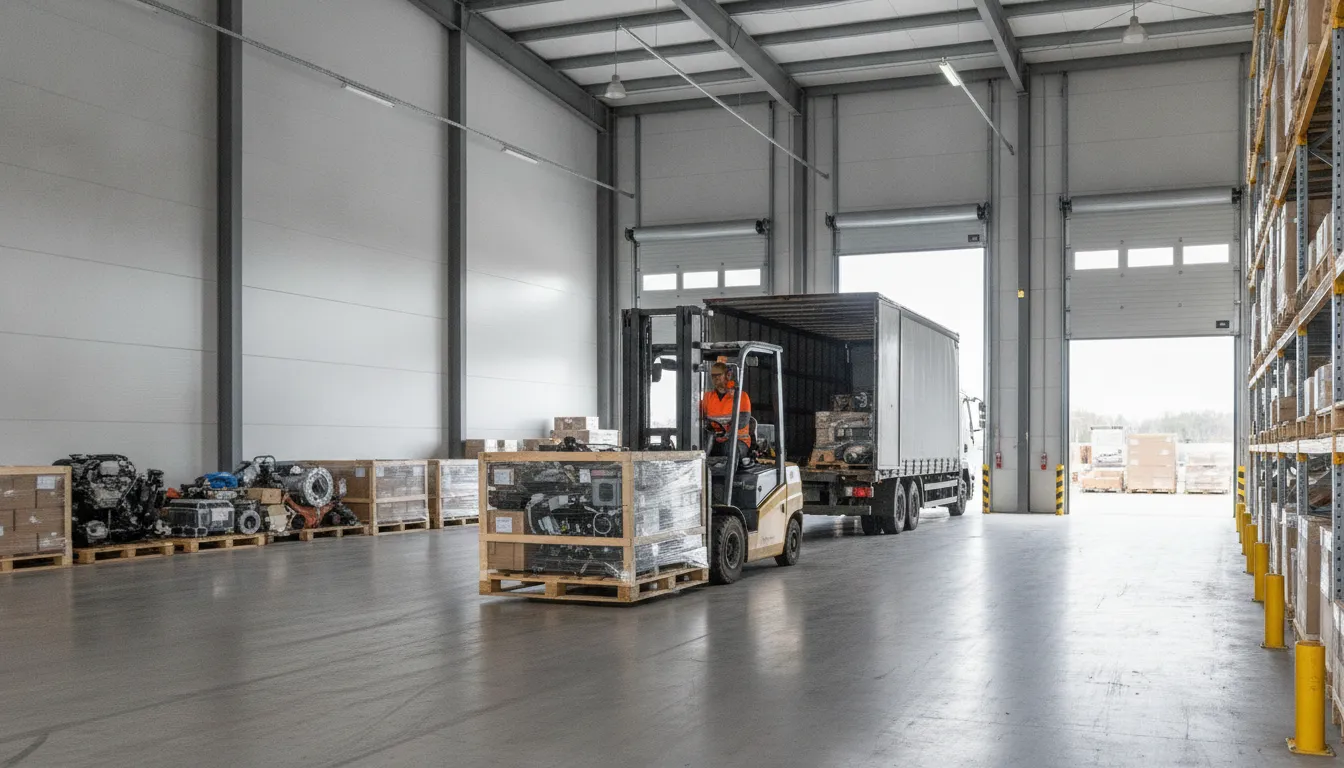
Load One operates a modern 15,000 square foot logistics and cross-dock facility in Laredo, Texas. This facility provides secure cross-docking, temporary storage, and trailer staging services, giving shippers maximum control over their cargo as it nears the border. By utilizing a dedicated, secure site in this key gateway, Load One is able to inspect cargo, verify documentation, and rapidly transload shipments to prevent border bottlenecks.
Managing customs paperwork
The successful execution of cross-border shipping relies entirely on the accuracy and timeliness of compliance documentation. Shippers must work closely with their customs brokers to ensure that all required regulatory filings are completed and submitted well before the vehicle reaches the border crossing. Any discrepancy in the commercial invoice, weight declarations, or classification codes can result in customs delays, equipment detention, or cargo seizures.
The primary customs declaration document required for commercial imports into Mexico is the Pedimento de Importacion. This official document must be prepared and filed by a licensed Mexican customs broker (Agente Aduanal) and serves as the legal tax receipt proving that all import duties, value-added taxes (IVA), and counter-vailing fees have been paid to the Mexican state. In addition, shippers must provide an accurate packing list and a commercial invoice translated into Spanish to facilitate smooth customs inspections.
The Ultimate US-Mexico Cross-Border Shipping Checklist
Navigating the complexities of international trade requires a systematic, step-by-step approach. Because a single document error can halt cargo at the border, shippers should leverage a standardized checklist to audit their shipments before dispatch. This checklist serves as an operational roadmap to ensure compliance, protect production schedules, and minimize transit delays.
Prep your import forms
Preparing customs paperwork early is the single most effective way to prevent border delays. Shippers should establish a formal review process to verify that all data fields across invoices, packing lists, and certificates of origin match exactly. This operational discipline minimizes the risk of customs rejections and ensures that cargo clears international checkpoints efficiently.
- Verify importer registration. Ensure that the Mexican importer of record is officially registered on the Padron de Importadores (Official Register of Importers) managed by the Mexican tax authority (SAT).
- Pre-file the Pedimento. Coordinate with a licensed Mexican customs broker to complete and pre-file the Pedimento de Importacion to pre-clear the cargo before it arrives at the border.
- Translate the commercial invoice. Provide a detailed commercial invoice that includes a Spanish translation of all item descriptions, unit values, total costs, and terms of sale (Incoterms).
- Verify USMCA eligibility. Check if the goods qualify for preferential tariff treatment under the USMCA trade framework and provide a complete certificate of origin with the nine required data elements.
- Coordinate with customs brokers. Send all digital documentation to both the U.S. and Mexican customs brokers at least 24 to 48 hours in advance to allow for a thorough compliance review.
- Select the optimal transport mode. Determine if the shipment requires specialized ground expedite, standard truckload, or air freight solutions based on transit urgency and cargo value.
- Deploy real-time tracking systems. Confirm that the selected carrier has installed satellite-enabled GPS tracking on their equipment to provide continuous visibility throughout the transit.
Work with your partners
Successful cross-border shipping requires deep operational integration between the shipper, carrier, and customs brokers. Shippers should establish clear communication protocols, ensuring that all parties receive automated alerts when shipments are dispatched, when they arrive at the border, and when they clear customs. This collaborative approach allows logistics teams to coordinate equipment handoffs and warehouse labor, minimizing idle trailer time at the gateway.
By partnering with an asset-based carrier that operates its own dedicated cross-docking facilities, shippers can streamline the entire transfer process. A single logistics provider managing both the physical transportation and the border warehouse operations eliminates friction between separate carriers and 3PLs. This centralized control ensures that cargo moves seamlessly through transloading and customs inspections without coordination gaps.
Track your freight and plan for delays
In time-critical supply chains, real-time shipment visibility is a necessity. Shippers must monitor their freight’s location and transit status continuously to identify potential delays before they impact production schedules. GPS tracking systems provide shippers with accurate, up-to-the-minute coordinates, allowing them to manage their operations proactively and communicate reliable estimated times of arrival (ETAs) to final receivers.
Despite meticulous planning, border crossings can experience unexpected delays due to customs system outages, traffic congestion, or severe weather conditions. To mitigate these risks, shippers must develop robust contingency plans that include alternative border gateways, pre-staged equipment, and emergency expedite solutions. Partnering with a logistics provider that offers 24/7 dispatch support and flexible capacity ensures that backup plans can be activated immediately when exceptions occur.
What Are the Essential Customs Documents for US-Mexico Freight?
Compliance is the foundation of predictable cross-border logistics. Shippers must understand the purpose, requirements, and origin of each document in the customs package to maintain regulatory compliance and avoid costly operational disruptions. Working with an experienced logistics team ensures that all compliance documentation is prepared to the highest professional standards.
Common Border Crossing Documents
The core of any cross-border customs package is the Commercial Invoice and the Bill of Lading (BOL). The Commercial Invoice lists the buyer, seller, country of origin, detailed description of the goods, and the transaction value, which serves as the basis for calculating import duties. The Bill of Lading acts as the contract of carriage, detailing the terms of transportation and proving custody of the freight as it moves between different carrier segments.
In addition to these standard documents, international shipments must include a detailed packing list that specifies the weight, dimensions, and packaging type of each pallet or crate. All data points across these documents must remain perfectly consistent. Any discrepancy between the weight listed on the Bill of Lading and the weight recorded on the commercial invoice can trigger a mandatory physical inspection by customs officers, adding hours or days to the transit time.
Specific Mexican Compliance Needs
Importing commercial goods into Mexico involves unique compliance challenges that require specialized local expertise. Every shipment entering Mexican territory must be accompanied by a validated Pedimento de Importacion. This official tax document certifies that the cargo has been declared to the Mexican government, all import taxes have been paid, and the goods comply with all relevant Mexican standards and regulations (NOMs).
Furthermore, under Mexican law, only a licensed Mexican customs broker is legally authorized to submit a Pedimento. Shippers cannot bypass this requirement and must establish a strong relationship with an Agente Aduanal. To ensure that the clearance process remains efficient, shippers should leverage Load One’s pre-positioned assets and customs integration services in Laredo, allowing local teams to coordinate directly with brokers and expedite the clearance of time-critical shipments.
| Document Name | Main Purpose | Who Makes It |
|---|---|---|
| Commercial Invoice | Specifies the transaction value and item descriptions for import duty calculations. | The Shipper |
| Bill of Lading | Serves as the contract of carriage and proof of custody for the shipment. | The Carrier |
| USMCA Certificate | Certifies regional manufacturing compliance to secure preferential tariff treatments. | The Producer |
| Pedimento | Acts as the official customs tax receipt required for Mexican import clearance. | Customs Broker |
Ensuring Real-Time Visibility and Managing Logistics Exceptions
In highly synchronized manufacturing sectors like automotive assembly, real-time shipment visibility is critical. When parts are sequenced to arrive directly at the production line, any unscheduled transit delay can trigger a costly plant shutdown. Shippers must partner with logistics providers that utilize advanced telematics and integrated data systems to maintain constant visibility over their freight.
High-Tech Tracking for Better Control
Load One leverages advanced GPS and satellite tracking technologies to provide shippers with real-time, high-precision location updates for every shipment on the road. Rather than relying on manual status checks, shippers can access dedicated mobile tracking applications that deliver automated push notifications and geofenced transit alerts directly to their devices. This continuous stream of digital data ensures that logistics teams always have access to reliable tracking information.
By integrating in-house electronic data interchange (EDI) systems, Load One facilitates seamless data sharing between shippers, carriers, and dispatchers. This automated data flow eliminates communication delays, allowing shippers to monitor transit milestones and update their internal production schedules in real time. Having access to high-precision location data enables supply chain leaders to manage their logistics programs with confidence.
Planning for Customs and Weather Delays
Even the most robust logistics networks must plan for potential transit disruptions caused by adverse weather conditions, highway accidents, or customs system outages. According to data from the International Trade Administration, Mexican Customs operations can experience sudden technical outages or processing surges that temporarily increase border clearance times from the typical 4 hours to over 12 hours. High-performance shipping programs proactively account for these operational exceptions by build-in buffer times and staging emergency assets.
To mitigate the impact of border bottlenecks, Load One helps shippers develop structured contingency plans that outline specific recovery protocols. In a recent automotive recovery, an OEM supplier facing a customs system outage at the Colombia-Solidarity Bridge leveraged Load One’s pre-positioned 15,000 sq. ft. Laredo cross-dock. By rapidly transloading the shipment from a delayed Mexican carrier to a dedicated Load One team-driver unit within 35 minutes, the cargo cleared customs and arrived at a Detroit-area assembly plant 4 hours ahead of schedule, saving the client an estimated 120,000 dollars in assembly line shutdown fees.
24/7 Support and Clear Communication
Operational visibility is not just about technology; it also requires dedicated human support. Load One’s specialized international customer service team operates 24/7/365 to monitor cross-border shipments, manage exceptions, and provide shippers with continuous support. When a delay occurs, our dispatchers do not simply report a GPS coordinate; they provide comprehensive context, outlining the root cause of the delay and presenting actionable recovery options.
This commitment to transparent communication is the hallmark of a true logistics partnership. By keeping all stakeholders informed through structured hourly updates, Load One ensures that shippers can make proactive, data-driven decisions during a crisis. This level of support minimizes operational stress and helps shippers maintain tight delivery schedules under the most challenging road conditions.
Frequently Asked Questions
Do I need a customs broker for cross-border shipping?
Yes, you must utilize a licensed customs broker to transport commercial freight between the United States and Mexico. As outlined by the U.S. International Trade Administration, only licensed Mexican customs brokers (Agentes Aduanales) are legally authorized to submit import declarations to Mexican Customs. Partnering with an experienced customs broker is essential to ensure compliance with complex tariff codes, manage regulatory filings, and prevent costly border transit delays.
What documentation is required for US-Mexico freight?
To clear commercial freight through Mexican Customs, shippers must provide several critical documents, including the Commercial Invoice (with detailed Spanish translations), a comprehensive packing list, a Bill of Lading, and a validated Pedimento de Importacion. Additionally, if the goods qualify for preferential tariff treatment under the USMCA, a valid Certificate of Origin containing the nine mandatory data fields must be submitted to secure duty reductions.
How can I track my cross-border shipment?
You can track your cross-border shipments in real time using satellite-enabled GPS tracking devices installed directly on the carrier’s asset equipment. Load One provides continuous transit visibility through integrated EDI data sharing and custom mobile tracking applications, delivering automated status alerts and high-precision location updates from origin dispatch to final destination delivery.
How do I get a quote for cross-border shipping?
To secure a transparent and accurate cross-border shipping quote, you must provide detailed cargo specifications, including total shipment weight, physical dimensions, freight classification codes, exact origin and destination postal codes, and your preferred service level (such as transloading or ground expedite). Requesting a custom quote from an asset-based carrier like Load One ensures access to stable freight capacity and competitive, custom pricing.
Ready to get a custom cross-border shipping quote?
In international logistics, a single document error or uncoordinated carrier handoff can stall your cargo at the border for days, driving up trailer detention fees and putting your production schedule at risk. To secure your supply chain against unpredictable border bottlenecks, you must implement a proactive, asset-backed cross-border strategy today. Load One’s dedicated logistics experts, Laredo gateway infrastructure, and real-time tracking systems ensure that your commercial cargo moves seamlessly through customs and arrives at its destination on schedule.
Do not let preventable customs delays disrupt your operations. Contact our team to get a custom cross-border shipping quote today.