Freight Consolidation Guide for North American Shippers
Managing multiple small freight orders separately leads to wasted trailer space and higher fuel bills. Smart shippers combine these loads into single trips to improve efficiency and protect profit margins.
Freight consolidation is the logistics method of combining multiple small shipments into a single, larger load to improve efficiency. This way of working allows shippers to share trailer space, which lowers costs and helps protect profit margins for makers. By grouping smaller orders into one truckload, companies can reduce the total number of trips their supply chain needs. This change leads to lower fuel use and less waste across the entire network. According to data from Ware2Go, combining shipments is very helpful for businesses that often move small amounts of cargo. It ensures that trucks run full, which makes tracking easier and helps deliveries stay on time. Using this plan helps keep factory lines running by ensuring that parts arrive when they are needed without the high cost of a private truck.
Optimize Your Freight Spend Today
Combine your smaller shipments into high-efficiency full truckloads. Reach out to our logistics experts and secure your shipping solution.
Understanding how this system works is the first step toward improving your North American logistics strategy. This method helps businesses save money while maintaining fast shipping times for critical parts. To see how these services can help your company, we will look at What Is Freight Consolidation? and the path begins with
What Is Freight Consolidation?
Freight consolidation is the process of combining many small shipments into one large shipment to boost efficiency and lower costs. By grouping partial loads into a single truck, shippers can move goods more effectively while protecting production uptime. This method turns less-than-truckload (LTL) freight into full truckloads for faster transit.
How the consolidation process works
The goal of comprehensive logistics services is to aggregate fragmented shipments into efficient truckloads. This helps firms reduce supply chain costs and preserve profit margins as volume grows. For businesses that ship small amounts often, this strategy provides the scale needed to stay competitive.
Effective consolidation requires deep planning to reduce total vehicle miles. According to the U.S. Department of Transportation, these plans can address traffic jams and safety risks in urban areas. By optimizing load factors, companies also lower their fuel use and total carbon footprint.
Four key operational phases
Moving goods through a consolidated network happens in specific stages. Each phase ensures that freight stays secure and moves on time to its final stop. Load One uses its asset-based model and regional hubs to manage these steps with full visibility.
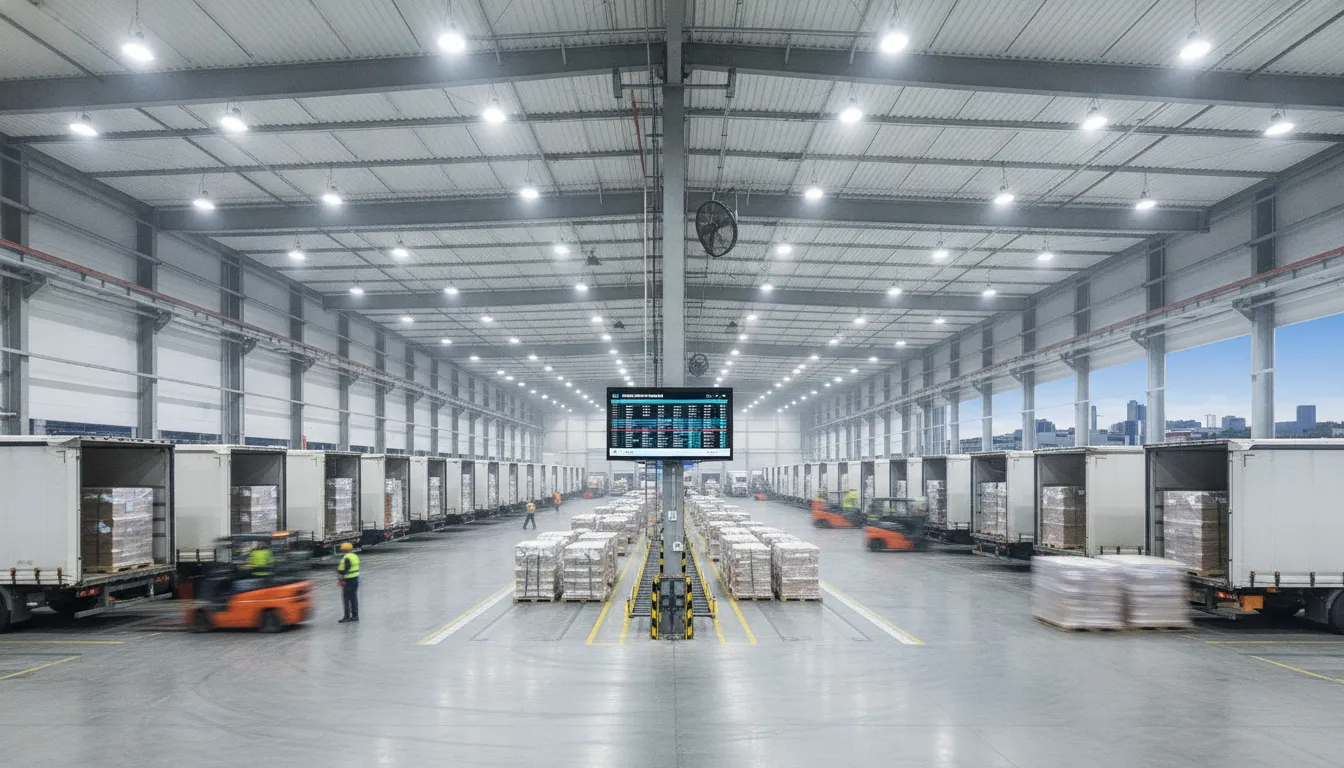
- Inbound sorting: Workers receive small loads from many sources and sort them by their final destination.
- Batching: The team groups these loads together to fill a single trailer for a specific route.
- Line haul: The full truck travels the main leg of the trip, often between major logistics hubs.
- Break-bulk deconsolidation: At the final hub, the large load is split back into individual shipments for local delivery.
The role of technology and cross-docking
Success in this field relies on specialized freight services that use real-time tracking. Digital platforms help sync shipments and match loads to the right trucks instantly. This level of control is vital for keeping manufacturing lines running without a break.
Strategic hubs also use cross-docking to speed up the flow of goods. This process allows for the rapid transfer of freight with very little storage time. At the Laredo cross-border facility, this method is used to move shipments quickly between the U.S. and Mexico while maintaining high service levels.
When Does Freight Consolidation Reduce Shipping Costs?
Freight consolidation helps you save money by combining several small shipments into one full load. You pay only for the space you use instead of the cost of a full truck or plane. This method often cuts transit costs by 30% to 60% while keeping your supply chain moving fast.
Pay for used space
Most small loads do not need a whole trailer. With comprehensive logistics services, you can merge your goods with other cargo. This boosts total volume and lowers your per-unit shipping costs. It is a smart way to protect your profit margins when you have many small or frequent orders.
Using shared space also helps you avoid extra fees. Many carriers add high surcharges for fuel and admin tasks on every single stop. By grouping your freight, you pay these fees once for the entire load. This leads to reduced fuel consumption and lower overall spend for your business.
Use regional and air hubs
Strategic hubs make shipping more efficient. We use regional centers within 350 miles of our Detroit headquarters to group freight quickly. This local focus helps us offer better rates for parts moving through the Midwest. It also ensures your time-critical components stay on track to meet tight plant schedules.
For high-value cargo, expedited air freight consolidation is a top choice. Grouping partial air loads allows you to get the speed of flight without the price of a full charter. This is vital for reliable manufacturing delivery schedules when you must prevent a line-down event at your factory.
Cut down on handling
Fewer stops mean less risk for your goods. When we consolidate freight, we use truckload transportation solutions to move goods directly to a major hub. This reduces the number of times workers touch your cargo. Less handling often leads to lower insurance costs because the risk of damage or loss drops.
Effective consolidation also makes tracking simpler. You can monitor one large shipment instead of many small ones. This gives you clear visibility and helps you manage your supply chain management tasks with less stress. Our asset-based model ensures you always know where your consolidated freight is in real time.
The Critical Tension: Consolidation vs. Time-Critical Expedited Delivery
Freight consolidation joins small loads to cut costs, but this act often adds 24 to 72 hours of wait time. For just-in-time (JIT) plants, this delay can stop a line. The stress lies in choosing between the savings of comprehensive logistics services and the urgent need for speed.
Balancing cost and speed
Using freight consolidation helps firms save money by filling trucks in a better way. When you join many pallets into one large load, the cost per unit goes down. This is good for stock, but it fails when a plant needs a part now to keep working.
Lean supply chains use these ways to cut waste and lower their carbon footprint. By putting more on each truck, firms can use less fuel. The Environmental Protection Agency (EPA) notes that better truck use leads to lower emissions per mile. But for JIT plants, the cost of a quiet shop is much higher than any shipping savings.
The risk of wait times
Common consolidation needs a wait at a hub while the carrier builds a full truckload. This delay can last three days, which is too slow for emergency freight. Dedicated ground expedite moves your goods as soon as they are ready. It skips the hub and goes straight to the goal to protect your uptime.
Some firms try to fix this by overcoming logistics challenges like slow transit times. They use cross-docking to move freight fast from one truck to the next. This helps, but it still lacks the raw speed of a dedicated van or truck that never stops for other loads.
When to choose expedite
You should choose expedited air freight or ground expedite when the cost of a delay is high. If a line goes down, every minute costs money. Dedicated shipping gives you a clear time for arrival and real-time tracking. It is the best way to handle high-value or time-sensitive parts.
Load One uses its own assets to make sure you have a truck when you need one. Our model gives us control that brokers do not have. We can pivot from a slow route to a fast dedicated run in minutes. This plan is vital for shops that cannot afford to wait 72 hours for a shipment to move.
How to Evaluate the Tradeoffs: A Decision Framework for Shippers
Choosing the right shipping method involves balancing cost, speed, and safety. Shippers often weigh traditional less-than-truckload (LTL) against freight consolidation or dedicated expedite. To pick the best path, you must assess your cargo volume, time needs, and budget goals. This framework helps you find the most efficient fit for your supply chain.
Comparing Shipping Methods
Every freight mode has distinct pros and cons. Freight consolidation combines multiple small loads into one larger truckload to lower per-unit costs. This method often provides better transit times than LTL because it bypasses many hub stops. In contrast, dedicated expedite offers the highest speed and security but comes at a higher price point.
| Feature | Traditional LTL | Freight Consolidation | Dedicated Expedite |
|---|---|---|---|
| Cost Profile | Lowest upfront | Moderate savings | Premium pricing |
| Transit Speed | Slow (many stops) | Faster (fewer hubs) | Fastest (direct) |
| Cargo Handling | High (frequent) | Low (minimal) | None (point-to-point) |
| Visibility | Milestone-based | Real-time GPS | 24/7 Monitoring |
Reduced handling is a major win for consolidated shipments. Fewer touchpoints lead to a lower risk of cargo damage or loss. This can help you get lower insurance rates over time. Using standardized pallets also makes the move between transit points much faster and more efficient.
Steps for Choosing Your Best Path
When you have a shipment ready, follow these steps to decide if consolidation is the right move for your needs. Using comprehensive logistics services can help you spot these chances early in your planning cycle.
- Check your volume and weight. Look for shipments that are too big for parcel but too small for a full truckload.
- Review your delivery date. Consolidation works best when you have a bit of lead time to group orders together.
- Map your route. Find if your freight is heading to a major hub or a high-traffic regional corridor.
- Assess cargo sensitivity. Use consolidation for high-value items that need less handling than standard LTL networks provide.
- Verify tracking needs. Choose a partner that offers real-time status updates to keep your supply chain visible.
Accurate demand forecasting is a key part of this process. It allows you to plan consolidation chances well in advance. This proactive move ensures your resources are used well and your freight moves on time. For complex needs, you can always reach out to us for help overcoming logistics challenges in your daily operations.
Maximizing Your Efficiency
The success of these strategies depends on clear communication. Shippers, carriers, and hubs must work together to keep freight moving without delay. Advanced route software also helps by finding the best ways to group diverse loads into efficient paths. This tech-led approach keeps your costs low while protecting your production uptime.
Effective consolidation centers also act as key hubs for regional distribution. They allow for the rapid transfer of freight through cross-docking. This move cuts down on storage needs and speeds up the final delivery to your customer. By choosing the right mix of services, you ensure your logistics stays lean and reliable.
Cross-Border Consolidation: Streamlining US-Mexico Logistics
Freight consolidation for US-Mexico trade combines small, partial loads into full truckloads at strategic hubs like Laredo, Texas. This method streamlines cross-border logistics by reducing custom broker fees and making the transloading process easier. By using centralized hubs, shippers can lower transit costs while maintaining the speed required for time-critical plant work.
The Laredo nearshoring hub
Nearshoring has turned the US-Mexico border into a vital path for trade. As more companies move plant work to Mexico, they need a fast way to get parts to US sites. Load One uses a large, modern site in Laredo to manage these moves. This hub allows us to offer 24/7/365 help for all cross-border freight. We help companies protect production uptime by ensuring that goods do not sit idle at the border.
By using comprehensive logistics services, we can move freight through this busy path with ease. Our asset-based model gives us full control over the timing and safety of each load. We do not just book trucks; we own the process from start to finish. This helps our clients avoid the common delays found with standard brokers who lack their own fleet or hubs.
Cutting costs and customs delays
Shipping many small loads across the border is costly. Each load often needs its own set of forms and fees. Using freight consolidation allows you to combine these small lots into one large shipment. This change makes regulatory and customs inspections much easier to handle. It also cuts the total number of custom broker fees you must pay for a single project.
Our cross-docking work at the border makes the transfer between carriers fast and safe. Instead of a trailer sitting for days, we move freight quickly from a Mexican carrier to a US-bound truck. This step is key for keeping your supply chain lean and fast. It removes the waste of underused truck space and lowers the risk of cargo damage during long stops.
Real-time visibility for consolidated loads
Some shippers worry that combining loads will make them harder to track. Load One solves this with real-time GPS and smart tech tools. We monitor every load to give you clear ETA updates at all times. Strategic consolidation makes logistics work easier by lowering the number of items you have to watch. This leads to a more organized and visible supply chain for your team.
Clear updates are a core part of our work. We provide status reports so you always know where your freight is. This is helpful for auto and heavy truck industries where a late part can stop a whole line. By using our Laredo hub and expert team, you get the cost wins of consolidation with the speed of an expedited carrier.
Frequently Asked Questions
What is the difference between freight consolidation and deconsolidation?
Freight consolidation is the process of combining small loads from different sources into one large shipment. This happens at a central hub before the long trip. Deconsolidation, or break-bulk, is the opposite step. It happens at a regional hub near the final destination. There, the large load is split back into smaller pieces for last-mile delivery. Using both steps helps shippers move goods better across North America while keeping costs low for every pallet.
How does freight consolidation help reduce shipping costs?
Consolidation reduces costs by letting shippers share truck space and pay only for the room they use. According to Ware2Go, per-unit shipping costs drop as total volume increases. By grouping pallets together, businesses avoid high minimum rates for small loads. This strategy also leads to fewer truck trips. Lower fuel use and less handling also help keep profit margins high. It is a smart way for small and mid-sized firms to get bulk shipping rates.
Is freight consolidation different from less-than-truckload shipping?
Yes, these two methods are different. Standard less-than-truckload (LTL) shipping moves goods through a network of terminals with many stops. Freight consolidation combines those same small loads into a single truckload that goes to one region. This method often involves less handling because the goods stay on the same truck for the main part of the trip. This reduces the risk of damage and can lead to more reliable delivery times for shippers in North America.
When should a business choose consolidated freight over expedited shipping?
Consolidated freight is best when delivery times are flexible and you want to save money. If you need a shipment to arrive as fast as possible, dedicated expedited service is the right choice. However, as noted by Load One, consolidation helps you avoid high costs when you have a bit more time. It is a great middle ground for partial loads that need reliable care but do not need the speed of an emergency response.
Are you ready to optimize your North American freight spend?
If you wait to fix your shipping plan, you will keep losing money on every small load that leaves your dock today and tomorrow too. Every day you delay is another day of paying high rates for shipping services that do not fit your actual needs or your shipping budget. Starting a new consolidation plan today stops this waste right now and helps you contact our expert team to save both your money and time.
Ready to get even better results for your business? Contact our expert team at Load One today to schedule a free logistics consultation and optimize your freight spend across your entire North American supply chain network.