
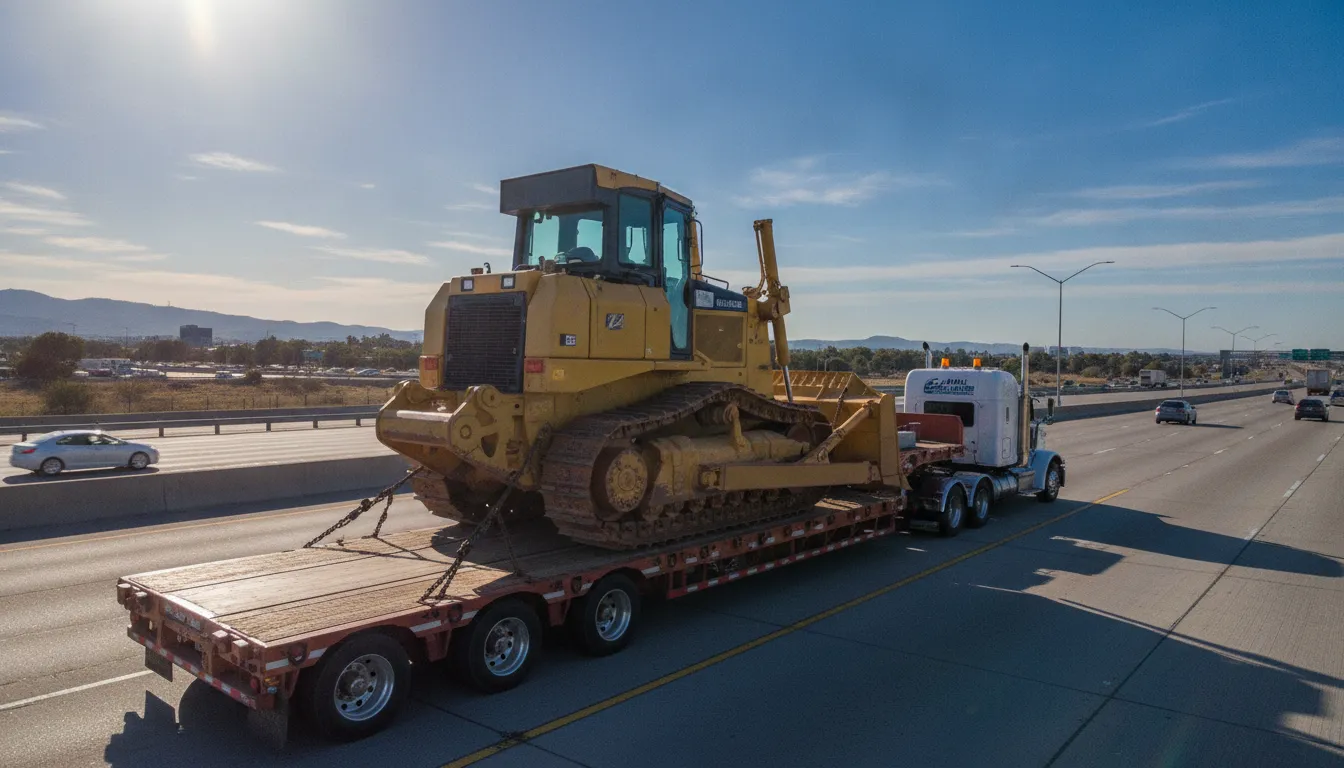
Heavy Equipment Shipping Guide: Plan and Move Oversized Cargo
Shipping heavy machinery requires specialized trailers and thorough knowledge of safety regulations. One wrong measurement can stop your work. This article shows how to plan every detail of your next oversized move correctly.
Heavy equipment shipping requires a clear plan that finds the exact size of your load before you pick a trailer. You might need specialized flatbeds, step-decks, or Removable Gooseneck units to move your large cargo safely. You must also get the right state permits for any load that is too big or heavy for the road. The Federal Highway Administration says that each state handles these rules for large vehicles. A good plan checks for low bridges and power lines while using the right axle setup to spread the weight. Doing this technical work early keeps your gear safe. It also helps you avoid the high costs of a delayed shipment or a broken machine.
Moving huge loads demands more than just a big truck and a competent driver. You need to know the basic rules and terms that guide these difficult jobs. A successful haul is a complex task, but the path begins with What Is Heavy Equipment Shipping? For time-sensitive equipment movements that fit a ground mode, Load One’s expedited freight solutions can support dependable delivery planning.
What Is Heavy Equipment Shipping?
Heavy equipment shipping is the movement of large or heavy machines. This process uses special trailers to haul cargo that standard trucks cannot carry. At Load One, we focus on protecting your work time by moving these assets safely and on time.
Types of Heavy Cargo
Most heavy machines fit into four main groups. Construction tools like cranes and dozers are common. Industrial gear includes large pumps and factory tools. Farmers also need to move big tractors. Finally, plants often ship large press machines. Each type of gear needs a clear plan to load and tie down.
Shipping these items often needs specialized trailers like flatbeds or step-decks. Some loads use a Removable Gooseneck (RGN) unit to sit low to the ground. These trailers fit wide and tall loads. Picking the right trailer is the first step for a safe haul.
The Role of Nondivisible Loads
A key rule in this field is the nondivisible load. The Federal Highway Administration says this is a load that you cannot split without hurting its value. If it takes over eight hours to take a machine apart, it is usually nondivisible. This rule is vital. It lets us get permits for loads that are over standard size or weight limits.
Load One gives expert heavy equipment logistics to help you follow these rules. We look at the size of your gear to find the best way to move it. Our team makes sure your cargo stays in one piece while meeting all road laws.
Specialized Transport Solutions
Moving heavy gear is not just about having a big truck. It needs a full plan. This includes picking the best route and getting state permits. We use our own fleet and deep knowledge to solve these tasks. Our goal is to give you a smooth shipping path from start to finish.
Our fleet can handle many sizes and weights. We use live tracking to keep you updated. This helps you plan your work at the job site. With Load One, you get a partner that knows how to deliver your most critical freight.
Understanding Weight and Size Regulations
Moving large gear on the road is a hard task. You must follow strict rules to keep all people safe. These laws help protect the roads from wear. When you plan your heavy equipment shipping, you must know the weight limits for every part of the trip. If your load is too heavy or too wide, you will need special papers to move it.
Weight Rules for the Interstate
The US government sets basic rules for all big trucks on the main roads. Most trucks have a limit of 80,000 pounds for their total weight. This is known as the gross vehicle weight. There are also limits for each axle. A single axle can usually carry 20,000 pounds. A tandem axle group can carry 34,000 pounds. These federal weight rules apply to the whole National System of Interstate and Defense Highways.
If your cargo goes over these numbers, it is an overweight load. You must follow these caps to avoid fines. Heavy trucks that weigh too much can damage the road over time. By staying within these limits, teams help keep the roads in good shape. It also makes sure that the truck can stop and turn safely in traffic.
The Federal Bridge Formula
Weight is not the only thing that counts. How that weight is spread out is just as key. The Federal bridge formula is a math rule that protects our bridges. It looks at the number of axles on a truck and the space between them. This formula makes sure that the weight of the truck does not put too much stress on a single spot of a bridge. Large pieces of gear often need trailers with many axles to spread the load evenly.
When you ship heavy gear, the length of the truck matters for this reason. A short truck with a very heavy load is harder on a bridge than a long truck with the same weight. Spacing out the axles helps the bridge carry the load without bending or breaking. Our team checks these facts for every move to keep your cargo and the public safe.
Getting State Permits for Oversized Loads
Sometimes, a piece of gear is just too big to fit the standard rules. In these cases, you need a special permit. It is key to know that the federal government does not give out these permits. Instead, each state handles its own rules for big loads. If you drive through five states, you may need five other permits. Each state may have new rules for when you can drive and if you need a lead car to help you.
Handling these permits is a big part of shipping plans. You must apply for them before the truck leaves the yard. Our team at Load One has the skills to handle these tasks for you. We offer nationwide truckload services and can plan the best path for your heavy cargo. We take the stress out of the permit process so you can focus on your work. We make sure every move meets all local and state laws.
Choosing the Right Trailer Configuration for Your Equipment
Finding the right way to move heavy gear starts with exact sizes. You must know the height, width, and weight of your load before you pick a truck. These facts help you choose the best tools for your specialized shipping services. Most moves must stay within the federal weight limit of 80,000 pounds for the whole vehicle. If your load is too big, you will need special permits and the right trailer type.
Common Trailer Types for Heavy Cargo
Flatbed trailers are the workhorse of the shipping world. They have a level deck with no sides or roof. This makes them easy to load from any angle. A standard flatbed can carry about 48,000 pounds. They work best for items that are not too tall. If your gear is over 8.5 feet high, a flatbed might be too tall for some routes.
Step-deck trailers, also called drop-decks, have a lower main deck. This gives you about 20 inches of extra height room. They are great for moving large parts or machines that stand up to 10 feet tall. By lowering the load, you can avoid hitting low bridges. This helps keep the move safe and on time.
For tall or heavy gear, a double-drop trailer is often needed. These trailers have a well in the middle that sits close to the ground. This low point allows you to ship cargo that is up to 12 feet high. While the well is shorter in length, it is the best spot for ultra-tall items that will not fit on other decks.
Trailer Comparison Table
Use this table to see which trailer fits your cargo size. Limits can change based on the specific truck and local road rules.
| Trailer Type | Max Weight | Max Cargo Height | Main Benefit |
|---|---|---|---|
| Flatbed | 48,000 lbs. | 8.5 feet. | Easy loading from all sides. |
| Step-Deck | 48,000 lbs. | 10 feet. | Extra height for tall gear. |
| Double-Drop | 40,000 lbs. | 12 feet. | Best for ultra-tall cargo. |
| RGN | 150,000+ lbs. | 11.5 feet. | Easy loading for self-propelled gear. |
Specialized and Weather-Protected Options
Some heavy equipment needs to stay dry and clean. Load One uses Conestoga trailers to solve this problem. A Conestoga has a rolling tarp frame that slides over the deck. It gives you the full access of a flatbed but adds the safety of a closed van. This protects your high-value assets from rain, snow, and road debris while in transit.
Removable gooseneck (RGN) trailers are another vital tool for heavy equipment shipping. The front part of the trailer can be pulled away. This creates a ramp so you can drive machines like dozers or cranes right onto the trailer. This method is fast and safe. It reduces the need for large cranes to lift the gear, which saves you money and time.
Choosing the right setup is about more than just fitting the load. It is about protecting your production uptime and ensuring the gear arrives ready for work. Load One has over 400 years of team knowledge to help you make the right choice. Our team looks at every detail to find the safest and best path for your shipment.
Permit Requirements and Route Planning for Oversized Loads
Moving large assets across state lines takes more than just a big truck. You must plan every mile to keep the cargo safe and follow the law. The process starts by checking if your load is nondivisible. A nondivisible load is one that you cannot take apart without harming its value or function. If it takes more than eight hours to dismantle the gear, it usually fits this rule.
Applying for State Permits
The federal government does not give out permits for oversized moves. Instead, each state sets its own rules. If your heavy equipment logistics plan covers five states, you must get five separate permits. These papers list the exact path the driver must take. They also set the times when the truck can be on the road. Most states do not allow large moves at night or on weekends to keep traffic flowing.
Mapping the Best Path
Route planning is the most vital part of the job. You must find a path that avoids low bridges, weak roads, and tight turns. A route survey helps find these traps before the truck leaves the yard. Load One manages all parts of this work, from specialized shipping services to final delivery. Our team checks for road work and height limits to ensure a smooth trip without delays.
Following the Planning Steps
- Verify load status. Confirm the gear cannot be broken down into smaller parts to fit standard size limits.
- Check state laws. Review the specific weight and height rules for every state on your planned path.
- Apply for permits. Submit the load details to state offices to get the legal right to move the cargo.
- Conduct a route survey. Map the path to find low wires, narrow lanes, and bridge weight limits.
- Hire pilot cars. Arrange for escort vehicles if the state rules require them for your specific load size.
- Set the schedule. Plan the move during allowed hours to avoid fines and keep the public safe.
Escort Vehicles and Timing
Very large loads often need a pilot car to lead the way. These cars warn other drivers and check for new road blocks. The state permit will tell you if you need one or two escorts. Load One handles all pilot car coordination so you do not have to find separate vendors. We focus on protecting your uptime by handling these complex details behind the scenes.
How to Prepare Heavy Equipment for Shipping
Planning for heavy equipment shipping starts long before the driver arrives at your site. A good plan keeps costs low and the gear safe. If you fail to prepare, you might face fines or have to pay for a second trip. Most problems start when the size or weight of the load does not match the driver’s gear. This is why you must start with the facts and have your site ready for the truck.
Plan for safety and savings
A clear plan helps you manage risk for your business. You want to make sure your machine arrives at the next job in good shape. By using the right steps, you can work well with your heavy equipment logistics partner. They will use your data to get the right permits and choose the best path for the haul. This helps you avoid extra fees and keeps the load safe on the road.
Steps to prepare your machines
Proper setup ensures the move goes smoothly and stays on budget. The goal is to make the machine safe for the road and easy for the carrier to load. Follow these steps to get your gear ready for the trip.
- Measure and weigh the machine. You must know the exact height, length, width, and weight of your gear. These numbers help the carrier choose the right trailer, like a flatbed or a step-deck. Since US rules set a max weight of 80,000 pounds for standard moves, knowing your load’s weight is vital for planning permits.
- Record the exact state. Clean the machine so you can see every part. Take clear photos of all sides before you load it. Note any chips, cracks, or old damage in a log. This proof is helpful if you need to file a claim later.
- Check fluids and batteries. Look for leaks in the fuel or oil lines. Some carriers want you to drain fuel tanks to a certain level or empty them for safety. You should also unhook the battery to stop it from draining or starting during the haul.
- Secure loose parts. Tape down or tie up any doors, covers, or flaps. If the machine has a cab, make sure the glass is safe and locked. Wind can pull on loose parts at high speeds, which can cause damage to the gear or other cars on the road.
- Take off extra parts. Pull off buckets, blades, or booms if they make the load too wide or too tall. These items can often ride on the same trailer but in a different spot. Taking them off can lower the cost of permits by keeping the load within standard size limits.
- Plan for loading and unload. Decide if you will need a crane, a ramp, or a dock. Make sure there is enough space for a large truck to turn and park at both ends of the trip. If the machine does not run, tell your carrier so they can bring a winch or a trailer with a ramp.
- Check insurance plans. Ask your carrier about their cargo insurance limits. Your own policy might also cover the gear while it is in transit. Make sure you have the right papers and contacts ready in case of an accident or delay.
Team up with logistics pros
Moving heavy loads is a team effort. You and your carrier must talk often to avoid surprises on moving day. A team with the right specialized shipping services will help you with every detail. They can guide you through state rules and the math for bridge weight limits. This keeps your gear safe and your costs in line. When you take the time to set things up right, you ensure your project stays on track and your machines stay in top shape.
Cross-Border Heavy Equipment Shipping
Moving heavy gear between the US, Mexico, and Canada adds many layers of rules to your plan. Success in heavy equipment shipping across borders needs a deep grasp of trade laws. Carriers must follow tax codes and safety rules to keep freight moving without costly stops. Working with a firm that has full North American reach is vital for your supply chain. You can find more about these tasks through our comprehensive logistics services.
Streamline Mexico trade via Laredo
Laredo, Texas, sits at the heart of the largest trade crossing between the US and Mexico. Load One runs a 15,000-square-foot site right at this hub to help manage your cross-border moves. This site serves as a bridge for gear moving into or out of Mexico. Having a base at the border allows for fast checks and better control over big loads. Our team handles the hand-off between firms to ensure your gear stays safe and on track.
Bilingual staff at the border bridge the gap between different rules and tongues. They talk with customs brokers and officials on both sides to clear paths for your cargo. This clear talk prevents the small slips that often lead to big delays. By managing the flow of papers and assets in real time, we help you keep your work on track.
Security and customs rules
Shipping large gear across borders means meeting strict safety goals. We maintain top certs like C-TPAT, CSA, and PIP to prove our focus on safe shipping. These programs allow for fast border checks through known lanes. We also hold TSA and NEEC status to cover all air and ground moves. These labels help lower the risk of random checks that can slow down your day.
Meeting these marks is a key part of North American heavy equipment logistics for many firms. Each country has its own way of defining safe loads and legal entry. For example, the Federal government does not issue permits for oversize loads in the US; instead, states manage those rights. Our team tracks these rules to keep your gear legal from start to end.
Reduce delays with expert help
The right cross-border plan turns a hard task into a simple move. Using a fleet with a strong border base removes the doubt from your global shipping. We work with local agents to ensure every permit is in place before the truck leaves. This fast approach saves time and keeps your costs low. Trusting your gear to a team with local skill ensures a smooth trip across any North American border.
Choosing the Right Heavy Equipment Carrier
Choosing a partner for heavy equipment shipping is a big decision for your company. Your choice affects your production uptime and the safety of your high-value tools. You should pick a carrier based on their fleet, their skills, and their safety record. A good partner manages the hard parts of heavy equipment logistics so you can focus on your own work.
Asset based vs broker models
An asset-based carrier owns the trucks and trailers used for your move. This model gives them better control over the work and the gear. Brokers must search for trucks, which can lead to late starts or the wrong gear. Load One owns its fleet, so we can give you the exact tools needed for your job. This direct control helps us keep our high standards for every shipment we handle.
Our team has over 400 years of combined work experience in this field. This deep knowledge helps us find and fix problems before they cause delays. We know the technical needs of specialized shipping services, from how to tie down loads to how to plan long routes. Picking a partner with a long track record cuts the risk of damage or fines during the trip.
Safety and tech tools
Safety is the most vital part of moving large machines. You should check a carrier’s DOT ratings and safety scores before you hire them. Load One holds top certifications to stay in line with all state and federal rules for heavy hauls. We use tech tools to give you a live look at where your shipment is at all times. This clear view helps you manage your busy work schedule.
Our work with tech has won us the CCJ Innovator of the Year award. We use GPS and satellite tools to track every mile of the move. This data helps us give you fast updates and keep your cargo safe on the road. When you ship with us, you get help all day and night from a team that puts your needs first.
Frequently Asked Questions
Do I need permits for heavy equipment shipping?
Most oversized or overweight loads require special state permits. According to the FHWA, the federal government does not issue these documents. Instead, individual states grant permits for vehicles that exceed standard size or weight limits. A professional carrier will manage the permit process and plan safe routes. They also coordinate pilot cars and police escorts when local laws require them for your specific equipment.
How much does it cost to ship equipment?
Shipping costs vary based on the distance, equipment size, and weight. Prices are not fixed because every move has unique needs like permits or escort cars. Factors such as fuel prices and trailer types also change the final rate. Most carriers provide custom rates for each load. To get an accurate price for your machinery, you should request a quote that includes all required fees and specialized trailer costs.
What equipment is needed for heavy haul transport?
Standard flatbed trucks work for some loads, but heavy machinery often needs specialized trailers. Removable Gooseneck (RGN) trailers are common because they allow equipment to drive directly onto the deck. Step-deck trailers help when moving tall items that would otherwise hit power lines or bridges. Using the right trailer ensures your load stays within legal height limits. Expert carriers match your cargo to the best trailer configuration to maintain safety and efficiency.
How to prepare equipment for shipping?
Start by taking exact measurements of the height, width, and weight of your machinery. You must clean the equipment to help inspectors see its condition and find tie-down points. Remove or secure any loose parts that could fall off during the trip. It is also wise to cover sensitive parts like glass or chrome. These steps protect your asset and help the driver secure the load properly. Proper preparation prevents delays and ensures a safe delivery.
Ready to get a quote for heavy equipment shipping?
Moving large gear takes time and careful thought. If you wait too long to set up your haul, you might face big delays that hurt your plans. Finding the right trailer and getting state permits can take weeks. Starting your search today means you can lock in the best route. You do not want to deal with the high costs of a late move. Our team has the tools and the skill to handle every part of your move. We will work fast to get your gear where it needs to go without stress. You can rest easy knowing your assets are in safe hands from start to finish.
Ready to get a quote? Talk to an expert to get a quote for heavy equipment shipping.