Hot Shot Trucking vs. Ground Expedite
Production shutdowns cost factories thousands of dollars per minute. Logistics managers choose hot shot trucking or ground expedite to move urgent loads. Knowing the difference between these two choices is vital for your success.
Hot shot trucking is a freight method that uses medium-duty pickup trucks to pull flatbed trailers for smaller, time-sensitive loads. This type of transport often serves local or regional needs and is known for its lower equipment costs. However, it may lack the tracking and expert support found in ground expedite services. Expedited trucking deals with rush orders for items that must arrive at a specific time (auto.edu). While both modes focus on speed, ground expedite uses more vehicle types like Sprinter vans and straight trucks to keep your cargo safe. Expert providers offer real-time visibility and updates to protect your uptime. These features make it the best choice for urgent factory work and cross-border shipping across North America.
Choosing the right way to ship needs a look at your freight needs and delivery times. You must decide if you want the speed of a pickup truck or the support of an expert partner. Our Hot shot trucking vs. ground expedite at a glance section shows the way. The path begins with.
Hot shot trucking vs. ground expedite at a glance
Defining each service
Logistics leaders often use hot shot trucking or ground expedite to move freight fast and keep plant lines running. Hot shot trucking got its start in the Texas oilfields during the 1970s. Drivers used pickup trucks to get parts to drill sites as fast as they could. Today, it still aims at smaller loads that need to move now using mid-size trucks.
In contrast, ground expedite is a broad branch of freight hauling for rush orders. It handles items that must arrive at a set time and cannot be moved again. These loads range from small lab samples to huge plant parts that keep a shop open. You often use expedited freight solutions when you need more than just a quick trip. You need a partner who can manage the whole move with care and speed.
Key tools and load types
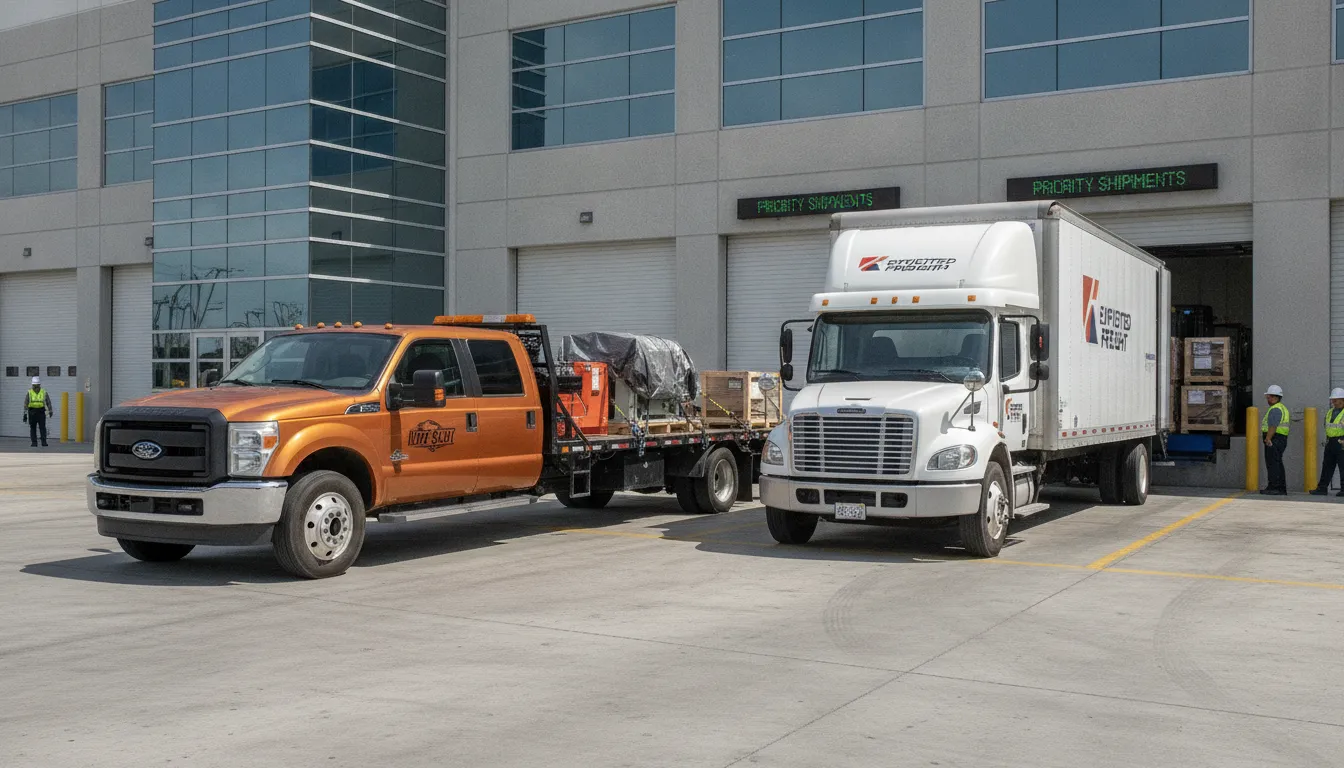
The main gap between these two services is the gear used. Most hot shot drivers use Class 3, 4, or 5 pickup trucks. They often pull flatbed trailers to carry more freight. This setup is great for local jobs where the driver needs to move fast but stays close to home.
Ground expedite uses a wider range of tools, such as cargo vans, Sprinter vans, and straight trucks. As one case, a Sprinter van can hold three pallets or about the same weight in cargo. Expert teams also use tractor-trailers for larger rush moves.
These trucks often have two drivers to keep the freight moving all day and night. This helps to make sure the load stays on the same truck from start to finish. Using the right gear ensures that the cargo arrives on time without damage.
A side by side comparison
Many firms in the car and heavy tool trades use these services to stop plant shuts. These shops rely on just-in-time parts to keep their work on track. When a part fails or a shipment is late, the cost can reach thousands of dollars per hour. Choosing the right truck type helps you keep these costs low while meeting tight deadlines.
When you choose a path, you must think about risk and tracking. Hot shot moves are often done by single drivers. They might not have the tools for real-time views that large plants need.
Ground expedite from a top team gives you more, such as 24/7 help and clear updates. This helps you avoid plant stops and keeps your supply chain safe. The table below shows how these two paths compare for your next urgent move.
| Feature | Hot Shot Trucking | Ground Expedite |
|---|---|---|
| Vehicle Type | Class 3-5 pickups with trailers | Sprinters, straight trucks, vans |
| Load Size | Smaller LTL or flatbed loads | Anything from samples to full loads |
| Speed | Fast for local or regional trips | Rapid for long-haul and cross-border |
| Tracking | Often basic or manual updates | Real-time views and 24/7 checks |
| Primary Use | Oilfield parts and local construction | Just-in-time manufacturing and high-value cargo |
When does hot shot trucking fit urgent freight?
Hot shot trucking is a way to move small, rush loads with medium-duty trucks. This method uses Class 3, 4, or 5 pickup trucks. Most of these trucks pull flatbed trailers to haul more weight. This type of work started in the Texas oil fields in the 1970s. Back then, drivers used pickup trucks to get parts to drill sites fast. Today, it helps many firms that need parts moved quickly to keep work running. It is a vital part of the supply chain for many niche markets.
Common trucks and gear
Most hot shot trucking relies on pickup trucks and trailers. These trucks are often bigger than a standard car but smaller than a semi-truck. They use Class 3 to Class 5 trucks to pull open trailers. These trailers allow for easy loading from the side or top. This setup is great for odd-sized gear or heavy parts that do not fit in a van.
But these trucks are not the only choice for rush loads. Expert expedited freight solutions often use other tools. These include cargo vans, Sprinter vans, and straight trucks. A Sprinter van can hold three pallets of cargo. This is often better for fragile items that need a closed space. The right choice depends on the size of the load and how fast it must arrive. Each load type needs the right tool to ensure it arrives safe and on time.
Best use cases for hot shot
Hot shot work is best for local or regional jobs. It works well when a factory needs one part to keep the line moving. It also fits well in the oil and gas industry. Because the trucks are smaller, they can reach tight spots where a semi-truck cannot go. This ease is a big plus for many shippers in the field.
Many shipping leads use this service for “less than truckload” shipments. This means the freight does not fill a whole trailer. It is a smart way to move urgent goods without paying for a big truck. It also helps drivers get more home time. Most of their jobs stay close to a local hub or city. This makes it a great choice for short hauls that need a fast response.
Limits and professional needs
While hot shot is fast, it has some weak points. Drivers must fuel often because pickup trucks have small tanks. Moving long trailers in small lots can also be hard. Also, these drivers must follow strict DOT rules. This includes having a US DOT number and enough coverage to protect the load. Safety is always a top goal for any driver on the road.
For the most urgent loads, some shippers need more than just a truck. They need to see where their freight is at all times. Expert teams give real-time tracking that many small hot shot drivers lack. This is key for factory lines that cannot stop. Choosing between a hot shot and a full expedite service depends on your need for tech and tracking. High-stakes loads often need the extra care and tracking of a trusted partner.
When is ground expedite the stronger choice?
Choosing between hot shot trucking and ground expedite depends on your exact freight needs. While hot shot trucks often use pickups and trailers, ground expedite uses more truck types. This choice is key when your cargo is part of a tight supply chain. Expert expedited freight solutions offer the speed and safety that high-stakes loads need. They help you meet the strict needs of just-in-time work.
Hot shot trucking is often used for local moves. It is a good choice for some small loads, but it may lack the scale of a full fleet. Ground expedite works best for shipments that must cross long paths or borders with no delays. This service fills the gap between air freight and standard truck loads. It gives you a fast and sure way to move goods across North America.
Protecting plant output
Firms in the car and tool trades use ground expedite to keep lines running. One late part can stop a whole plant. Expert ground expedite helps protect your production uptime. These services make sure rush orders get there at a set time without any stops. This helps you avoid the high costs of a shut-down line. It is a vital tool for any lead in a busy plant.
Urgent freight often holds items that are weak or cannot be moved. School logistics guides show that expedite work is best for goods that must stay on one truck. This direct path lowers the risk of breaks during the move. It is the safest way to ship goods that are hard to replace or very dear. A direct truck keeps your cargo safe from the risks of moving it between trucks.
Choosing the right truck
Ground expedite gives you more truck choices than standard hot shot loads. You can pick from small vans, Sprinters, or straight trucks. For example, a Sprinter van can hold three pallets of goods. This range lets you match the truck to the size of your load. It is a smart way to manage your time-critical freight shipping. You do not have to pay for space you do not use.
Matching the truck to the job helps you save time and money. Small vans can move through road work and city streets with ease. Since these trucks only carry your load, they do not make extra stops. This direct service keeps your goods on the fastest path to their goal. It ensures that your most urgent parts get where they need to go right now. It is a key part of modern supply chain plans.
Tracking your load in real time
Knowing where your goods are at all times is a big plus of ground expedite. Top teams use tech to give you a live view of your shipment. This level of tracking is often not found with a simple broker. You can watch your cargo move from the start to the end of the trip on your screen. This data helps you plan for the time your freight hits the dock.
Clear talk helps supply chain heads make quick choices. If a delay occurs, you will find out fast. Choosing a transport mode should rest on how fast you need it and safety. A team that watches your load at all hours makes sure your freight stays safe and on time. This 24/7 care is a key part of top logistics support.
Which option delivers the right speed and coverage?
Choosing between hot shot trucking and expert ground shipping depends on more than just the size of your load. You must look at how fast the truck can get there and how far the service reaches. True speed is not just about a fast truck. It is about how the team plans the trip and handles stops like traffic or border checks.
Factors that set the trip time
Trip time depends on driver rules and gear. In hot shot trucking, drivers often use Class 3 to Class 5 trucks with flatbed trailers. These trucks move quickly for local or regional jobs. But for long trips, federal rules on drive time apply to all commercial moves. Safety rules from the Department of Transportation help keep roads safe. When a load must arrive at a set time, an expert team can plan for these stops to keep the freight on track. This planning stops delays before they start.
How far away the truck is and how ready it is also play a big role in total speed. A truck that is close by can start a job fast. Expert firms use many types of trucks to find the best fit. This might include Sprinter vans or straight trucks for time-critical freight shipping needs. Having the right truck ready to go saves time before the trip even starts. For example, a Sprinter van can often hold up to three pallets of goods for a quick move.
Managing borders and reach
Coverage for a load often goes across borders. Moving freight between the U.S., Canada, and Mexico adds more steps to the job. These steps can slow down a trip if the carrier does not have a clear plan. Expert teams use set hubs to speed up these moves. A hub in Laredo helps with ground expedite shipping facts like border rules. This reach is a key part of a full shipping plan.
Large networks offer better reach than a single truck owner can give. A firm with many trucks can cover more ground. They can find a truck for a load even in remote spots. This is vital for just-in-time work where a late part can stop a whole plant. Choosing a mode based on urgency and cost ensures the shipment gets the right level of care. A good plan uses all assets to reach the finish line on time.
Trust through tracking
A fast truck is only helpful if you know where it is. Real-time tracking gives you the power to see your freight at any time. This helps you plan for when your goods will arrive. While hot shot trucks are good for quick local moves, they may lack the high-tech tools of a larger fleet. Knowing the exact spot of your freight helps you keep your lines running. You can trust the data rather than a vague promise of a fast move.
The best choice for your freight will fit your needs for both speed and cost. You should look for a partner that has:
- A large fleet of trucks for better reach.
- Tools for real-time tracking of every load.
- Skills with border stops and customs rules.
- The right truck for the size of your freight.
These parts work together to create a service that protects your work schedule.
How do tracking and risk differ?
Logistics managers must weigh visibility against potential losses when choosing a freight partner. Tracking shows where a truck is at any given moment. Risk covers what happens if that truck fails to deliver. In time-critical freight shipping, a lack of data can lead to line shutdowns and lost revenue.
Visible tracking and communication
Modern tracking uses GPS data to provide real-time updates. This allows shippers to see when a vehicle arrives at a plant or crosses a border. Professional carriers use these tools to offer proactive updates to clients. Unlike generic ground expedite shipping facts, elite services integrate these data points directly into your supply chain view.
Good communication is just as vital as a GPS dot on a map. When a delay occurs, a dispatcher must notify the shipper at once. This level of transparency helps managers adjust work schedules in real time. Accurate data helps teams avoid the stress of “dark” periods where the location of cargo is unknown.
Managing freight risk and liability
Risk management involves vetting drivers and checking insurance limits. Interstate hotshot truckers must carry at least $750,000 in primary liability insurance to meet federal rules. Beyond basic limits, shippers should look for cargo insurance that covers the full value of the goods. This is crucial for high-value items like car parts or medical gear.
Chain of custody also plays a major role in lowering risk. Loads that do not need reloading at cross-docks are less likely to suffer damage. High-stakes freight often goes by a single driver from start to finish. This direct route keeps the goods safe and ensures the cargo arrives in the same state it left the dock.
Planning for the unexpected
Contingency planning is the final piece of the safety puzzle. A carrier should have a plan for breakdowns or bad weather. This might include a backup vehicle or an air freight option. Federal rules state that urgency, cost, and safety must all factor into how a transport mode is chosen for critical needs.
Choosing a partner with a deep network can limit your exposure. If one truck has a flat tire, another should be ready to take the load. This depth of service protects your production uptime even when things go wrong on the road. A strategic partner does not just move freight; they protect your bottom line from the unexpected.
How should logistics managers choose?
Planners face many choices when a shipment is urgent. You must decide if a standard hot shot trucking service is enough or if you need full ground expedite. The right choice protects your production line and your budget. It starts with knowing the needs of your cargo before you book a truck.
Check your freight needs
You should start by looking at the size and shape of your load. Some shipments fit on a small flatbed, but others need a van to stay dry and safe. You also need to think about how much the load is worth. High-value goods often need better safety and tracking than a usual local hot shot can give.
Federal rules say that you should choose a shipping mode based on speed, cost, and safety. If you have a one-pound part or a large machine, the need for speed stays the same. But the truck you pick will change. You must weigh these factors to keep your supply chain moving without extra costs.
- Check size and weight. Measure your freight well. A hot shot truck often uses a flatbed for heavy parts. If your cargo is small but needs a fast trip, a Sprinter van might be a better fit than a large truck.
- Look at handling needs. Decide if your goods can be reloaded. Expert expedite services often keep your freight on the same truck from start to finish. This reduces the risk of damage for fragile or high-value items.
- Set your time goals. Note the pickup deadline and the must-arrive time. If the delivery is for a just-in-time line, you need a partner who can meet tight windows. Some teams offer 24/7 help to manage these rush orders.
- Review the route. See where the load is going. If you are moving goods across North America, you may need a carrier with a wide reach. This is very important for choosing an expedite partner who knows how to handle border stops.
- Demand live updates. Ask about visibility. You should know where your freight is at every moment. Expert teams use tech to give you live data and clear talk. This helps you plan for the arrival of the part at your factory.
Find the right shipping mode
The final step is to look at your risk level. A local driver might be fine for a simple trip across town. But for a high-stakes shipment, you need a team that can handle any problem. They should have a large network of trucks and vans ready to go at any time.
Choosing the best path keeps your business strong. When you use the right tools and data, you can ship with peace of mind. Make sure your carrier has the right DOT numbers and insurance to keep your cargo safe. This choice is a key part of your logistics plan.
Why the provider matters as much as the vehicle
Finding a truck for your freight is easy. But finding a partner to manage the shipment is hard. In the world of hot shot trucking, the driver is often the one finding the loads. For a small business, this might work. But for a big plant, a single truck is not enough. You need a team that can watch the road all day and night.
Choosing the right tools for the load
A pickup truck with a trailer is not always the best tool. Some loads are small and need a fast van. Other loads are heavy and need a full trailer. A good partner looks at your freight first. They choose the best truck to keep your costs low and your speed high. This choice keeps your goods safe and on time.
We use many truck types to fit your exact needs. This range of assets helps us cover more ground than a single driver could. We do not just book a truck; we build a plan for your freight. Our fleet includes:
- Cargo vans and sprinter vans for small, urgent parts.
- Straight trucks for mid-sized loads.
- Full tractors and trailers for large shipments.
You can learn more about these choices in our ground expedite shipping facts guide. Having these types of trucks is key to helping you avoid a production stop.
Trust through tracking and support
When a load is for a “just-in-time” plant, you cannot guess where it is. You need to see the truck on a map. You need a team that answers the phone at 3 AM. Top partners use tools to track every mile. This tracking lets you know when the parts will reach your dock. Our team works 24/7/365 to watch your shipments. We do not just wait for the driver to call. We use tech to see the truck in real time.
Federal rules tell us how to pick the best way to move goods. These rules for transport say we must look at how fast the load needs to get there. We also look at safety and cost. At Load One, we combine these rules with our own high standards. This mix keeps your production lines running without a stop.
Handling complex logistics and compliance
Moving freight across borders is not simple. It takes more than a driver with a map. It takes a team that knows the law and the forms. Take the border at Laredo as an example. It needs a clear plan to work well. We use our own hubs to make these crossings fast and smooth. This helps guard your freight from long delays at the gate.
Safety is also a big part of the job. Every driver must follow the federal rules for drivers to keep the road safe. We check these rules every day to make sure our fleet is ready. When you are choosing an expedite partner, look for this level of care. It is the only way to guard your cargo and your brand.
Frequently Asked Questions
Hot shot trucking vs. ground expedite: what is the difference?
Hot shot trucking usually uses medium-duty pickup trucks with trailers to move small, urgent loads. Ground expedite is a broader service. It uses many types of vehicles, from Sprinter vans to full tractor-trailers. According to Load One, ground expedite offers more options for cargo size and urgency. Both services focus on time-critical shipping. However, ground expedite often provides better tracking and support for high-stakes production lines.
Can I do hot shot trucking without a CDL?
You do not always need a Commercial Driver’s License (CDL) for hot shot trucking. It depends on the total weight of the truck and trailer. Federal rules need a license if the weight rating is over 26,000 pounds. As noted by Cornell Law School, a CDL is very helpful for larger loads. Having one helps drivers take on more work and follow safety laws.
What types of trucks are used in hot shot trucking?
Most hot shot trucking jobs use Class 3, 4, or 5 pickup trucks. These vehicles often pull flatbed trailers to carry extra freight. According to the Georgia Driving Academy, this setup helps drivers deliver time-sensitive items fast. Some drivers also use goose-neck trailers for better balance. The choice of gear depends on the weight and size of the cargo being moved.
What insurance do I need for hot shot trucking?
Drivers doing interstate hot shot work must have a US DOT number. They also need at least $750,000 in primary liability insurance. This amount is needed unless the driver leases their vehicle to another carrier. The Georgia Driving Academy states that drivers must pay for all operating costs. Getting a quote is the best way to find exact costs for your shipping needs.
Ready to secure your urgent freight with a free quote today?
Every minute your freight stays still is a risk to your work and your profits because idle trucks cause gaps in your supply chain. Waiting to book expedited freight solutions leads to late loads and high costs from stopped lines that can hurt your business and good name. Starting the process now ensures your cargo gets on the road before small delays become a major crisis for your team and your bottom line.
Ready to move your freight? Get a Quote to request your time-critical shipment today. Keep your production lines running on time without any more delays or lost profits. Our team is standing by to help you with your most urgent needs.