Automotive Logistics Solutions for JIT Manufacturing
A single modern vehicle contains more than 30,000 individual components sourced from dozens of suppliers across multiple countries. When just one critical part runs late, the entire assembly line can stop within hours, triggering revenue losses that compound with every minute of idle production time.
Automotive logistics solutions are specialized services that manage the flow of parts and finished vehicles across the supply chain to keep production lines running at peak efficiency. These systems combine precision-scheduled freight, real-time GPS tracking, and 24/7 dedicated dispatch teams to ensure that critical components arrive at assembly plants exactly when needed. By using asset-based fleets and ground and air transport options, providers help manufacturers avoid the massive financial losses that result from unplanned production stoppages.
Understanding how these logistics services work is essential for any manufacturing leader looking to protect uptime and maintain competitive delivery schedules. The path to a resilient supply chain starts with a clear look at how automotive logistics solutions function in practice.
What Are Automotive Logistics Solutions?
Automotive logistics solutions are integrated freight and supply chain services designed specifically for the automotive industry’s unique demands: lean inventory, tight production windows, and multi-tier supplier networks. They cover inbound parts delivery, finished vehicle transport, cross-border movement, and emergency expedite services, all coordinated through real-time tracking and dedicated dispatch teams.
Automotive logistics covers two primary flows: getting parts and components into assembly plants (inbound) and moving finished vehicles to dealers and distribution centers (outbound). Effective solutions balance both sides to reduce costs while maintaining the speed that modern manufacturing requires. This starts with inbound logistics, where thousands of parts from hundreds of suppliers must arrive at the assembly line in precise sequence.
Managing Inbound and Outbound Flow
Inbound logistics involves coordinating deliveries from raw material suppliers, component manufacturers, and subassembly plants across the globe. Each shipment must reach the factory floor at a specific time, often within a window of just hours. Outbound logistics then moves completed vehicles from the plant to dealership networks, requiring specialized car-carrier equipment and route optimization. Leading providers such as Load One handle both sides of this flow with dedicated fleet resources, delivering greater control and reliability across the entire production-to-delivery cycle.
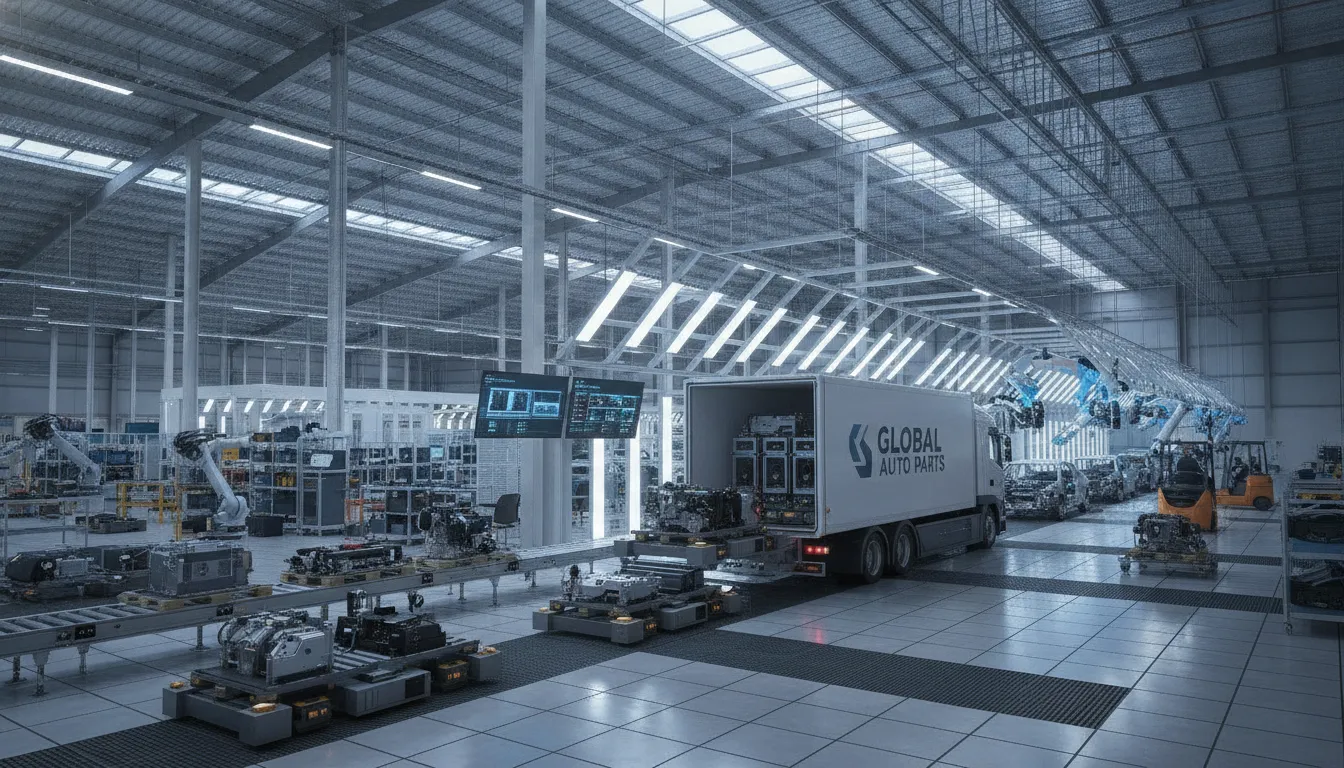
Automotive parts vary widely in size, value, and handling requirements. High-value electronic control units, fragile glass panels, and large body stampings each need specific equipment and care during transport. Logistics partners with experience in automotive manufacturing logistics maintain the specialized gear and trained personnel needed to move these components safely.
Precision Scheduling for Lean Plants
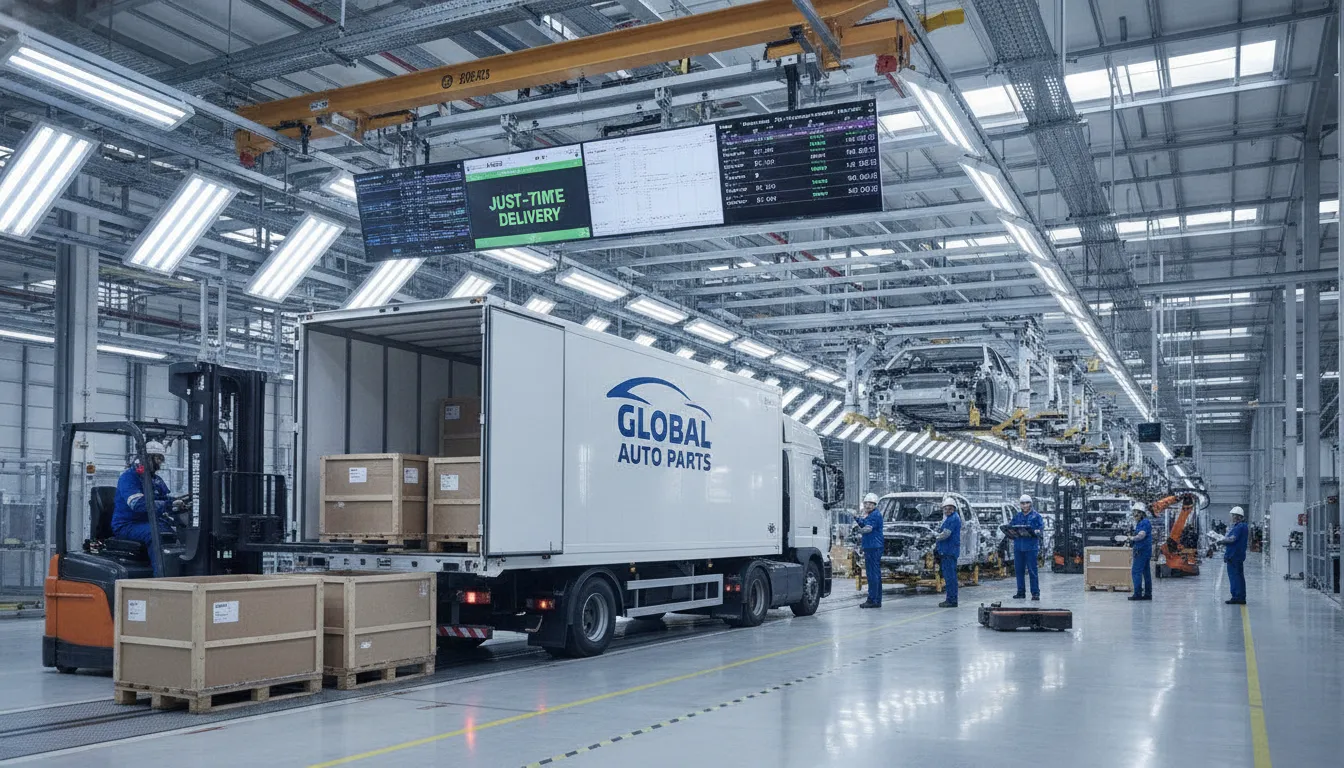
Most automotive assembly plants operate on just-in-time principles, keeping enough inventory on hand for only a few hours or days of production. This lean approach reduces warehouse costs and working capital, but it also creates vulnerability. Delivery precision is not a convenience; it is a requirement. Logistics teams must hit tight delivery windows so that parts arrive exactly when the line is ready for them. Just in time delivery services use data-driven route planning and real-time adjustments to maintain this schedule under any conditions.
Advanced logistics providers now use AI and predictive analytics to optimize routes, forecast demand, and identify potential disruptions before they occur. According to industry research from Mecalux, these technologies help logistics teams stay ahead of weather events. Port congestion, and traffic delays by finding alternative routing options in real time. This data-driven approach ensures that even the most complex supply chains remain resilient.
Real-Time Data and Tracking
Visibility into every shipment is a core requirement of modern logistics. Real-time GPS tracking and mobile applications allow manufacturers to see exactly where their parts are at any given moment. If a truck encounters a delay, the logistics team knows immediately and can act to protect the delivery schedule. This level of transparency enables better planning at the plant level and reduces the uncertainty that comes with complex multi-supplier supply chains.
Beyond day-to-day tracking, shipment data helps logistics experts identify patterns and optimize the entire network over time. They can determine which routes perform best, which suppliers need additional support, and where capacity bottlenecks are likely to form. This continuous improvement cycle makes the supply chain stronger with every shipment.
Why Is Reliable Logistics Critical for JIT Manufacturing?
Reliable logistics is critical for JIT manufacturing because lean production systems carry minimal inventory buffers, leaving assembly lines exposed to any supply chain disruption. A single late part can halt production within hours, costing millions in lost output and idle labor. Professional logistics solutions provide the rapid-response safety net that JIT plants need to maintain continuous operations.
Just-in-time manufacturing succeeds on a simple premise: bring materials to the production line only when they are needed. This discipline reduces inventory carrying costs and frees up factory floor space. But it also means that most plants hold only a few days of parts in stock, sometimes just hours. When something disrupts the flow, there is almost no buffer to absorb the delay.
The fragility of JIT systems was famously demonstrated in February 1997, when a fire at an Aisin Seiki plant in Japan threatened to halt Toyota’s entire production network. The Aisin plant was the sole supplier of a critical brake part used across nearly all Toyota models. With no backup stockpile, Toyota faced the prospect of shutting down dozens of assembly lines nationwide. A research report from MIT Sloan documented how the crisis was resolved in days through a rapid, self-organized effort by suppliers to establish alternative production lines. The lesson endures: even the most sophisticated JIT systems need a rapid-response backup plan.
For modern automotive plants, automotive logistics solutions provide that backup. Expedited freight services, dedicated dispatch teams, and multimodal transport options create the safety net that prevents a minor supply disruption from becoming a full production stoppage.
Why Shutdowns Cost More Than Parts
A modern automotive plant can produce a finished vehicle every sixty seconds. At that rate, a four-hour shutdown means dozens of vehicles that will never be built. The lost revenue from those vehicles is gone permanently. When you add idle worker wages, fixed overhead costs that continue during downtime. And potential penalties for late dealer deliveries, even a short stoppage carries a staggering price tag. This is why protecting production uptime is the single most important function of an automotive logistics partner.
How Precision-Scheduled Expedited Freight Prevents Assembly Line Shutdowns
Precision-scheduled expedited freight prevents assembly line shutdowns by moving time-critical parts directly from supplier to plant using dedicated, non-stop routes. Unlike standard freight that consolidates at hubs, expedited loads bypass intermediate stops, cutting transit time dramatically. Combined with 24/7 dispatch monitoring and real-time tracking, this service ensures that parts arrive before inventory runs out.
Protecting Uptime with Fast Delivery
Precision shipping eliminates the delays inherent in hub-and-spoke freight networks. Instead of routing through consolidation centers, expedited loads travel directly from origin to destination. This approach cuts transit time by hours or even days compared to standard shipping. For JIT manufacturing environments where every hour counts, this speed differential can mean the difference between uninterrupted production and a costly line stoppage.
Dedicated dispatch teams monitor every expedited shipment around the clock. These dispatchers act as the central nervous system of the operation, rerouting shipments in real time when weather, traffic, or mechanical issues threaten the delivery window. Expedited logistics services combine this human oversight with technology to deliver the reliability that time-critical automotive production demands.
Using Air Charter for Urgent Needs
When ground transit cannot meet a critical deadline, air charter solutions provide the fastest possible alternative. Dedicated aircraft move small, high-value components across the country in hours instead of days, bypassing all ground-level delays. Air charter is typically reserved for the most urgent scenarios: a $50,000 air freight charge to deliver a $200 part that would otherwise halt a production line producing millions of dollars in vehicles per day.
Instant Visibility and Rapid Response
Modern expedited freight relies on data as much as horsepower. GPS tracking, electronic logging devices, and mobile communication platforms give logistics teams continuous visibility into every shipment. When a load falls behind schedule, dispatchers can adjust routing in transit, arrange backup transport, or coordinate with the receiving plant to adjust the production sequence. This rapid-response capability is what separates a minor delay from a catastrophic line stoppage.
What Role Do Real-Time Tracking and Dedicated Dispatch Teams Play?
Real-time tracking and dedicated dispatch teams form the operational backbone of automotive logistics. GPS-based tracking provides continuous location data for every shipment, while experienced dispatchers use that data to make proactive routing decisions. Together, they create a responsive supply chain that can adapt to disruptions before they impact production schedules.
Real-time tracking has evolved from a premium feature to a baseline expectation in automotive logistics. The complex, multi-tier supply chains serving modern assembly plants involve thousands of simultaneous shipments crossing multiple countries and time zones. Without continuous visibility into each load, logistics managers cannot make the rapid decisions needed to keep production lines running.
Modern tracking platforms use GPS, cellular triangulation, and mobile applications to provide updates at every stage of the shipment. Load One offers a mobile app with push notifications that let customers see their freight location in real time. Receive automatic event alerts, and access proof of delivery through in-cab scanning. This technology was recognized when the company was named the 2019 CCJ Innovator of the Year for leadership in transportation technology. These capabilities ensure that expedited freight solutions operate with full transparency.
Dedicated Dispatch Teams as a Strategic Asset
Technology alone cannot guarantee supply chain reliability. The human expertise behind the tools is what differentiates a functional logistics operation from an exceptional one. Load One operates a 24/7/365 dedicated dispatch team that monitors every time-critical shipment. These dispatchers are trained to identify potential disruptions before they occur and take proactive action. If weather delays a shipment on a key route, they reroute it in transit. If a supplier shipment runs behind schedule, they coordinate with the manufacturer to adjust the delivery window.
The combination of real-time data and experienced human decision-making creates a supply chain that can absorb sudden demand changes or supply shocks. This agility is essential for automotive manufacturers facing constant pressure to reduce costs while maintaining perfect delivery performance. The best logistics operations marry powerful tracking technology with skilled teams who know how to act on the data.
How Does Cross-Border Logistics Support Integrated Supply Chains?
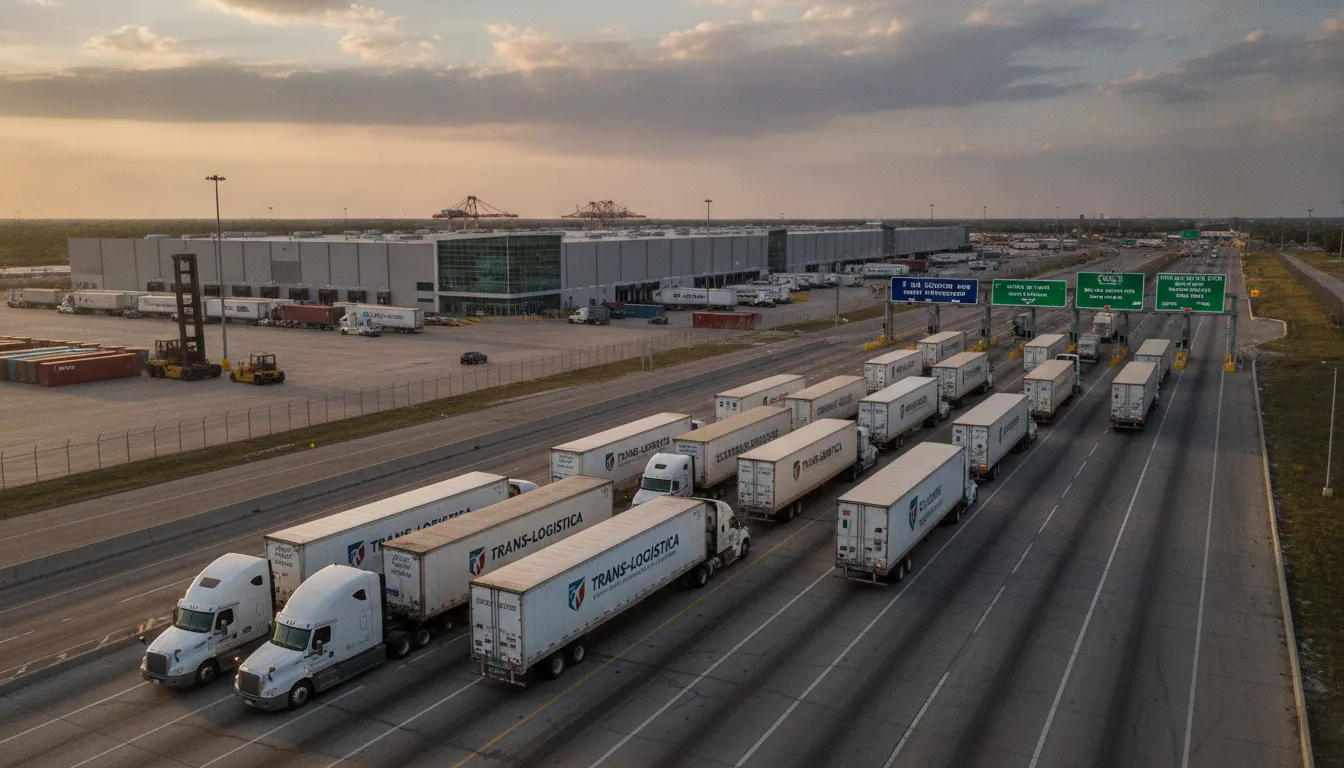
Cross-border logistics supports integrated North American supply chains by managing the complex flow of parts across US, Mexico, and Canada borders. Specialized facilities at key border crossings, such as Load One’s Laredo hub, provide warehousing, cross-docking, and customs processing to streamline crossings. Bilingual compliance teams and security certifications like C-TPAT help prevent the border delays that can disrupt JIT production schedules.
The North American automotive industry functions as a single integrated manufacturing ecosystem. Parts move across the United States, Mexico, and Canada multiple times during the production process, from raw material suppliers through component manufacturers to final assembly plants. Mexico-US freight trade reached $872.8 billion in 2025, with 73.6% of that volume traveling by truck, according to Bureau of Transportation Statistics data. For JIT manufacturers, every hour a shipment sits at the border moves the plant closer to a potential shutdown.
Load One operates a 15,000-square-foot facility in Laredo, Texas, at the busiest US-Mexico trade crossing in North America. This dedicated hub provides warehousing, cross-docking, and customs processing capabilities that accelerate border crossings. The team includes bilingual specialists with deep knowledge of customs regulations, and the company holds all major border compliance certifications including CSA, C-TPAT, and PIP. This infrastructure ensures that freight moves across the border without the delays that affect less prepared carriers.
For manufacturers operating manufacturing logistics across the continent, consistent cross-border performance is non-negotiable. A Mexico stamping plant ships body panels to a Michigan assembly plant, which sends subassemblies to an Ontario final assembly facility. Each border crossing creates a potential delay point. Providers with dedicated cross-border infrastructure and standardized processes maintain visibility and control across every node of the production network.
What Are the Emerging Logistics Challenges from Electric Vehicle Batteries?
Electric vehicle batteries create new logistics challenges because lithium-ion units are classified as hazardous materials (Class 9) under DOT regulations. Requiring specialized hazmat-compliant vehicles, certified drivers, and temperature-controlled transport. As EV production scales, demand for these specialized logistics capabilities is growing rapidly, creating pressure on providers to invest in compliant equipment and trained personnel.
The automotive industry’s shift toward electrification introduces logistical demands that most traditional auto parts never required. Lithium-ion battery packs are hazardous materials under DOT regulations, needing specialized equipment, certified hazardous materials drivers, and strict temperature controls throughout the shipping process. Any deviation from the required temperature range can affect battery performance or create safety risks.
Battery transport requires hazmat-compliant vehicles with temperature-monitoring technology, specialized containment systems, and drivers with hazardous materials endorsements. As more automakers announce aggressive EV production targets, the demand for these capabilities is accelerating rapidly. Predictive analytics and AI-powered routing tools are becoming essential for managing battery shipments. Helping providers forecast demand, optimize routing for hazmat-required routes, and anticipate capacity needs before bottlenecks form.
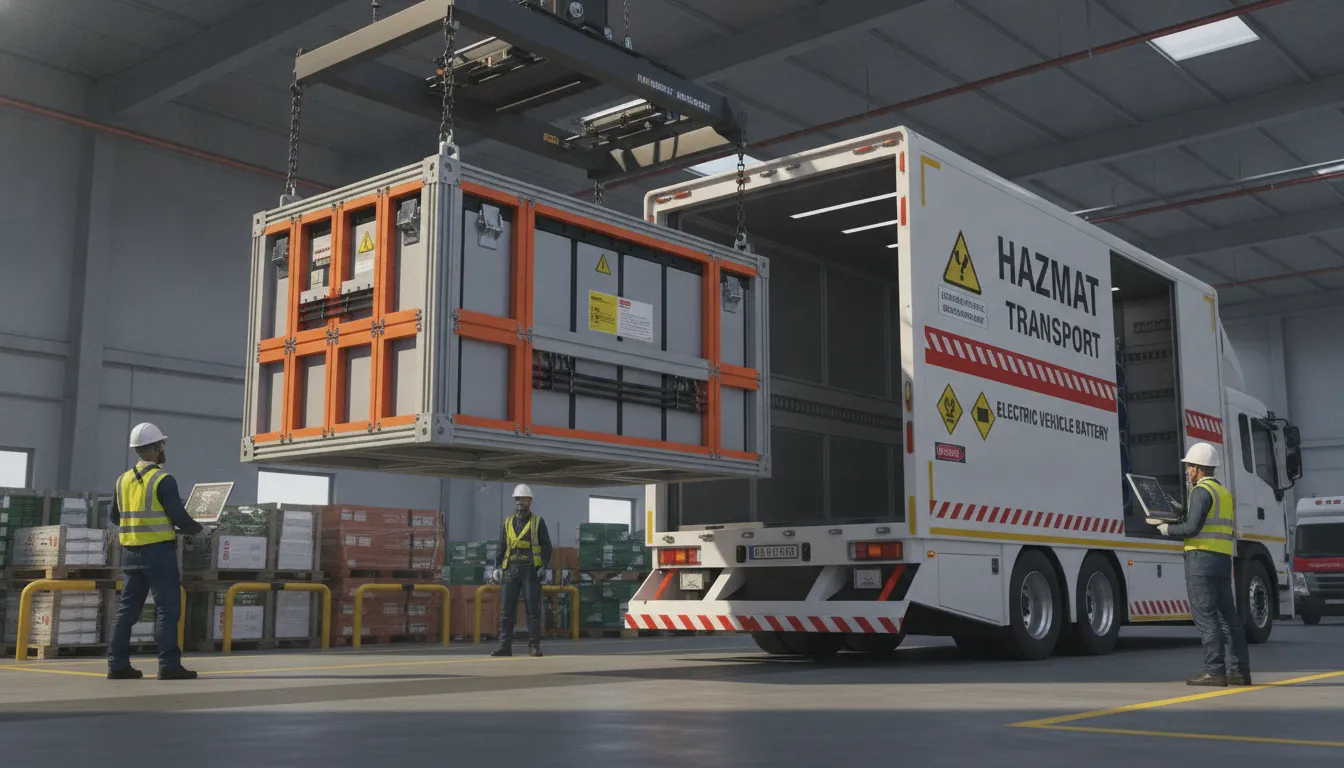
Load One maintains hazmat-compliant vehicles and temperature-controlled equipment capable of handling sensitive automotive cargo. As the EV market expands, providers with this existing infrastructure and compliance expertise will be increasingly vital to keeping new-energy vehicle production lines running efficiently.
What to Look for in an Automotive Logistics Provider
Choosing an automotive logistics provider requires evaluating fleet control, industry experience, tracking technology, border compliance certifications, and 24/7 availability. Asset-based providers with direct fleet ownership generally offer greater control and reliability for time-critical shipments than broker models. Key certifications such as C-TPAT and PIP are essential for cross-border operations.
Selecting the right logistics partner is one of the most important decisions a manufacturer can make to protect production uptime. A strong partner does more than move freight. They function as an extension of the manufacturing team, ensuring every component arrives on schedule. When evaluating providers, look for these key capabilities:
- Asset-based fleet control: Providers that own their trucks and employ their drivers directly have greater control over scheduling, routing, and service quality than brokers who contract with third-party carriers.
- Border compliance certifications: C-TPAT, PIP, and CSA certifications demonstrate that a provider has the security protocols and customs expertise needed for cross-border freight.
- 24/7 dispatch availability: Automotive production runs around the clock, and logistics support must match that schedule with dedicated teams available at any hour.
- Real-time tracking technology: GPS-enabled tracking with customer-facing dashboards and push notifications provides the visibility that lean manufacturing requires.
- Multimodal transport options: Ground expedite for routine time-critical needs and air charter for emergencies gives manufacturers a complete toolkit for any scenario.
Core Logistics Capabilities
Your logistics partner must offer the infrastructure to manage inbound parts flow effectively. This includes warehousing and cross-docking facilities to stage and sequence deliveries, cross-border logistics expertise for US-Mexico-Canada shipments. And specialized equipment for oversized or delicate components such as engines, transmissions, and body panels. Load One’s full-service logistics capabilities include all of these, backed by more than 400 years of combined transportation management experience across the team.
Advanced Technology and Support
High-quality logistics providers differentiate themselves through technology and collaborative support. Electronic data interchange (EDI) integration allows seamless communication between the provider’s systems and the manufacturer’s production planning software. Customer portals with real-time shipment dashboards give logistics managers the visibility they need. Aftermarket logistics for spare parts is another important consideration, ensuring that service parts reach dealers and repair centers efficiently long after vehicles leave the assembly plant.
Comparing Logistics Provider Models
Not all logistics providers operate the same way. Some own their fleet assets directly, while others function as freight brokers connecting shippers with third-party carriers. The table below compares the two models across key criteria:
| Feature | Asset-Based (Load One) | Broker Model |
|---|---|---|
| Fleet Control | Direct ownership of tractors, trailers, and drivers | Relies on third-party carrier network |
| Industry Experience | 400+ years combined transportation management | Varies by individual agent |
| Tracking Technology | Proprietary EDI and mobile app with push alerts | Depends on each carrier’s systems |
| Security Certifications | C-TPAT, PIP, and CSA certified | Varies by carrier used |
| Border Infrastructure | Dedicated 15,000 sq ft Laredo facility | Uses local third-party agents |
| Availability | 24/7/365 dedicated dispatch | Often limited business hours |
Contact Us to Discuss Your Automotive Logistics Needs
Frequently Asked Questions
How do automotive logistics solutions prevent assembly line shutdowns?
Automotive logistics solutions prevent assembly line shutdowns by providing precision-scheduled expedited freight and air charter services that deliver critical parts exactly when production needs them. Asset-based providers with 24/7 dispatch teams can respond to supply chain disruptions within hours, bypassing the delays inherent in standard freight networks. This rapid-response capability keeps JIT production lines running and protects manufacturers from the massive financial losses caused by unplanned downtime.
Why is real-time tracking vital for automotive freight?
Real-time tracking is vital because modern JIT assembly plants carry minimal inventory buffers. GPS-enabled tracking and push-notification systems let logistics managers detect delays the moment they occur and reroute shipments before the plant runs out of parts. This level of visibility has become an operational necessity for automotive supply chains where every hour of delay risks a production stoppage.
What makes cross-border automotive logistics so complex?
Cross-border automotive logistics is complex because components cross US-Mexico-Canada borders multiple times during assembly, each time requiring customs documentation, security compliance, and regulatory clearance. Dedicated border facilities with bilingual specialists and certifications such as C-TPAT and PIP help streamline these crossings. The busiest US-Mexico trade crossing in Laredo, Texas, handles billions in automotive freight annually.
When should a manufacturer use air charter services?
Manufacturers should use air charter services when ground transit is too slow to prevent an imminent line stoppage. Air charter delivers small, high-value components across the country within hours, bypassing all ground-level delays. While more expensive than ground expedite, air freight is cost-effective when compared to the millions of dollars in lost production that result from a plant shutdown.
What are the logistics challenges of EV battery transport?
Electric vehicle batteries are classified as Class 9 hazardous materials under DOT regulations, requiring hazmat-compliant vehicles, certified drivers with hazmat endorsements, and temperature-controlled environments. As EV production scales, manufacturers need logistics providers with existing hazmat infrastructure, specialized containment systems, and proven compliance protocols to handle these shipments safely and reliably.
Ready to Protect Your Assembly Line with Automotive Logistics Solutions?
A single late part can stop your production line and create losses that ripple across your entire operation. Getting the right logistics partner in place protects your uptime and gives you confidence that every component will arrive exactly when needed, every time.
Ready to get started? expedited freight solutions to keep your assembly line running on schedule. Our team is standing by to help you move freight with the speed and reliability that modern automotive manufacturing demands.