Just in Time Delivery: A Manufacturing Guide
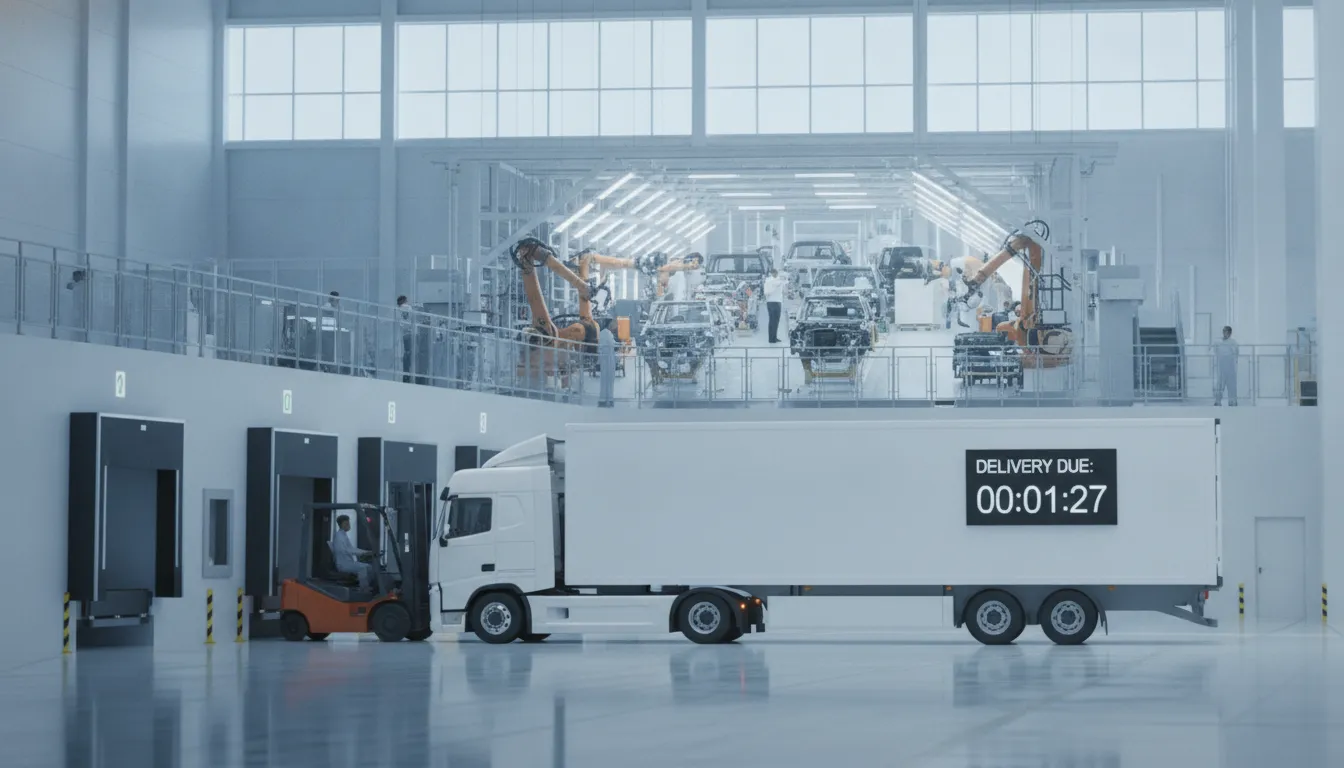
One late component can leave operators waiting, schedules slipping, and an automotive assembly line at risk of stopping. Just in time delivery protects lean manufacturing only when every inbound load arrives inside a defined window and the logistics team can recover quickly from exceptions.
Protect your production schedule with a tailored plan. expedited freight solutions.
Just in time delivery is a logistics method in which materials arrive only when production needs them. It reduces inventory and storage demands, yet leaves little room for delays. A reliable program pairs carefully designed delivery windows with contingency capacity and clear escalation rules.
What is just in time delivery?
Just in time delivery is a way to move goods so they arrive right when a plant needs them. This method helps firms keep less stock on hand. Instead of filling a large room with parts, a business gets only what it needs for the next few hours of work. This approach often links back to the Toyota Production System, which made this way of working famous around the world. It is now a key part of how most plants manage their supply chains.
Moving parts to match work
In a factory, space is a big cost. When a site keeps too many parts, it wastes money and room. Just in time delivery solves this by bringing parts to the line just as workers are ready for them. This helps a team cut out tasks that do not add real value to the product. Many plants use lean tools to find these waste points and make the flow of goods better for the whole shop. By using these tools, a firm can keep its costs low and its quality high.
This method keeps the shop floor clear and lowers the cost of holding stock. It means a plant can change what it makes much faster. But it also means the supply chain must work perfectly. If one truck is late, the whole line might stop. That is why having a strong logistics partner for JIT delivery is so vital for many brands. A good partner knows how to handle the stress of a tight schedule and keeps the line moving.
Beyond simple speed
Some people think just in time delivery is just about fast shipping. While speed is part of it, the main goal is timing. Fast shipping moves a box from one place to another as quickly as possible. In JIT work, a truck might need to wait at a site so it can drop off a part at a set minute. The goal is to match the speed of the work line. This requires more than just a fast driver. It needs a team that knows the whole flow of the plant.
This focus on timing helps plants manage their work order. For example, a car plant might need seats to arrive in a set way to match the cars on the line. If the wrong color seat arrives first, the work slows down or stops. JIT keeps the parts and the work in sync. This allows the plant to keep moving without any breaks or errors in the build process. It turns the supply chain into a part of the assembly line itself.
The benefits and risks of just in time delivery
Just in time delivery is a smart way to run a supply chain. This method brings parts and goods to a plant right when they are needed for work. It removes the need for big stock rooms and keeps a firm lean. Many car makers use this plan to stay ahead of their rivals. While it can save a lot of money, it also brings new risks. If one part of the chain fails, the whole plant could shut down in a few hours. Knowing these trade-offs is key for any shipping leader.
Maximizing daily work flow
The biggest win for this model is how it cuts down on waste. In the past, firms kept huge piles of parts in warehouses. This tied up a lot of cash and took up a lot of floor space. By using just in time delivery, a firm keeps its money free for other needs. A study from the gov shows that lean tools help firms stay strong for the long term. This path cuts out work that does not add value to the final product.
Firms also see fewer issues with old or broken stock. When parts sit for months, they can get lost or damaged. JIT keeps parts moving fast from the truck to the work line. This makes it easier to keep the shop floor safe and clean. It also lets a maker change their plans fast. If customers want a new style of car, the maker can switch tools without throwing away old parts. This agility is a huge plus in a fast market.
Managing the risk of line stops
The main downside to a lean system is that there is no buffer. If a supplier has a fire or a truck gets stuck in a storm, the factory has no extra parts to use. This can lead to a total stop in work. Research shows that managing supply chain risk is vital to prevent these breaks. A single missed delivery can cost a firm thousands of dollars every minute the line is down.
To stay safe, makers must have a rock solid plan. Overcoming JIT delivery challenges requires deep trust in your shipping partner. You need a partner who can track every load in real time. They must have backup trucks and drivers ready to go at any hour. If a road closes, they should be able to move goods by air to keep the plant open. This level of care is the only way to make a lean system work in the real world.
Balancing cost and speed
Choosing this model means finding the right balance between cost and safety. Saving on space and cash is great, but the cost of a shutdown is very high. Firms must weigh the savings of a lean warehouse against the cost of urgent shipping. Often, the best path is a mix of lean work and strong backup plans. This allows a firm to get the best of both worlds without taking too much risk.
| Feature | Just In Time Delivery | Traditional Inventory |
|---|---|---|
| Storage Needs | Very low floor space used | Large warehouses needed |
| Cash Flow | Money stays free for use | Cash is tied up in parts |
| Risk Level | High if a truck is late | Low due to large safety stock |
| Waste | Very low waste and damage | High risk of old stock |
| Agility | Fast to change product mix | Slow due to existing stock |
| Partner Needs | High trust and 24/7 help | Basic shipping services |
How to build a reliable JIT delivery program
Building a just in time delivery plan takes more than just speed. It needs a clear path that links your factory floor to your shipping team. When you reduce stock, you lose your safety net. This means your shipping must be perfect to keep work moving. Successful JIT plans rely on robust process planning to avoid gaps in the flow.
You need a system that spots trouble and fixes it fast. A good plan protects your factory from costly downtime. It also helps you save money by cutting down on extra parts in your warehouse. Logistics leaders must look at the whole supply chain to make this work.
Analyze your production needs
You cannot run a JIT program without good data. You must know exactly how fast your lines move. You also need to know how much material they use each hour. This data tells you when to call for a shipment. A small error here can shut down a whole plant in hours.
Gather your production leads to map out the daily flow. Ask how much stock they need on hand at all times. This helps you set the rules for your new shipping plan. It ensures that every part arrives exactly when the line is ready for it.
Select a reliable shipping partner
A standard truck line may not be enough for JIT work. You need a logistics partner for JIT delivery that can act fast. They should offer real-time tracking so you always know where your parts are. This helps you spot a delay before it stops your line.
The right partner will work with you to plan every route. They should know which roads often have delays. They also need to have back up plans for when things go wrong. Being on time is the most important trait in a JIT carrier.
Manage risks with back up plans
Even the best plans can fail. A storm or a crash can hold up a truck for days. You must manage supply-chain risk with a back up plan. This might mean having a second carrier ready to go. You could also use air shipping when ground is too slow to meet your needs.
Write down your plan for every possible problem. Know who to call and what to do when a truck is late. This keeps your team calm during a crisis. It helps keep the plant running when things go wrong on the road.
- Review your production flow. Look at your daily output and part usage. Map out exactly when parts must arrive to keep the line running. This sets the base for your new shipping schedule.
- Check your supplier readiness. Talk to your suppliers about your JIT goals. Make sure they can pick and pack goods on a tight schedule. They must be as fast and reliable as your shipping team.
- Design your delivery windows. Define tight time slots for your trucks to arrive. JIT shipping often works in windows of just one or two hours. Make sure your team can unload the goods quickly.
- Vet your carrier network. Choose carriers that have the right assets and tech. They must show they can hit tight deadlines every time. Look for partners that offer expedited shipping solutions for JIT.
- Define who owns the fix. Assign one person or team to handle shipping delays. They must have the power to spend money or change modes to keep parts moving. This saves time when every minute counts.
- Review and adjust KPIs. Track how often trucks are on time and how much stock you carry. Use these numbers to make your flow even leaner over time. Constant checks help you find new ways to save.
- Run a controlled pilot. Start your JIT plan with just one line or one part. Watch it closely for a few weeks to find any weak spots. Use what you learn to fix the plan before you grow.
A reliable JIT plan is a living system. It needs constant check ups to stay sharp. As your business grows, your shipping needs will change too. Stay close to your team and your carriers to keep the flow smooth.
How should manufacturers set JIT delivery windows?
Setting the right window is the core of just in time delivery. If a truck arrives too late, the work stops. If it arrives too early, the dock becomes a mess. Success starts with a deep look at your own plant floor. You must map how fast your team uses parts and how much space your dock holds. These plans help you set windows that keep parts moving without wasting time. Most firms find that a window of one to two hours works best for high-volume parts.
Use clear talk to manage windows
A drop-off window only works if everyone knows it. Your carriers need to see the schedule in real-time. This helps them plan their routes and avoid late fees. Good talk also means sharing data from the plant back to the truck. If a line goes down, tell the driver to wait or slow down. This prevents a jam at the gate. Open talk between the dock and the driver is the best way to handle the stress of tight timelines. When everyone has the same data, the whole supply chain works better.
- Review your dock space every day to avoid jams.
- Monitor carrier work across all lanes to find gaps.
- Update shipping windows when your work speeds change.
- Share real-time traffic and plant data with your shipping team.
- Set clear rules for what happens when a truck misses a window.
Why real-time visibility is essential for JIT
To run a lean supply chain, you need more than fast trucks. You must know exactly where your freight is at every second. For companies using expedited shipping solutions for JIT, real-time data is the only way to keep a factory floor running. Without it, a small road delay can turn into a total line shutdown. Data helps you spot these risks before they become disasters.
Milestones and tracking tools
A good logistics plan uses GPS and digital tools to watch every mile. This tech lets you see your load move in real time. It is not just about knowing the truck is on the road. You need to see if it hits each mark on time. This robust process planning is a key part of any JIT setup. It gives you the proof you need to trust your supply chain.
When you have full sight of your freight, you can manage your staff better. You will know exactly when to have workers ready at the dock. This cuts down on idle time and saves money. It also helps you stay on track with your production goals. Clear data means you can make fast choices based on facts, not guesses.
Exception alerts and ETA
Even the best plans can face issues like bad weather or traffic. This is why exception alerts are so vital for overcoming JIT delivery challenges. These alerts tell you the moment a truck falls behind. When you get a warning early, you can act fast. You might change a route or swap to a faster mode of travel to save the day.
Predictive tools also give you a more accurate time of arrival. They look at traffic, weather, and driver hours to give you a clear ETA. This helps you manage risk in a proactive way. As research shows, proactive risk management can keep your business safe during a crisis. It helps you avoid the high costs of a broken supply chain.
Decision-ready communication
Data is only helpful if the right people can see it. A shared dashboard lets everyone stay on the same page. This includes your team, your carrier, and your customers. When everyone has the same facts, you can solve problems together. This leads to faster choices and less stress for your logistics team.
This kind of open talk is a big part of a true logistics partnership. It builds trust and keeps your freight moving. You need a partner who values transparency as much as you do. With the right tools and clear talk, you can hit every window for just in time delivery. This keeps your customers happy and your costs low.
How can contingency planning protect production uptime?
In high-stakes manufacturing, a single late shipment can halt an entire factory floor. Robust contingency planning is a core part of effective just in time delivery management. When a plan deviates, logistics leaders need a clear playbook to stay on schedule. This process starts with setting trigger thresholds to find issues before they become crises. By monitoring real-time data, you can spot delays early and act fast to protect your production uptime.
Building redundant carrier capacity
Relying on one carrier is a risk that most lean operations cannot afford. A strong plan includes a mix of in-house assets and a large partner network. This setup gives you backup options when a primary truck is stuck or delayed. Having a logistics partner for JIT delivery helps you switch loads to new drivers in minutes. This redundancy ensures that a local breakdown does not lead to a costly plant shutdown.
Rapid mode switching and expedite options
Sometimes, a standard truckload will no longer meet your deadline. In these cases, you must switch to faster modes like expedited freight solutions or air freight. Ground expedite uses dedicated vehicles to move freight directly to the destination without extra stops. If ground options are too slow, an air charter can bridge the gap for long distances. These emergency tools allow you to recover from major supply chain breaks and keep your lines moving.
Communication and root cause review
Clear talk is the most important tool during an emergency. Teams must have a set communication cadence to update all stakeholders every hour. Once the crisis is over, a full review of the failure is needed to prevent it from happening again. Research shows that proactive risk management leads to much better outcomes after a supply chain fire. By learning from each delay, you build a more resilient system for future shipments.
Choosing a logistics partner for just in time delivery
Automotive teams managing sequenced parts can review Load One’s automotive manufacturing logistics capabilities, while plant leaders across other sectors can explore support for manufacturing and production logistics.
Choosing a logistics partner for just in time delivery is a big choice. Your pick will affect your production line and your total costs. A good partner does more than move freight. They must act as a part of your own team. They need to know how one late truck can stop a whole plant. This means they must have the right tools, the right network, and a deep focus on speed.
Look for asset based reliability and flexible capacity
A strong logistics partner for JIT delivery should have their own trucks. This gives them direct control over the drivers and the gear. When a shipment is critical, you need to know who is behind the wheel. But a partner also needs a backup plan. They should have a large network of other carriers they trust. This blend of assets and extra capacity keeps your freight moving even when things get busy.
This model is a key part of success. Many firms find that robust process planning and integration are needed for good results. By using a partner with a deep network, you can switch modes or routes in a moment. This protects you from line shutdowns and high costs.
Demand real-time visibility and 24/7 support
In a just in time delivery model, you cannot wait for an email update. You need to see where your truck is at any moment. Your partner must offer tech that gives you live tracking. This helps you plan your labor and your dock space. If a truck hits traffic, you need to know right away so you can change your plans.
Support must also be ready at all hours. Logistics problems do not only happen from nine to five. A good partner is open 24/7, every day of the year. They should have a team ready to handle calls at midnight or on a Sunday. This level of care is what keeps your supply chain safe from breaks.
Check automotive skill and escalation plans
Experience in your field is a must. If you are in the auto world, your partner should know how your plants work. They should have years of work with tight windows and strict rules. Ask them how they handle delays. A good partner has a clear, written plan for when things go wrong.
This plan should show who gets called and what the next steps are. For example, they might have a plan to move a load from a van to a plane if a road is closed. This kind of active risk management helps you stay ahead of trouble. It shows that they are ready for the high stakes of your work.
Frequently Asked Questions
How does just in time delivery benefit manufacturing logistics?
Just in time delivery helps firms cut waste and lower storage costs by getting goods only when they are needed for work. According to researchers, this lean tool helps by cutting out extra steps that do not add value. For car makers, this means keeping less cash tied up in parts while making sure the line stays moving without big piles of stock.
What are the risks of just in time delivery?
The main risk of just in time delivery is a total line shutdown if one part arrives late. Breaks in the supply chain can lead to large losses. This was seen in the different ways Nokia and Ericsson bounced back after a fire. Without a safety stock buffer, any delay from traffic or weather can stop work on the shop floor entirely.
How can companies plan for a just in time delivery disruption?
Good plans use extra carrier choices and fast shipping changes to stay on time. Firms must have a clear path to switch from truck to plane when a delay happens. According to Load One, strong backup planning is the only way to keep the line running when the main route fails during a tight delivery window.
Why is real-time visibility critical for just in time delivery?
Real-time views let managers see possible delays before they cause a plant shutdown. New tracking tech gives the data needed to make fast choices about urgent shifts or route changes. Having 24/7 access to where trucks are helps leaders talk clearly with the team. This openness is vital for managing the tight time windows needed when making goods today.
Ready to Protect Your Just-In-Time Delivery Success?
If one truck is late, your whole factory could stop, leading to lost money and upset customers. You can avoid these problems today by choosing a partner who knows how to handle tight windows and sudden changes. Starting right now helps you build a strong supply chain that handles risk and keeps your parts moving day and night. We give you a clear view of your freight so you can stop worrying about late loads and focus on your work. Take the lead now to ensure your line stays open and your team stays on task because every hour counts.
Ready to keep your production on track? Get a Quote to find the right expedited shipping solutions for JIT and talk to a logistics expert about your needs today.