Navigating US-Mexico Customs: A Cross Border Logistics Guide
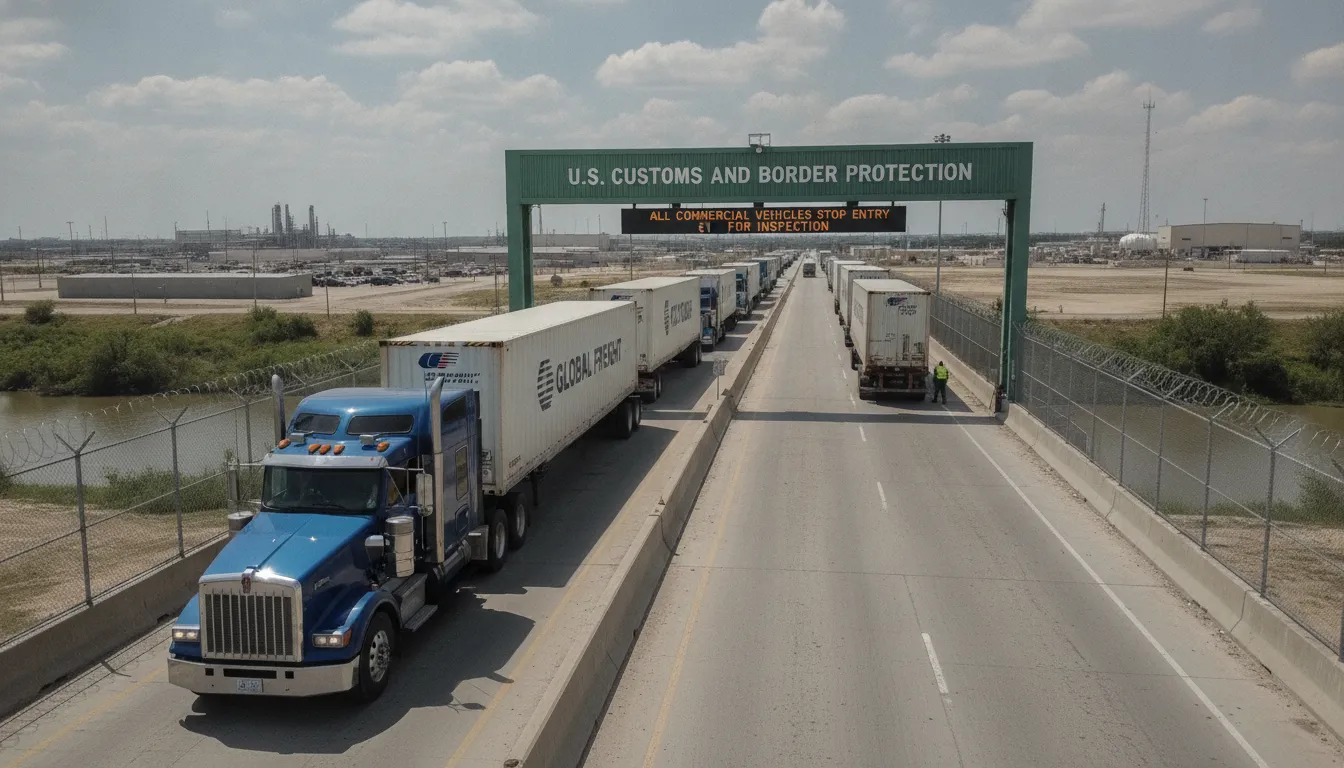
Laredo, Texas is the busiest land port in the Western Hemisphere, handling over 40% of all US-Mexico trade. Every day, roughly 18,000 trucks cross through this single gateway to keep factory lines running across North America. For logistics leaders managing time-critical supply chains, understanding the customs clearance process, security protocols, and transloading requirements at this border is essential to protecting production uptime. Protect your production line with a cross border logistics partner who knows the border from the inside. Get a quote from Load One today. Cross border logistics for US-Mexico trade involves coordinating carriers, customs brokers, and drayage teams to move freight through ports of entry like the World Trade Bridge in Laredo. The process requires careful management of customs documentation, security certifications, and transloading procedures on both sides of the border. This guide covers what supply chain leaders need to know to move freight reliably between the US and Mexico.
Cross Border Logistics: The Scale of US-Mexico Cross Border Trade
The US-Mexico trade corridor is one of the busiest in the world. The Federal Highway Administration reports that Laredo’s World Trade Bridge processes thousands of commercial trucks daily, making it a critical chokepoint for North American supply chains. With nearshoring accelerating the shift of manufacturing to northern Mexico, the volume moving through this region continues to grow.
Managing cross border logistics at this scale requires more than just a trucking company. It demands a partner with physical infrastructure on both sides of the border, real-time tracking capabilities, and deep knowledge of customs procedures. Without these elements, even a single paperwork error can idle a truck for days and shut down a just-in-time production line. For time-critical freight that needs a dependable domestic leg, Load One’s expedited freight solutions connect transportation with operational visibility.
For automotive manufacturers, general manufacturing, and heavy equipment industries in particular, border delays carry enormous cost. A stopped production line can cost tens of thousands of dollars per hour. That is why selecting the right logistics partner is a strategic decision, not just an operational one.
Already planning a cross border shipment? Contact Load One for a customized logistics plan tailored to your freight.
What Happens During US-Mexico Customs Clearance?
Customs clearance for US-Mexico trade involves two separate government agencies and a set of procedures that must be followed precisely. Understanding these steps helps supply chain leaders anticipate delays and choose carriers who can navigate the process efficiently.
The Role of Customs Brokers on Both Sides
A customs broker acts as the liaison between your freight and the government agencies that regulate cross-border trade. In US-Mexico trade, you typically need a broker on each side of the border. The Mexican broker verifies the shipment before it leaves Mexico, confirming that all duties and taxes are paid. A US broker then manages entry into the United States, ensuring compliance with customs and safety regulations. Working with a logistics provider who has established broker relationships reduces the risk of documentation errors that cause delays.
E-Manifest Filing and Port Processing
Before any truck reaches the World Trade Bridge, the driver must file an e-Manifest with US Customs and Border Protection. This digital document tells border officials what the truck carries, who is driving, and where the cargo is going. Filing the e-Manifest early allows CBP to review the data before the truck arrives, which speeds up processing at the gate. Delays often stem from incomplete or inaccurate manifests, making this step one of the most critical in the clearance process.
The DODA Clearance System in Mexico
Mexico uses the DODA system for customs clearance on its side of the border. This digital system assigns a QR code to each shipment, allowing customs officials to scan and verify the load’s status in real time. The code indicates whether the shipment is cleared for entry or requires a physical inspection. Understanding this system is essential for any logistics management services operation because a DODA rejection on the Mexican side can stop a load before it ever reaches the US port of entry.
How Does C-TPAT Certification Accelerate Border Crossings?
The Customs-Trade Partnership Against Terrorism (C-TPAT) is a voluntary program run by US Customs and Border Protection that rewards carriers who meet high security standards with faster border processing. For logistics leaders managing time-sensitive freight, this certification is one of the most effective tools for reducing border wait times.
What C-TPAT Means for Your Shipments
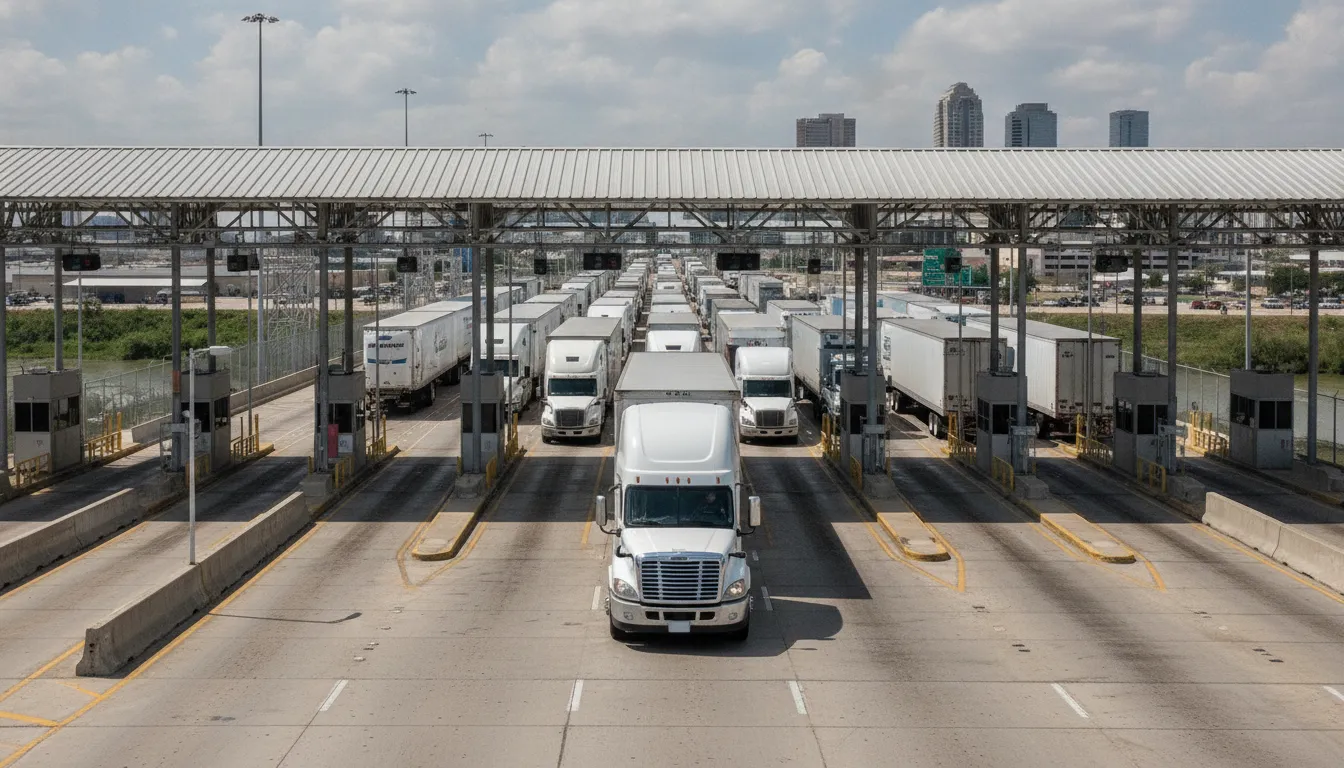
C-TPAT certified carriers are classified as low risk by CBP. This status means their loads face fewer inspections at the border, which translates directly to faster crossing times. Certified carriers also gain access to FAST lanes at major ports. Including the World Trade Bridge in Laredo, where pre-screened freight moves through dedicated lanes with reduced inspection requirements. For expedited shipping, those saved hours can mean the difference between meeting a production deadline and shutting down a line.
The Four Pillars of C-TPAT Security
Becoming C-TPAT certified requires a carrier to implement security measures across four areas:
- Physical security: Fencing, lighting, cameras, and secure gate access at all facilities where freight is handled or stored.
- Personnel security: Background checks and vetting for all employees and drivers who handle cargo, preventing unauthorized access to shipments.
- Procedural security: Documented processes for how goods are packed, moved, and transferred, ensuring no unauthorized items enter a load.
- Access controls: ID cards, passcodes, and biometric systems that restrict entry to secure zones and track who enters and leaves.
Load One holds C-TPAT certification alongside CSA, PIP, and TSA security badges, providing a layered security approach that protects freight at every stage of the journey. For shippers, choosing a certified carrier means fewer border delays and a direct line to CBP contacts if issues arise.
Secure Transloading: A Critical Step at the Border
Transloading is the process of moving freight from one trailer to another at the border. It is a standard requirement in US-Mexico cross border logistics because legal restrictions prevent most Mexican carriers from operating deep inside the United States and vice versa. Understanding how transloading works and choosing a secure facility for it protects your cargo and your schedule.
How the Transloading Process Works
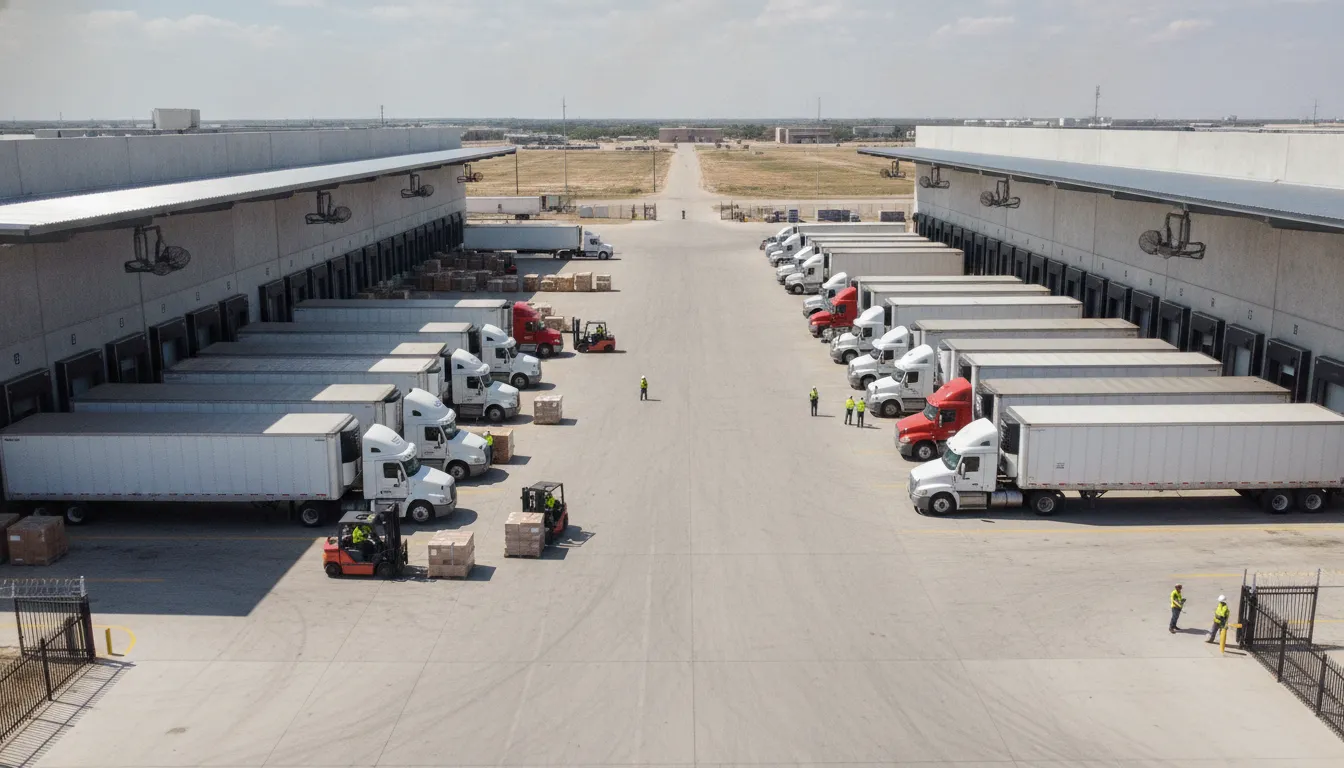
The process begins when the arriving truck reaches a secure transloading facility near the border. Staff verify the shipment against the bill of lading and packing documents before any cargo is moved. Goods are then transferred across a cross dock a loading platform with doors on both sides directly from the arriving trailer to the departing trailer. This process happens in hours, not days, when managed by an experienced team. The Load One Laredo terminal includes a 15,000 square foot facility with full cross dock capabilities for this purpose.
Security Protocols at Transloading Facilities
A high-quality transloading site must have strong perimeter security, constant video surveillance, and strict access controls. These measures prevent theft and tampering during the transfer process. The facility should also have space for vehicle inspections, allowing staff to check trucks and trailers for damage before cargo moves. Choosing a facility that meets these standards reduces risk compared to using an unsecured lot or relying on a broker who outsources this step to an unknown provider.
Critical Documentation for US-Mexico Freight Shipments
Proper documentation is the foundation of smooth cross border logistics. Missing or incorrect paperwork is the most common cause of border delays. Every shipment between the US and Mexico requires a specific set of documents, and each one must be accurate for the load to clear customs without delay.
- Commercial invoice: Details the shipment value, product descriptions, and parties involved. Must be in both English and Spanish.
- Bill of lading: The contract between shipper and carrier, describing the freight, route, and terms of transport.
- Customs bond: Guarantees payment of duties and taxes. Required for all commercial shipments entering the US.
- Certificate of origin: Proves where goods were manufactured, often required for USMCA tariff preferences.
- Arrival notice: Notifies the consignee that freight has arrived at the border and is ready for clearance.
- DODA QR code: Mexico’s digital clearance code, generated when the Mexican customs broker registers the shipment.
- e-Manifest: The digital cargo declaration filed with CBP before the truck arrives at the port of entry.
Download the full cross border shipping checklist to ensure every document is ready before your next shipment.
Why a Dedicated Laredo Terminal Delivers Faster Crossings
Having a physical terminal in Laredo changes the economics of cross border logistics. A dedicated facility gives the logistics provider direct control over transloading, storage, vehicle inspections, and dispatch. This control translates into faster border crossings and fewer delays compared to working with a broker who manages the border remotely.
| Capability | Dedicated Terminal Operator | Standard Cross-Border Broker |
|---|---|---|
| Facility size and control | 15,000 sq ft secure site with cross dock | Shared office or virtual presence |
| Equipment availability | Direct access to owned fleet | Relies on spot-market carriers |
| Bilingual border team | On-site English and Spanish support | Varies by partner availability |
| Transloading speed | Direct on-site control, hours not days | Outsourced with limited oversight |
| Real-time tracking | GPS-enabled visibility on every load | Occasional status updates |
| Customs relationships | Established broker network on both sides | General broker knowledge |
Load One’s Laredo cross-border logistics hub provides these advantages to every customer. The facility enables same-day delivery to northern Mexico manufacturing centers, bilingual support for seamless communication with drivers and customs officials on both sides. And real-time tracking so you always know where your freight is. This asset-based model eliminates the delays that come from depending on broker networks that lack physical border infrastructure.
Ready to streamline your US-Mexico supply chain? Contact Load One for cross border logistics solutions built around your schedule.
Frequently Asked Questions About US-Mexico Cross Border Logistics
How long does customs clearance take at the US-Mexico border?
Typical clearance times range from one to four hours for properly documented shipments moving through ports like the World Trade Bridge in Laredo. Delays occur when documentation is incomplete, when shipments trigger additional inspections, or during peak traffic periods. Working with a C-TPAT certified carrier reduces clearance time by qualifying loads for reduced inspection lanes.
What is the difference between a customs broker and a freight forwarder?
A customs broker specializes in clearing goods through government customs agencies, handling documentation, duties, and compliance. A freight forwarder manages the broader logistics of moving goods from origin to destination, including carrier selection and route planning. In US-Mexico cross border logistics, both roles are often needed, and the best logistics providers maintain strong relationships with brokers on both sides of the border.
Do I need a Mexican customs broker for shipments into the US?
Yes. Most US-Mexico shipments require a Mexican customs broker to clear the goods before they leave Mexico and a US broker to clear them upon arrival. Many cross border logistics providers include broker coordination as part of their service, ensuring both sides handle documentation correctly before the truck reaches the border.
What happens if my cargo gets selected for a physical inspection?
A physical inspection at the border typically adds four to eight hours to the crossing time. The truck is directed to an inspection facility where CBP officers examine the cargo and verify it matches the documentation. Loads from C-TPAT certified carriers are less likely to be selected for inspection, but no shipment is guaranteed to bypass this step entirely.
What is the Laredo World Trade Bridge and why does it matter?
The World Trade Bridge in Laredo is the busiest commercial port of entry on the US-Mexico border. It handles the majority of commercial truck traffic between the two countries and is a critical infrastructure asset for North American supply chains. A logistics provider with a terminal near this bridge can respond to changes in port conditions in real time.
Secure Your Cross Border Supply Chain with Load One
Reliable cross border logistics requires more than a phone number and a broker relationship. It demands physical infrastructure at the border, certified security protocols, experienced bilingual teams, and real-time visibility into every shipment. Load One delivers all of these through our dedicated Laredo terminal, C-TPAT certified operations, and 24/7/365 support team.
Whether you need ground expedite, air freight, specialized transport, or full supply chain management across the US-Mexico border, we build solutions around your production schedule. Our team of logistics professionals brings more than 400 years of combined experience to every shipment.
Get a quote today and experience the difference that a dedicated cross border logistics partner makes.