
Cross Docking Logistics Services for JIT Manufacturing
Get control of warehouse costs with cross docking logistics services that keep just-in-time materials moving. Load One helps manufacturers coordinate freight, dock activity, visibility, and rapid response around production requirements.
Get a Quote for cross-docking logistics services
Cross docking logistics services transfer freight from inbound to outbound transportation with little or no storage in between. That shorter dwell time can reduce inventory holding, warehouse labor, and repeated handling while helping components reach production when scheduled. Load One connects this process with time-critical transportation, shipment visibility, and responsive communication.
Cross-docking is not simply a faster warehouse process. It is a coordinated operating model. Inbound freight, dock doors, handling resources, outbound capacity, and production demand must align. For a broader view of how manufacturers can combine transportation and logistics capabilities, review Load One’s 3PL and supply chain management guide for manufacturers.
What Is Cross-Docking in Logistics?
Load One describes cross-docking as moving goods from an inbound vehicle to an outbound vehicle with little or no storage time between them. Instead of putting freight away, holding it on a rack, and picking it later, the terminal receives, sorts, stages, and transfers the shipment toward its next destination.
The process starts before the truck reaches the dock. The logistics provider needs accurate shipment details, delivery windows, destination information, and handling instructions. The terminal then assigns dock space, labor, and outbound capacity. When the freight arrives, teams verify the load, move it across the facility, and load the next vehicle.
This model can remove several warehouse activities. It may reduce put-away, location management, picking, and repeated movement. It does not remove the need for control. If an inbound truck misses its appointment or an outbound trailer is unavailable, the freight can wait at the transfer point instead of moving through as planned.
Research on cross-docking operations in just-in-time systems describes the technique as distributing products with marginal to no handling or storage time. The practical value depends on matching the technique to freight characteristics, facility capability, and shipment timing.
How does the dock workflow operate?
Scheduling is the control point. The terminal coordinates the inbound arrival, receiving inspection, sorting, transfer, outbound loading, and departure. A reliable workflow normally includes these activities:
- Collect shipment, destination, appointment, and handling data.
- Assign dock doors and handling resources before arrival.
- Receive and verify the inbound freight.
- Sort or stage each shipment for its next movement.
- Load the outbound vehicle and confirm departure.
For manufacturers evaluating warehousing and cross-docking services, the question is operational fit. The provider must manage timing, dock activity, transportation, exception communication, and documentation as one process.
How Do Cross-Docking Logistics Services Reduce Warehouse Costs?
Cross docking logistics services can reduce warehouse costs by shortening the time freight occupies space and reducing the number of times teams handle it. The savings may come from lower storage demand, less put-away and picking labor, fewer touches, and better transportation utilization.
| Cost area | Traditional storage flow | Cross-docking effect |
|---|---|---|
| Storage and space | Products occupy space while awaiting orders or production demand. | Shorter dwell time can reduce storage requirements and free floor space for other work. |
| Warehouse labor | Teams put away inventory, track locations, retrieve items, and pick orders. | Direct transfers can reduce put-away and picking activity. |
| Handling and damage | Goods may move repeatedly between receiving, storage, and shipping areas. | Fewer handling events can reduce exposure to handling-related damage. |
| Transportation | Smaller shipments may require separate trips or underused vehicles. | Consolidation can improve vehicle utilization and reduce unnecessary trips. |
These savings are not automatic. Freight can lose the benefit if schedules are poorly coordinated or if a receiving facility cannot accept the shipment. The operating plan should define delivery windows, dock ownership, appointment changes, and exception escalation before the first movement.
Cross-docking may also delay or avoid a storage expansion when existing capacity can support a higher flow of freight. Research on warehouse operating costs and cross-docking connects reduced storage time with lower holding and facility costs. The result varies by volume, product type, labor model, and facility layout.
Consolidation creates another possible benefit. Combining compatible shipments can improve trailer utilization and reduce duplicate distribution movements. Cornell research on cross-dock consolidation examines how coordinated transfers can support transportation efficiency. Logistics leaders should compare total landed cost, not storage expense alone.
Talk with Load One about your cross-docking logistics services plan
Which Industries Use Cross-Docking Most?
Load One sees cross-docking as a strong fit for industries where inbound materials must move quickly, shipment flows are repeatable, and delays can affect production or customer commitments. Automotive manufacturing, general manufacturing, and heavy equipment operations often have these requirements.
Automotive manufacturers may use cross-docking to move components toward assembly operations with limited storage time. Timing matters because a missing part can interrupt a tightly sequenced production process. The provider must coordinate supplier freight, receiving windows, line-side demand, and contingency transportation.
General manufacturers can use the model for components, finished goods, or shipments moving between facilities. A transfer point can consolidate freight from several suppliers or direct materials toward multiple plants. This can help operations respond to changing demand without treating every shipment as a separate warehouse project.
Heavy truck and equipment manufacturers face additional handling and scheduling requirements. Large, dense, or specialized components need appropriate equipment, clear instructions, and transportation capacity. A cross-dock plan should account for dimensions, weight, packaging, staging space, and safe loading procedures.
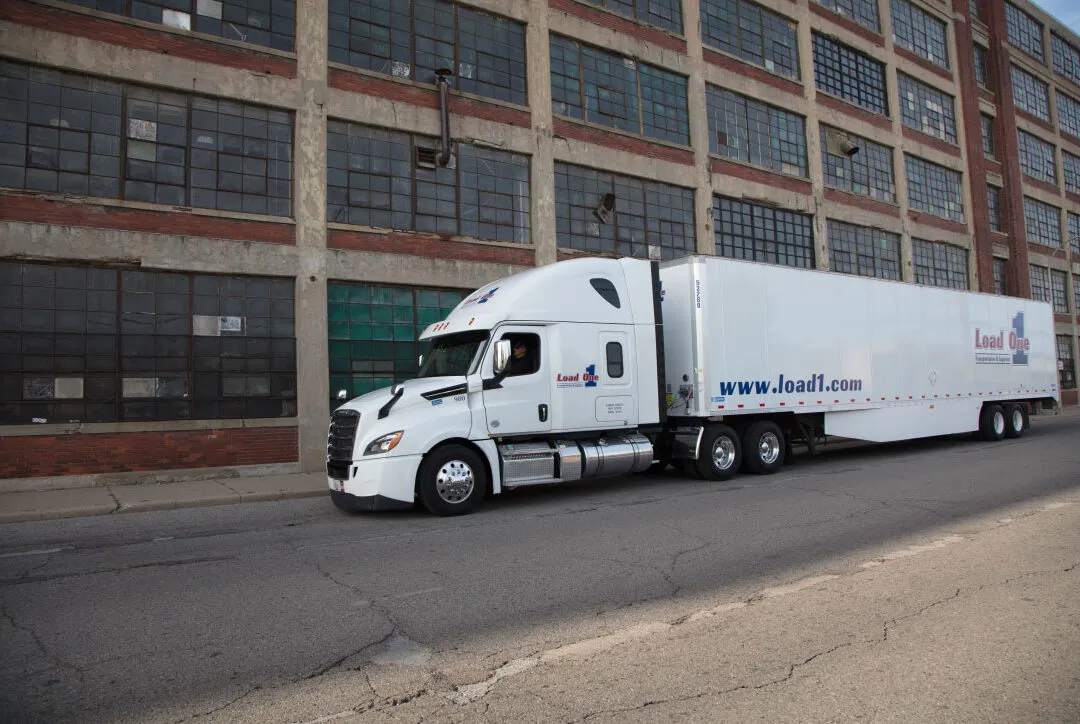
The strongest fit is not defined by industry alone. It depends on shipment urgency, predictable receiving and shipping windows, available dock capacity, and the cost of a missed delivery. Load One supports automotive, general manufacturing, and heavy equipment customers with time-critical transportation and coordinated logistics capabilities.
Cross-border networks can add another layer of complexity. Shipments moving between the United States, Mexico, and Canada require clear handoffs, customs planning, and accurate status updates. Load One’s North American coverage and dedicated Laredo facility support manufacturers that need a coordinated approach across regional supply chains.
How Does Cross-Docking Integrate With JIT Manufacturing?
Load One uses cross-docking to support just-in-time manufacturing by moving components from inbound transportation toward production with minimal storage. The model can reduce dwell time, but it makes schedule accuracy more important. A delivery that arrives too early can create staging pressure. A delivery that arrives late can threaten line continuity.
For a JIT operation, the cross-dock plan should connect each transportation milestone to the production requirement. That includes supplier pickup, line-haul movement, terminal arrival, transfer time, outbound departure, receiving, inspection, and movement to the point of use. A provider with shipment visibility can help the logistics team identify exceptions before they become plant-level disruptions.
Research on cross-docking and supply chain agility emphasizes the importance of coordinated flow. Research on dock assignment and scheduling also shows why door allocation and timing affect throughput.
- Align appointments with production demand. Map component arrivals to line-side requirements. Set delivery windows that account for transit, unloading, inspection, and transfer to the next vehicle.
- Assign dock capacity before freight arrives. Reserve doors, labor, and handling resources for each inbound and outbound movement. Confirm who owns appointment changes.
- Validate freight and routing data. Confirm part references, quantities, destinations, packaging, and special handling instructions before transfer.
- Monitor shipments in real time. Use status updates to coordinate the transportation cycle, not only the moment freight reaches the terminal. Federal transportation research discusses the value of visibility for logistics management.
- Manage exceptions before they affect the line. If a truck is delayed, a component is misrouted, or a dock window changes, communicate the issue immediately and activate the agreed contingency.
This operating model connects transportation decisions directly to plant performance. Cross-docking does not replace planning. It gives planning a tighter operational deadline. Manufacturers should establish escalation contacts, backup capacity, and reporting expectations before using the model for production-sensitive freight.
How Should Manufacturers Evaluate a Cross-Docking Partner?
Load One’s cross-docking approach does more than move freight across a dock. Manufacturers should assess whether a provider can protect production uptime, coordinate time-critical shipments, and adapt when schedules change. The evaluation should cover network reach, capacity, visibility, communication, response time, and cross-border execution.
Confirm capacity and flexibility
Ask how the provider will cover normal demand, urgent requirements, and unexpected volume. Asset-based capacity can provide direct operational control when production deadlines are rigid. The best solution may also combine in-house assets, partner-carrier resources, and third-party logistics capabilities. Load One tailors transportation solutions around the shipment need rather than forcing every load into one service type.
Test visibility and communication
Real-time tracking should show shipment progress throughout the transportation cycle. Confirm what updates your team receives, who owns exception management, and how quickly issues are escalated. Load One emphasizes technology-enabled tracking and transparent communication, which helps logistics leaders make decisions before a delay affects the next handoff.
Verify the response model
Manufacturing disruptions do not follow office hours. Confirm that the partner can respond 24/7/365 and support rapid changes without creating handoff delays. Evaluate the provider against actual lanes, production windows, border requirements, and escalation standards before committing.
North American coverage matters when suppliers, plants, and customers operate across multiple regions. Load One provides comprehensive logistics services for complex, multimodal, and time-sensitive requirements. Its Laredo cross-border facility can support coordination for freight moving through the United States and Mexico. Manufacturers should also review the 3PL service model for manufacturers when cross-docking is one part of a broader supply chain program.
Ask for a clear operating plan before service begins. It should identify the shipment data required, appointment ownership, dock contacts, escalation steps, contingency options, and reporting cadence. This review gives logistics leaders a practical basis for comparing providers beyond a quoted transportation rate.
The plan should also define measurable service expectations. Examples include on-time pickup, on-time delivery, dock-to-dock transfer time, exception-notification speed, and proof-of-delivery completion. Reviewing these measures with the provider creates a shared standard for performance. It also helps the manufacturer identify whether a missed milestone came from transportation, receiving capacity, inaccurate data, or a change in production demand.
Get a Quote for your cross-docking requirements
Before launch, review the first few lanes with the cross-docking partner. Confirm the daily volume, shipment dimensions, appointment windows, required equipment, and receiving contacts. A limited rollout can expose timing or data issues before the process supports a larger production network. Once the workflow performs consistently, the teams can expand coverage with clearer assumptions and fewer avoidable surprises.
Frequently Asked Questions
What is cross-docking logistics?
Cross-docking logistics moves incoming goods to an outbound vehicle with little or no storage between shipments. The process reduces put-away and picking steps, so materials can reach a customer or production site faster. It depends on accurate freight information and coordinated inbound and outbound schedules.
Is cross-docking a warehouse?
A cross-dock is a logistics facility, but it is not designed for long-term storage. Freight is received, sorted, staged briefly, and loaded for its next destination. Some operations may include warehousing, but cross-docking is centered on rapid transfer rather than holding inventory.
How does cross-docking reduce warehousing costs?
Cross-docking can reduce storage, inventory holding, put-away, picking, and repeated handling costs. Consolidating shipments can also improve vehicle utilization and reduce the number of distribution trips. Results depend on shipment volume, timing, facility design, and how well the process fits the broader supply chain strategy.
What companies use cross-docking?
Manufacturers with predictable shipment flows, tight production windows, and limited tolerance for delays are strong candidates. Automotive and other just-in-time operations may use it to move components toward production when needed. A provider should assess freight characteristics, schedules, locations, visibility requirements, and contingency needs before recommending the model.
What should a manufacturer ask a cross-docking provider?
Ask about facility coverage, dock capacity, appointment control, shipment visibility, exception escalation, backup transportation, handling requirements, and cross-border support. The provider should explain how its process connects inbound freight, transfer activity, outbound delivery, and production deadlines.
Get Started With a Cross-Docking Logistics Review
A practical review can help you assess cross-docking, warehousing, and time-critical transportation needs against your production schedules and cost goals. Load One can discuss shipment timing, handling requirements, North American coverage, cross-border coordination, and communication expectations.