
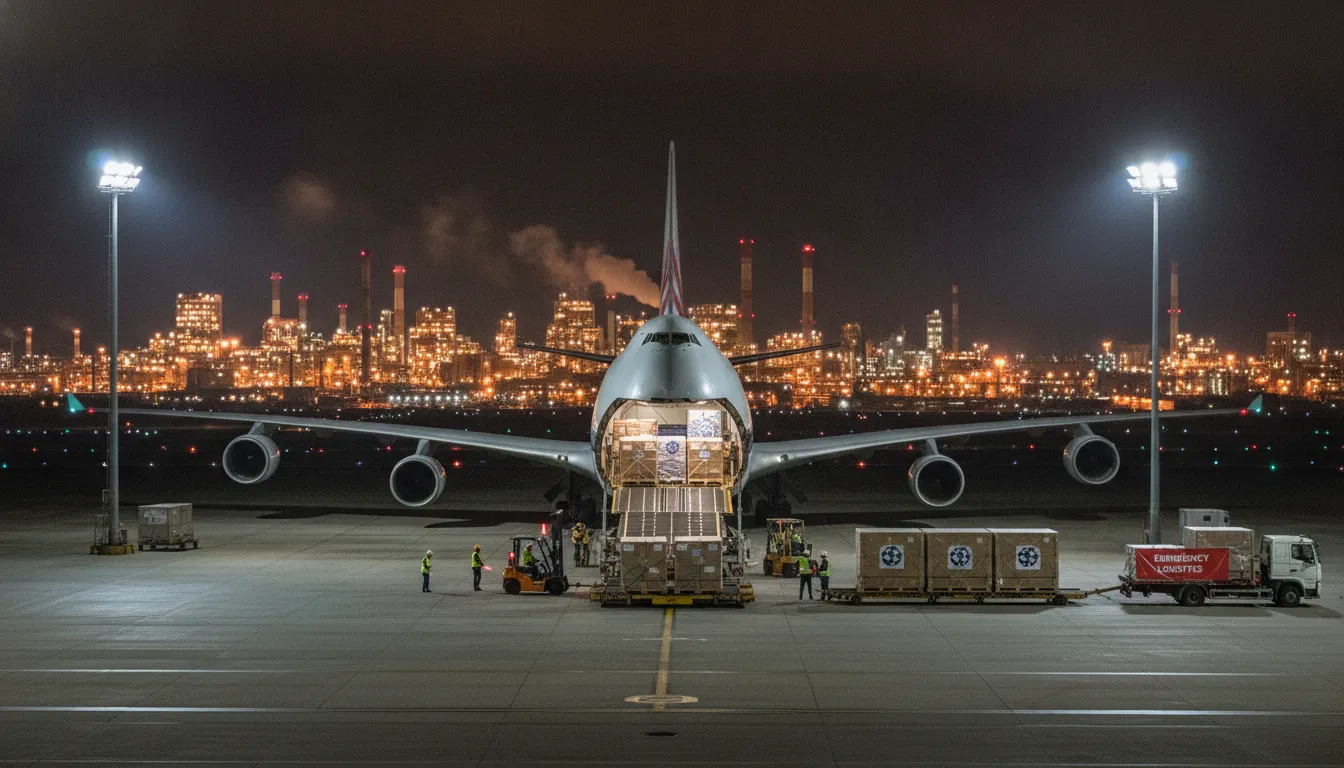
Automotive Air Cargo Charter: Preventing Production Downtime
A single hour of stalled automotive production can cost manufacturers more than one million dollars. These deep losses threaten the health of even the largest global supply chains. Protecting uptime needs a logistics plan that moves as fast as the assembly line itself.
Get a Quote for expedited automotive air cargo charter services and keep your production line running.
The High Cost of Production Downtime in Automotive
An automotive air cargo charter delivers critical parts in hours instead of days, preventing million-dollar assembly line shutdowns. This speed is essential for just-in-time manufacturing where even small supply delays can halt production.
Car making moves at a very fast pace. Most plants use a just-in-time model to stay lean and cut costs. This means they do not keep many extra parts on site. While this helps save space and money, it also creates a lot of risk. If a single part is late, the whole assembly line can come to a stop.
Risks of lean stock
The car sector works with very small buffer stocks to keep costs low. This lean model makes the plant very sensitive to any delay in the supply chain. Research shows that just-in-time production needs high reliability from every partner to work well. One small glitch can cause a large problem if parts do not arrive on time.
A break in the flow can lead to many hours of lost work. When a plant runs out of a key part, workers cannot finish the cars. This puts the entire schedule behind. Companies must find ways to fix these gaps fast to keep things moving. Expert automotive manufacturing logistics help plants manage these tight timelines and avoid parts gaps.
The million dollar per hour problem
The price of a line stop in a car plant is very high. Large car makers can lose over $1 million for every hour of work lost. These big losses come from missed sales and idle workers. A single part delay can also cause cascading delays across the supply chain that hurt other plants too. The cost adds up fast and can hurt the bottom line for the year.
Because the stakes are so high, plants cannot wait for slow trucks when a crisis hits. They need a way to get parts across the country in a few hours. This is why many leaders turn to an automotive air cargo charter. A private plane can fly parts directly to the plant site. This speed helps stop a line stop before it starts and saves millions in lost funds.
Preventing spreading delays
A delay at one plant often hurts others in the network. If an engine plant stops, the final car plant will stop soon after. These ripples move through the whole system very fast. Logistics teams must act with speed to break this chain of events. Reliable transport is the best tool to keep the entire network on time.
Using a dedicated plane ensures that your freight gets the full focus it needs. You do not have to wait for other cargo or follow a set path. This choice gives you the best chance to beat the clock. In the world of car making, a few hours can be the difference between a normal day and a very costly disaster.
How Automotive Air Cargo Charter Prevents Assembly Line Stoppage
A dedicated air cargo charter bypasses ground delays and hub congestion. It delivers parts directly to the plant floor within hours, keeping just-in-time production lines running even during supply chain disruptions.
Rapid Delivery for Tight Schedules
Most shipping is often too slow for urgent needs. Ground trucks can take days to cross the country. But air freight transportation services work in hours. This speed is vital when a plant is low on parts. Air charter is the last resort to keep a plant running. It cuts travel time by a huge amount. This is helpful for long trips.
Many car makers use just-in-time systems. They keep low stock levels to save space and money. This puts them at risk if there is any delay. A single late truck can cause a big problem. If a part does not arrive, workers have no work to do. Machines sit still. The firm loses money every minute the line is down. Air charter skips the traffic and the long roads. It gets parts to the plant floor before the stock runs out.
Direct Paths and Flexible Sizing
Most planes follow set paths. They make many stops at large hubs. This adds time and risk. A special charter takes the most direct path. It flies from the nearest airport to where the parts need to go. This skips the busy hubs where cargo often gets lost or late. It means less handling and less chance for damage. There are no other goods on the plane to slow things down. It also cuts the time needed for key parts. This direct way is the safest path for high-value items.
You can pick the right plane for your load. Small planes carry boxes of small parts. These are great for small parts like nuts or bolts. Large planes can carry heavy gear or big machines. You can even fly a whole car engine if you need to. This choice is key for automotive manufacturing logistics. It ensures you only pay for the space you need. You do not have to wait for a set flight time. The plane leaves as soon as the parts are ready. You are in charge of the timing. This level of control cannot be done with other ways. It is a custom way to fix your exact needs.
Examples of Quick Fixes
Speed is about more than just flying. It is also about how fast a plane gets in the air. Top teams can have a flight ready in one hour. This fast start saves the day for many brands. It lets them act fast when parts run low.
Real-world cases show how well this works. One team moved seat belt parts from China to Mexico. Another group sent rolls of cloth from South Carolina to Mexico. There was even a time when parts went from India to the United States. These long trips would take weeks by ship. They would take days by regular air mail. With a charter, they take less than a day. In each case, a charter plane stopped a factory from shutting down. This protects the firm from huge losses. It keeps the supply chain moving even when things go wrong.
What Emergency Scenarios Require Air Cargo Charter?
Air cargo charter is the fastest response to part shortages, equipment failures, natural disasters, and weather events that threaten just-in-time production lines. It provides hours-not-days delivery when ground routes are blocked or inventory is depleted.
Automotive lines run on tight schedules. These just-in-time systems leave very little room for error. Small problems can stop a whole factory. For many plants, the cost of stopped work is very high. Some car makers lose more than 1 million dollars every hour when a line goes down. These high stakes make fast work a must for supply chain leaders.
Part shortages and supply chain gaps
Part shortages are a big threat to vehicle assembly. Missing even one small part can halt the whole process. Global issues like the recent semiconductor shortage have shown how weak these supply chains can be. When a key part is not in stock, car makers cannot wait for ground freight. A dedicated air cargo charter becomes the only way to get parts to the plant in hours.
Most plants keep very low inventory. This helps save money but adds risk. When a supplier cannot deliver on time, the plant must act fast. An automotive air cargo charter provides the most direct path for these goods. It skips the stops and hubs of standard shipping. This speed keeps the line moving and saves the plant from huge losses.
Equipment failure and plant needs
Tools and machines can break without warning. If a key robot or press fails, the whole plant may stop. Often, the needed repair parts are not close by. In these cases, even a delay of just one hour can trigger an emergency call. Logistics teams must find the fastest way to move heavy or fragile repair tools across the country.
Air charter services can carry many types of cargo. This includes small sensors and large machine parts. These flights allow for flexible timing that standard airlines cannot match. A plant manager can book a flight that leaves as soon as the part is ready. This level of control is vital when each minute of downtime costs thousands of dollars.
Natural disasters and weather events
Bad weather often shuts down roads and ports. Floods, snow, or storms can stop trucks for days. When ground routes are blocked, air freight is the best way to get around the mess. Logistics experts use air charter as a last resort to keep the supply chain open. This ensures that key parts still reach the factory despite the weather.
Fast action is key during a disaster. Load One provides 24/7/365 dispatch to handle these emergencies. Teams work through the night to find planes and plan routes. They watch the weather and find clear paths to the plant. This constant care helps car makers stay on track even when things go wrong on the ground.
Coordinating Door-to-Door Expedited Air Cargo Moves
End-to-end coordination from factory floor to final delivery ensures parts reach the assembly line fast. One team manages pickup, airport logistics, flight, customs clearance, and final-mile delivery for every air charter shipment.
A failed part delivery can stop an entire assembly line. When this happens, an automotive air cargo charter provides the fastest way to get back on track. We manage the full move from the factory floor to the final destination. This door-to-door service removes the stress of handling many different firms during a crisis.
One team for your move
Success in quick logistics needs one team to take charge of the whole path. We start with a fast pickup at your supplier site. Our teams handle the ground moves to the airport and all cargo loading. This full control is vital for automotive manufacturing logistics because it lowers the chance of errors. You get one contact who owns the result and keeps the parts moving.
Car plant supply chains are very sensitive to delays due to lean stock models. Most plants work with low stock to save space and cost. Because of this, even one missing part can cause a total plant shut down. Using a set supply chain logistics plan helps you avoid these costly gaps. We fit every flight to your specific needs so that parts arrive exactly when the line needs them.
Custom planes for any part size
Car parts can be as small as a sensor or as large as a full engine. Our fleet options let us match the right plane to your load. We use small prop planes and large cargo jets to fit your freight. This lets us meet the benefits of air freight for urgent deliveries while keeping your costs in check. No matter the size, we ensure the plane is ready for a fast flight.
Live tracking and data
Knowing where your parts are is key when time is short. We give you full data for every air charter move. You can see the status of your cargo from pickup through the final mile. This tracking lets managers plan for the arrival of the parts. Clear data helps you tell your team when work can start again. We focus on clear data so you are never left guessing about a shipment.
Final-mile delivery is the last step in our door-to-door process. Once the plane lands, our ground team is already waiting. We move the freight from the airport to your site. This quick move ensures the parts reach the floor as fast as possible. Our goal is to protect your uptime and keep your supply chain running smooth.
Cross-Border Automotive Logistics Across North America
Air cargo charter bypasses congested land ports and border delays for US-Mexico-Canada freight. Load One’s Laredo facility and customs expertise ensure parts cross borders in hours, keeping tri-national production lines running.
North American car makers rely on a tough web of parts and plants. Much of this work happens across the borders of the US, Mexico, and Canada. Moving freight between these countries is a daily task for the automotive world. But this work needs deep skill and knowledge of trade paths. Using automotive air cargo charter helps teams move parts fast when every minute counts.
Managing US-Mexico-Canada freight flows
A trade pact links the US, Mexico, and Canada in one huge zone. Modern cars have parts that may cross a border many times before the final build. This setup makes logistics services a key part of the work. Freight must move without stops to keep building on track. Any delay at a port or border can stall an assembly line for hours or days.
Cross-border skill is a key part of North American car building. Teams must know how to move parts through US-Mexico-Canada trade lanes with ease. Large firms often use air charter to bypass busy land ports. This choice keeps vital parts moving even when roads are blocked or slow. It provides a direct path that keeps plants running in all three countries.
The Laredo site and customs planning
Laredo is a major hub for trade between the US and Mexico. Handling freight here needs a focus on speed and care. Load One uses a special site in Laredo to manage these cross-border moves. This site helps teams plan customs and ground moves in one place. Having a local base reduces the risk of lost time or paper errors. Common tasks at this hub include:
- Checking trade forms for the US, Mexico, and Canada.
- Planning safe routes through land ports.
- Tracking loads in real time across the border.
Border rules are a tough part of the trade process. Each border crossing has its own set of rules and forms. Failing to meet these rules can lead to big fines or lost goods. Expert teams work all day and night to ensure every load meets the law. This help is vital for parts that must move fast to stop a shutdown.
Just-in-time moves across borders
Most car plants use a just-in-time (JIT) model for their parts. This model means they keep very little stock on hand at the factory. While this saves money, it also makes the plant prone to trouble from shipping delays. According to research on automotive supply chains, lean stock levels increase the need for fast shipping. When a truck gets stuck, air charter becomes the best way to get parts to the line.
Air charter acts as a backup for JIT building. It fills the gap when standard shipping fails to meet a tight window. Moving parts by air avoids the wait times found at land borders. This speed ensures that a lean plant never runs out of the parts it needs. It protects the bottom line of the maker by keeping the line moving at all times.
When Should You Use Air Cargo Charter Over Ground Expedite?
Use air cargo charter for distances over 500 miles, cross-border emergencies, and situations where downtime costs exceed the premium freight rate. Ground expedite works best for local moves under 500 miles with flexible timelines.
Logistics leaders must choose the best way to move urgent parts when a line might stop. Choosing between air and ground depends on how much time you have. Ground expedite is often the first choice for nearby moves. But long distances or extreme deadlines need a faster path. High-speed shipping helps protect just-in-time systems from cascading disruptions across the supply chain.
Assessing Speed and Distance
Distance is the main factor in your decision. Ground trucks can cover many miles, but they face road delays and driver hour limits. Automotive air cargo charter delivers in hours rather than days. This speed is vital when a part needs to cross the country or a border to keep a plant running. Direct flights bypass the slow steps of standard freight networks.
Urgent needs often arise from small delays that grow into big risks. When ground travel takes too long, air charter provides the most direct path for your parts. This method bridges large gaps in a small amount of time. It is the best tool for emergency scenarios where every minute counts toward production uptime.
Comparing Capacity and Cost
Air charter offers flexible sizes but at a premium price. You can book a small plane for a few boxes or a large jet for heavy equipment. Ground expedite uses vans or trucks for specific cargo loads. While air costs more, the price is small compared to the cost of a halted line. Modern automotive manufacturing logistics focus on total value rather than just the freight bill.
| Factor | Air Cargo Charter | Ground Expedite |
|---|---|---|
| Transit Time | Hours | Days |
| Ideal Range | 500+ miles | Under 500 miles |
| Cargo Size | Highly flexible | Truck or van limits |
| Cost Profile | Premium | Standard expedite |
| Best Use Case | Production downtime emergency | Urgent restock |
Reliability through Asset Control
Asset-based reliability is key for emergency logistics. A carrier that owns its fleet has more control over the move. This direct control ensures better timing and safer handling of critical parts. Choosing a partner with logistics expertise and owned assets reduces the risk of third-party failure. This approach gives you the capacity you need even during peak demand.
Frequently Asked Questions
What is an automotive air cargo charter?
An automotive air cargo charter is a special flight used to move car parts or vehicles. It acts as a direct link between plants to stop assembly lines from shutting down. Unlike normal flights, these trips use private planes to meet tight deadlines. This service is a key tool for makers who need to keep work moving during urgent supply chain gaps.
How fast can an air cargo charter be ready?
As stated by Load One, a special flight can often be in the air within one hour of a deal. This fast response is key for supply chains where a small delay can cost over $1 million per hour. Teams work all day and night to find the right plane and plan ground moves. This speed helps teams fix problems before the plant stops.
What car parts can be shipped by air charter?
This service moves many kinds of parts, from small chips to large machines. It is great for key items like engines or parts that need special care. These flights use many plane sizes, from small prop planes to large cargo jets, to fit what you need to move. This choice allows for the special move of almost any part needed to keep a line running.
How much does an automotive air cargo charter cost?
Prices for air cargo charters are not fixed and depend on a few things. These include the size of the plane, the trip length, and how fast the parts must arrive. Since every urgent case is different, firms give custom quotes for each trip. While the cost is more than a truck, it is often less than the loss from a closed plant.
Ready to secure your automotive supply chain?
Every hour that your production line stays quiet costs your business more than one million dollars in lost sales and high fees. You cannot afford to wait for slow ground shipping when a single missing part can cause a total factory shutdown and hurt you. View our air freight services to see how we handle urgent moves for the automotive industry. Book a fast cargo flight now to get your urgent parts sent in just a few hours and keep your factory line moving. Secure your production schedule today and stay ahead of any risk to protect your brand.
Ready to book a flight? Get a Quote to set up your automotive air cargo charter and avoid a costly line stop.