Mexico Nearshoring Freight Logistics: A Practical Guide
Get a Quote before your Mexico production lanes go live. Nearshoring can shorten replenishment cycles, but it also creates new demands for border coordination, customs documentation, capacity, and shipment visibility. A missed handoff can put an entire manufacturing schedule at risk.
Companies use mexico nearshoring freight logistics to connect Mexican production with US plants through planned cross-border capacity, customs support, real-time tracking, and rapid response options. The right operating model protects production uptime while accommodating regular shipments and time-critical exceptions.
Mexico is attractive because regional manufacturing can support faster time-to-market and stronger supply chain resilience. However, the benefits depend on how freight moves between facilities, carriers, border gateways, and final destinations. Load One supports this planning with full-service transportation management, cross-border expertise, and a dedicated Laredo facility. Review the US-Mexico cross-border freight operational guide as you assess the operational reasons behind Mexico’s growing role in North American manufacturing. For coordinated cross-border planning, explore our logistics management services.
Contact Load One to start planning your cross-border freight program.
What Is Nearshoring and Why It Is Growing in Mexico
Nearshoring means moving production closer to the consumer market. For US manufacturers, that often means shifting some production, sourcing, or assembly from distant offshore locations to Mexico. The goal is to shorten transportation distances, improve supply chain responsiveness, and reach customers faster.
Mexico has become a major nearshoring destination because it sits next to the United States. Manufacturers can move freight by road between production sites, distribution centers, and US facilities. This proximity supports more frequent shipments and reduces dependence on long ocean routes. It also gives logistics teams more options when demand changes or production schedules move.
The shift gained momentum after global disruptions exposed weaknesses in long-range offshore manufacturing models. Extended transit times made delays harder to recover from. Port congestion, factory interruptions, and limited transportation capacity created greater risk for companies that depended on distant suppliers. Regional production does not remove every risk, but it can make disruptions easier to identify and manage.
Cost pressure is another factor. Offshore manufacturing costs have risen in some markets, while companies also weigh inventory carrying costs, disruption exposure, and the cost of missed production. Nearshoring can support a broader total-cost analysis. The decision is not based on factory cost alone. Transportation, customs, inventory, service levels, and time-to-market all matter.
Demand for faster time-to-market has made proximity more important. Manufacturers serving automotive, EV, heavy equipment, and other industrial markets need dependable material flow. Shorter regional lanes can support faster replenishment and more responsive production planning. They also require disciplined cross-border freight management, accurate documentation, and clear communication across each handoff.
The scale of this shift is visible in trade activity. US-Mexico trade reached approximately $840 billion in 2024, and Mexico became the largest US trading partner. An industry survey also found that about 80% of chief operating officers planned to expand nearshoring within two years. These figures point to sustained demand for North American manufacturing and transportation capacity.
For companies adapting to North American nearshoring, freight planning must begin before production moves. Teams should evaluate border crossings, customs requirements, shipment frequency, backup capacity, and delivery windows. A practical approach to adapting to North American nearshoring connects manufacturing decisions with transportation execution.
Nearshoring is growing in Mexico because regional production can improve access to US markets, reduce exposure to distant supply chain disruptions, and support faster delivery. Its success depends on reliable cross-border freight logistics, accurate customs processes, and transportation capacity aligned with production needs.
How Nearshoring Changes Freight Logistics for US Companies in Mexico
Nearshoring changes more than a factory location. It changes shipment frequency, lane design, delivery windows, and the response required when production schedules move. US companies sourcing or manufacturing in Mexico often need freight plans that connect suppliers, plants, border crossings, and distribution points with fewer handoffs.
Production shifts can create new recurring lanes between Mexican manufacturing centers and US plants. Volumes may begin as smaller, frequent shipments before stabilizing into dedicated truckload or cross-border programs. Automotive and EV manufacturing can also increase the need for controlled timing. A delayed component can affect an entire production line.
Why do just-in-time shipments require faster decisions?
Nearshored operations often support just-in-time or just-in-sequence production. That limits the buffer available for weather, border congestion, missed appointments, or documentation issues. Transportation teams need clear escalation procedures and access to expedite capacity when a standard movement will not protect the required delivery time.
Expedite demand can rise as companies adjust production forecasts, qualify new suppliers, or respond to changing customer orders. A reliable provider should manage planned freight and urgent recovery shipments through the same operating model. Load One combines transportation management experience with ground expedite, cross-border logistics, and rapid response capabilities. The company brings more than 400 years of combined transportation-management experience to complex freight decisions.
How does real-time visibility support Mexico freight logistics?
Real-time shipment visibility helps teams identify risk before a missed delivery becomes a production problem. Operations leaders can monitor status, coordinate receiving teams, update plant schedules, and escalate exceptions with better information. Load One uses tracking technology to support visibility across North American shipments and maintains 24/7/365 availability for time-critical needs.
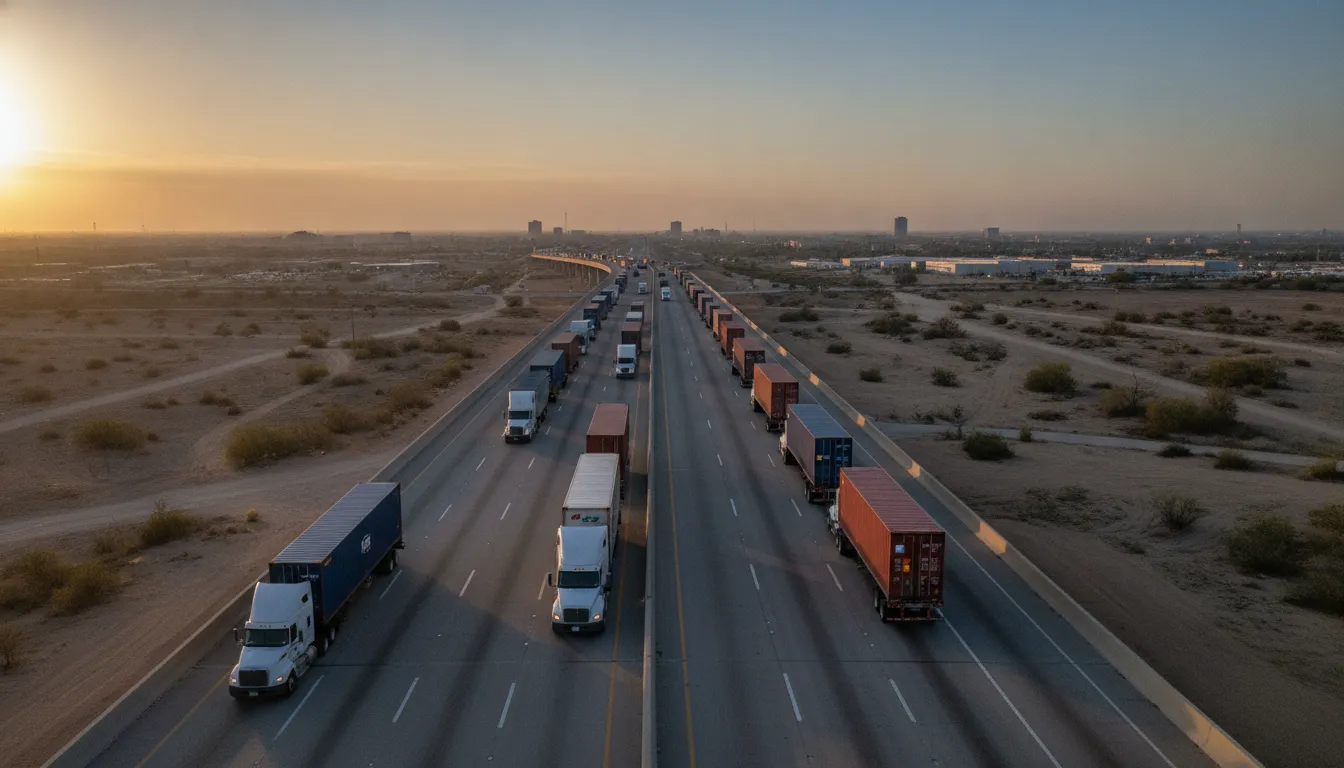
The border crossing also becomes a central planning point. Laredo, Texas connects freight moving between Mexico and major US manufacturing markets. Load One maintains a dedicated 15,000 square foot cross-border facility in Laredo, supporting US-Mexico trade and customs clearance needs. Learn more about the Laredo Texas gateway for Mexico freight.
Nearshoring changes freight logistics by increasing the need for coordinated lanes, tighter delivery control, and fast recovery options. US companies should plan around border operations, not treat them as a final handoff. Real-time tracking, customs support, Laredo capacity, and 24/7/365 response help protect production uptime as Mexico freight volumes grow.
Key Freight Challenges for Nearshored Manufacturing Operations
Nearshored manufacturing depends on consistent freight movement across a border with changing conditions. A delay at a crossing can interrupt production schedules, labor planning, and customer commitments. Manufacturers must manage several risks at once, from congestion and customs documentation to sudden capacity shortages and urgent replacement shipments.
Border congestion and customs compliance
Border traffic can fluctuate quickly. Congestion at major gateways creates uncertain transit times, especially when shipments arrive without complete documents or clear ownership of customs tasks. The Laredo Texas gateway for Mexico freight is a critical connection between Mexican suppliers and US manufacturing hubs. Planning must account for crossing procedures, handoffs, inspection risk, and delivery appointments after the border.
Mexican customs requirements also demand precise preparation. All import declarations must include the Importer of Record’s RFC, or Tax ID, regardless of shipment value or transport mode. Customs compliance also covers tariff classification, valuation, licensing, and applicable Official Mexican Standards. The US Department of Commerce explains these requirements in its Mexico customs regulations guidance.
Value documentation adds another potential hold point. Mexico’s Manifestacion de Valor must be transmitted through VUCEM, the Single Window for Foreign Trade. The requirement became mandatory on December 9, 2025. Exporters and importers need aligned records before freight moves. Errors can lead to delays, reassessments, or additional operating costs.
Capacity swings and visibility gaps
Nearshoring can create uneven demand across lanes. A new production launch may require more trailers, specialized equipment, or cross-border capacity than the existing network can provide. Seasonal demand, supplier changes, and plant shutdowns can tighten capacity with little notice. Without a contingency plan, a single missed pickup can affect an entire production sequence.
Visibility is another challenge. Basic status updates may not show where a shipment is held, which party owns the next action, or whether a delivery appointment remains achievable. Manufacturing teams need technology-enabled tracking and direct communication. Load One supports nearshoring operations with 24/7/365 visibility, so logistics leaders can identify exceptions and act before they become line-down events.
Emergency expedite requirements
Even a well-planned network will face urgent needs. A supplier may miss a production window, a component may fail inspection, or a plant may need a replacement part immediately. The response must cover more than booking a truck. It may require cross-border coordination, customs clearance support, alternate routing, and status updates throughout the move.
Nearshored manufacturers reduce freight risk by preparing customs data early, securing flexible cross-border capacity, and maintaining continuous shipment visibility. Load One combines customs clearance support with 24/7/365 coordination and emergency expedite capabilities. That support helps protect production uptime when border conditions, capacity, or supplier performance changes without warning.
How to Build a Reliable US-Mexico Supply Chain
Start with a cross-border transportation partner that understands your production requirements, customs process, and delivery windows. Nearshored manufacturing needs more than point-to-point capacity. It needs coordinated planning across plants, carriers, warehouses, customs specialists, and receiving teams.
Choose a dedicated cross-border provider
Evaluate providers on their ability to manage the full movement, not only the linehaul. Ask how they handle customs documentation, carrier coordination, border transfers, delivery appointments, and exceptions. Customs regulations cover documentation, tariff classification, valuation, licensing, and compliance with Official Mexican Standards. A capable logistics partner should help identify missing information before a shipment reaches the border.
Review the provider’s experience with your freight profile. Automotive and EV manufacturing may require scheduled component deliveries, specialized equipment, and rapid recovery when a shipment is delayed. Confirm the provider can support both routine moves and urgent freight without creating separate communication channels.
For additional planning guidance, review this resource on navigating US-Mexico customs.
Build visibility into every shipment
Real-time visibility should cover pickup, border progress, customs status, transfer points, and final delivery. Require clear milestones and proactive alerts. Your team should know when a shipment is at risk before the missed delivery affects production.
Visibility also improves communication between US facilities, Mexican suppliers, carriers, and receiving teams. Establish one accountable contact for updates and escalation. Define who receives alerts, what qualifies as an exception, and how quickly the provider must respond.
Plan for expedite contingencies
Nearshored operations need a documented recovery plan. Identify critical parts, approved alternate modes, emergency contacts, and decision thresholds before an incident occurs. The plan should address missed pickups, border holds, equipment shortages, weather, and plant schedule changes.
Use regular reviews to update the plan as volumes and lanes change. A provider with 24/7/365 availability and rapid emergency response can help protect production uptime when standard routing is no longer sufficient.
Position inventory near the border
Warehousing and cross-docking near Laredo can support faster transfers between Mexico and US manufacturing locations. These services can consolidate freight, stage time-sensitive components, and reduce unnecessary handling at destination facilities. Load One maintains a specialized 15,000 square foot cross-border facility in Laredo, Texas, for US-Mexico trade.
Use the facility model that matches your operation. Cross-docking may suit predictable flows with short dwell times. Warehousing may provide more control when production schedules vary or shipments need temporary staging. Review lane performance, inventory requirements, and border activity together. The Laredo Texas gateway for Mexico freight can be an important part of that assessment.
A reliable US-Mexico supply chain combines dedicated cross-border expertise, customs support, real-time visibility, contingency capacity, and border-adjacent warehousing. This framework helps nearshored manufacturers respond faster, reduce avoidable delays, and protect production schedules as freight volumes grow.
Why an Asset-Based Cross-Border Carrier Reduces Nearshoring Risk
Nearshored manufacturing depends on freight execution at every handoff. A pure broker may arrange transportation, but an asset-based carrier can provide more direct operational control. That difference matters when a delayed component threatens a production schedule.
Direct access to equipment and capacity gives transportation managers a clearer response path. The carrier’s dispatch team can evaluate available resources, assign the right equipment, and coordinate the move without relying on multiple external decisions. This structure also creates clearer accountability. A dedicated dispatcher can monitor the shipment, communicate changes, and stay responsible for the outcome.
| Operating Model | Capacity Control | Expedite Response | Visibility |
|---|---|---|---|
| Freight broker | Arranges capacity from external carriers | Depends on third-party availability | Limited by multiple handoffs |
| Asset-based carrier | Direct access to owned equipment | Dedicated dispatch and faster recovery | Real-time tracking across the move |
How does direct control support production uptime?
Nearshoring often involves recurring lanes, scheduled replenishment, and time-sensitive parts. A carrier that understands the operating pattern can plan capacity around those requirements. It can also identify risks earlier, such as a missed pickup, border documentation issue, or equipment mismatch.
When an emergency occurs, the response process becomes even more important. Asset-based capacity can support faster expedite decisions when a plant needs a recovery shipment. The objective is not simply to move freight. It is to protect production uptime through rapid coordination, accurate status updates, and reliable delivery commitments.
Load One supports these requirements with more than 400 years of combined transportation management experience, real-time tracking technology, and 24/7/365 availability. Its team also provides customs clearance support for freight moving between the United States and Mexico. These capabilities help operations leaders manage both routine shipments and urgent exceptions.
Why does a Laredo presence matter for Mexico freight?
Laredo is a critical gateway for freight moving between Mexico and US manufacturing hubs. Load One maintains a dedicated 15,000 square foot cross-border facility in Laredo, Texas, to support US-Mexico trade. A local operating presence can improve coordination around border movements, staging, and cross-border handoffs.
That support is especially relevant for automotive, EV, and other manufacturing operations with strict delivery windows. Teams can use the US-Mexico cross-border freight operational guide to review the planning factors that affect these shipments. Then they can align carrier capacity, customs support, and visibility requirements before production is exposed.
An asset-based cross-border carrier reduces nearshoring risk by combining direct capacity control, accountable dispatch, emergency expedite support, and shipment visibility. With a Laredo facility, customs clearance support, and 24/7/365 availability, Load One helps manufacturers maintain consistent delivery performance and protect production uptime across US-Mexico lanes.
Get a Quote to discuss building a reliable nearshoring freight program with an asset-based partner.
Frequently Asked Questions
What freight services do nearshored manufacturers typically need?
Most operations need coordinated cross-border truckload, expedited freight, customs support, and shipment visibility. Automotive and heavy equipment manufacturers may also require time-critical recovery moves, specialized transport, warehousing, or cross-docking when production schedules change.
How can companies reduce customs delays when shipping between the United States and Mexico?
Start with accurate commercial documents, tariff classification, valuation, licensing, and required product standards. Mexico customs regulations also require the Importer of Record’s RFC tax ID on import declarations, regardless of value or transport mode, according to the U.S. Department of Commerce.
Why is Laredo important for Mexico nearshoring freight logistics?
Laredo connects Mexican production with major U.S. manufacturing markets and is a critical gateway for cross-border freight. A provider with local operational capacity can coordinate transfers, customs clearance support, and exception management near the crossing.
What should a company look for in a cross-border logistics provider?
Look for proven Mexico and U.S. coverage, customs expertise, real-time tracking, rapid emergency response, and dependable communication. A provider should also offer scalable capacity and a clear contingency plan for border delays, missed appointments, and urgent production loads.
Get a Quote for your Mexico nearshoring freight logistics needs. Load One combines asset-based cross-border capacity, a dedicated Laredo facility, customs clearance support, and real-time shipment visibility to protect your production uptime. Our team works with automotive, manufacturing, and heavy equipment operations to plan both recurring lanes and time-critical exceptions across the US-Mexico border.
Talk to the Load One team today about your cross-border freight requirements. We will help you design a reliable supply chain that keeps components moving and plants running.