
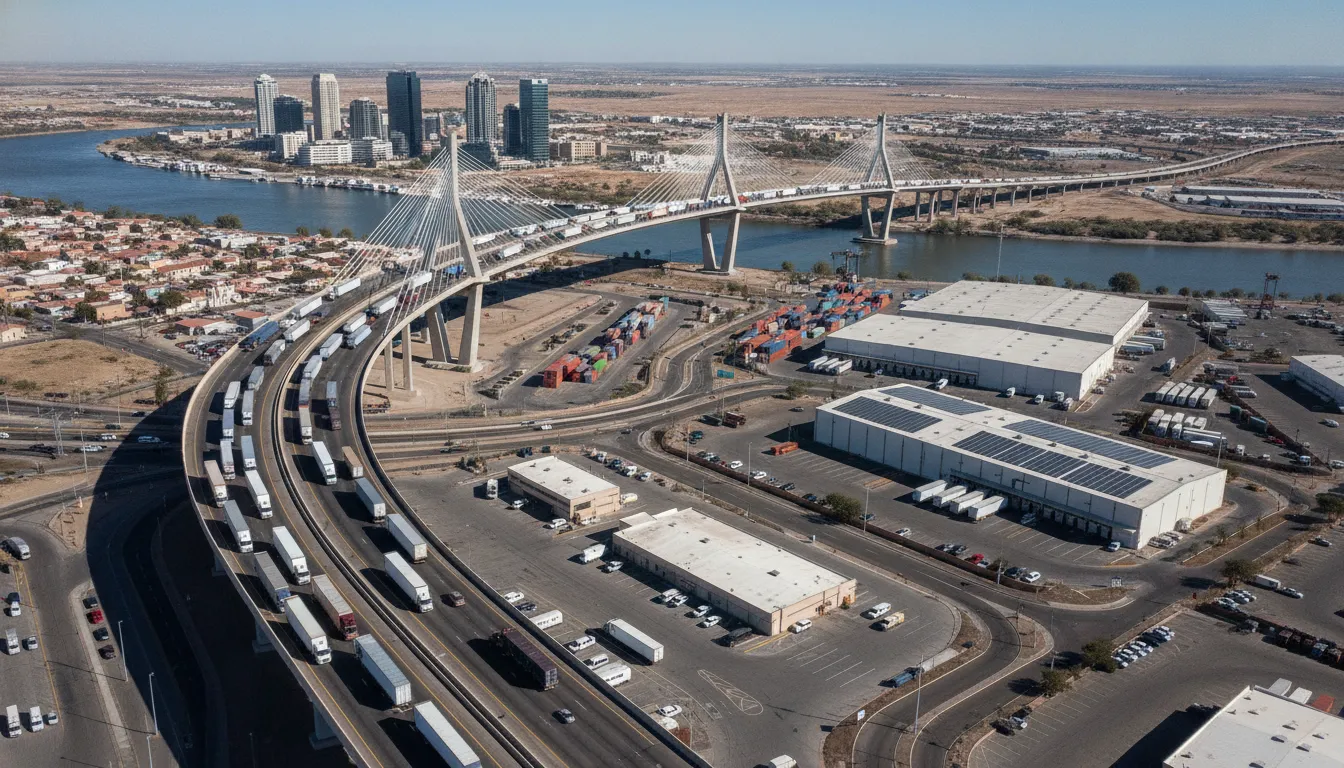
Supply Chain Resilience 2026: Adapting to Nearshoring in North America
Industrial manufacturing plants lose up to fifteen thousand dollars for every single minute their assembly lines stand still. To protect production uptime, leading manufacturers are moving their operations closer to North American consumers. This massive shift of factories to nearby regions is completely reshaping regional trade lanes. Businesses can no longer rely on fragile ocean shipping routes across the globe to keep their factories running.
To secure their operations, modern businesses are prioritizing supply chain resilience 2026 by moving production closer to North American consumer markets. This shift to nearshoring reduces shipping distances and eliminates the extreme delays of transoceanic transit. By shifting factories to countries like Mexico, manufacturers can replace fragile multi-week global supply lines with rapid ground transit. This geographical shift allows companies to quickly adapt to market disruptions and secure critical parts on demand. When emergencies occur, reliable expedited carriers provide the critical ground shipping and air charter services needed to maintain production. This proactive strategy ensures that assembly lines remain active even during major global disruptions.
As logistics managers redesign their freight networks, they must first understand how regional trade lanes are changing. This brings us to a critical question about the future of modern industrial transport. What Does Supply Chain Resilience Mean in 2026? Let us look at the new standards for cross-border freight and expedited transport. Here’s how. For coordinated cross-border planning, explore our logistics management services.
Supply Chain Resilience 2026: What Does Supply Chain Resilience Mean in 2026?
Define Active Adaptation
In 2026, supply chain resilience 2026 has evolved from static risk planning into active, real-time adaptation. Modern networks must have the ability to adapt to sudden disruptions without affecting the flow of goods to their final destinations. This active state means your systems constantly reroute shipments and adjust stock levels as delays happen, rather than waiting for a crisis to end before taking action.
Disruption Drivers and Demand Balance
Global logistics networks face constant disruptions from pandemics, geopolitical tensions, and policy restrictions. To protect production uptime, logistics managers use strategies that address demand and supply imbalances in real time. Organizations that build these active links into their daily operations can absorb sudden changes and maintain smooth cargo movement across borders.
Why Is Nearshoring Reshaping North American Freight Networks?
Nearshoring is rapidly changing how goods move across North America. To build stronger supply chain resilience 2026, many companies now move their production from Asia to Mexico. This shift brings factories much closer to US consumers and cuts shipping times. It also reduces the risk of global transport delays.
The shift from ocean to truck lanes
In the past, most US imports came across the ocean from China. But US tariffs on Chinese goods in 2018 and 2019 changed that path. A report from the Federal Reserve shows that Mexico then became the top import supplier to the US. This trade shift moved freight from cargo ships to cross-border trucks and trains. About 53% of Mexico’s trade gains came directly from those US tariffs on China.
Mexico gains lead in US trade
This trade pattern is not a short trend. Mexico now holds a strong 16.3% share of all US trade. Recent data shows that Mexico continues to widen this trade gap over other nations. By moving manufacturing closer, companies gain better control over their freight. This strong cross-border network helps logistics managers keep assembly lines running without interruption.
The Numbers Behind the Shift: US-Mexico Trade at Record Levels
Recent trade data shows that nearshoring is a deep shift in global logistics. Trade between the United States, Mexico, and Canada reached a record $1.57 trillion. This commerce makes up 30.8% of total United States trade. Trucking is the main driver of this trade, moving 72.2% of all freight between the United States and Mexico. You can find more details on these trends from the Bureau of Transportation Statistics.
Growth in Cross-Border Freight
The pace of this shift continues to accelerate. Truck crossings between the United States and Mexico rose 18% since 2023. Annual foreign direct investment in Mexican manufacturing went past $40 billion in 2025. This funding shows that companies are building long-term supply chain resilience 2026. Experts project cross-border freight will grow by 8% to 12% each year through 2030.
Lower Costs and Stronger Operations
This shift helps firms protect production uptime by moving hubs closer to home. Moving operations to Mexico cuts transportation costs by about 20%. Closer hubs also reduce transit times and lower transit risks.
| Metric | 2019 Pre-Nearshoring | 2025/2026 Current | Change |
|---|---|---|---|
| US-Mexico-Canada trade volume | $1.2T | $1.57T | +31% |
| Mexico share of US imports | ~14% | 16.3% | +2.3 pp |
| Annual FDI in Mexican manufacturing | ~$25B | $40B+ | +60% |
| US-Mexico truck crossings (index) | Baseline | +18% | +18% |
| Transportation cost (ocean vs truck) | Baseline | ~20% lower | -20% |
Companies can learn more about managing cross-border logistics on our cross-border services page.
How Are JIT Manufacturing Models Adapting to Nearshoring?
Just-in-time (JIT) manufacturing is shifting fast in the nearshoring era. To build supply chain resilience 2026, plant managers are moving from pure lean storage to smart parts buffers. New trade rules and port delays make zero-stock setups risky. A single missing component can pause an assembly line, which costs manufacturing brands up to 22,000 dollars per minute, according to study data hosted on ncbi.nlm.nih.gov.
The Rise of Regional Warehousing
Modern lean setups do not rely solely on cross-border transits. Instead, firms hold a few days of high-risk parts in local hubs. This hybrid method blends low carrying costs with safety stock. It keeps plants running smoothly even when border clearance slows down.
Why Asset-Based Expedite Carriers Matter
To keep buffers thin, plants need fast transit they can trust. Asset-based carriers run their own trucks and can guarantee on-time drop-offs. When supply chains face unexpected delays, using a direct transport fleet is the best way to bypass delays. You can learn more by checking our resource on automotive logistics solutions JIT manufacturing to see how elite carriers keep assembly lines moving.
Cross-Border Logistics: What Shippers Should Know in 2026
Managing cross-border freight requires extra care in 2026. Trade routes face new challenges that test corporate strategy. Shippers must adapt to key shifts at both borders to keep goods moving on time.
How do fast lanes ease border transit?
Dedicated commercial lanes offer a reliable way to avoid delays. Government programs speed up customs checks for approved carriers. Using these options helps protect your supply chain resilience 2026 goals.
The U.S. Customs and Border Protection agency manages the Free and Secure Trade program to simplify clearance. Shippers can verify program rules and lane availability on the official CBP website. Joining these programs reduces inspection times from hours to minutes.
Why are border hubs facing more congestion?
Many firms now move cargo from ships to trucks. This ocean-to-truck shift strains port facilities. Port congestion has risen because of this change in freight lanes.
To bypass these bottlenecks, logistics managers are changing their strategies. They use border transload setups and Mexico freight consolidation. Having flexible plans helps carriers find alternative paths when main routes stall.
What makes Laredo a strategic hub?
The city of Laredo serves as a critical point for North American trade. Having a physical presence there is key to fast shipping. A local base helps resolve customs issues and coordinate drivers with ease.
Load One operates a dedicated Laredo facility to support cross-border freight. This site lets shippers transload goods quickly and swap trailers. Using a single partner for both sides of the border makes your logistics simple and reliable.
Building Supply Chain Resilience Through the Right Carrier Partner
A strong supply chain resilience 2026 plan needs the right partner to keep freight moving. Disruptions can hit at any time and stop your work. Asset-based carriers help you avoid these halts. They own their trucks and tools so they can promise they have a cab and driver for your load. This is much safer than relying on simple freight brokers who must search for a truck when you call.
Real-Time Tracking for Active Production
To keep plants running on time, you must know where your cargo is. Real-time GPS tracking gives you the exact spot of your shipment at any hour. This allows logistics leaders to make quick plans if a road is blocked or a storm hits. With Load One, you get a clean view of your goods. You can check your shipment status through our dedicated expedited freight solutions portal to protect your uptime.
Asset-Based Fleet Support for Time-Critical Needs
When you must change your shipping routes fast, you need a carrier you can trust. Our team has over 400 years of combined transportation management experience to guide you through tough supply chain shifts. We also offer 24/7/365 operations to handle midnight emergencies. Knowing how to choose a reliable provider is key to keeping costs low. You can learn more about finding the right fit in this guide on expedited shipping services costs and timing.
- Check fleet ownership. Asset-based carriers own their trucks. Brokers do not. Ownership means guaranteed capacity when you need it most.
- Confirm cross-border permits. A carrier with C-TPAT, FAST, and PIP certifications can cross borders faster without customs delays.
- Review tracking tools. Real-time GPS and satellite tracking lets you see where your freight is at any moment. This visibility protects production schedules.
- Ask about backup capacity. The best carriers blend company-owned trucks with a network of vetted partner carriers. This mix covers demand spikes and emergency shipments.
- Verify 24/7 dispatch. When a critical part needs to move at 2 a.m., your carrier must answer the phone. Round-the-clock operations are not optional for time-critical freight.
Choosing a carrier with these five capabilities helps you build supply chain resilience 2026 that lasts. Each factor reduces risk when cross-border conditions change without warning.
Frequently Asked Questions
How does nearshoring support supply chain resilience in 2026?
Nearshoring places production closer to North American buyers. This strategy helps businesses avoid long shipping delays across oceans. Companies can respond faster to changes in market demand. By reducing transit distances, logistics managers protect production lines from global transit bottlenecks and build stronger supply chain resilience in 2026.
What challenges do logistics managers face during cross-border freight transit?
Logistics leaders experience bottlenecks at ports of entry like Laredo. Customs clearance delays and a shortage of transfer drivers often slow down shipments. To handle these issues, shippers must use logistics partners with local cross-docking facilities. These partners help keep goods moving smoothly across borders and prevent costly manufacturing line shutdowns.
Why is expedited shipping critical for just-in-time manufacturing?
Just-in-time manufacturing operates with very low inventory levels. A single delayed component can stop an entire assembly line. Expedited carriers use teams of drivers and real-time tracking to ensure on-time delivery. Reliable ground or air expedite solutions protect factory uptime by getting critical parts to the plant floor immediately when disruptions happen.
How do shippers select the best expedited carrier for nearshore freight?
Experienced shippers choose carriers that offer both asset-based fleets and partner logistics networks. This combination ensures capacity is available during emergency demand spikes. Shippers also require real-time freight tracking and specialized equipment like dry vans or flatbeds. The best partners provide round-the-clock dispatch to manage cross-border transits successfully.
Ready to get a quote for expedited freight services?
Every minute your manufacturing line sits idle, your company loses valuable ground, revenue, and customer trust. Delaying critical cross border logistics or nearshoring shipments can lead to factory shutdowns and severe supply chain delays. When timing is critical, waiting even one hour to book your carrier can throw off your entire delivery schedule for the week. Set up your shipping route now to keep your freight moving, protect your production uptime, and gain peace of mind. Our team is ready to assist you around the clock, ensuring that you receive rapid transit support and real time updates from dispatch to arrival. Do not let unexpected transport delays hurt your business relationships or your bottom line.
Ready to get started? Call (800) 957-4698 to request a quote today.