Air Cargo Charter: When to Book for Time-Critical Freight
A single missing component can halt a manufacturing assembly line within minutes. For automotive plants running just-in-time inventory, a parts gap of even a few hours triggers cascading costs: idle labor wages, missed production quotas, and contractual penalties with downstream buyers. When standard shipping networks cannot meet the window, an air cargo charter becomes the only viable option to protect production uptime and revenue.
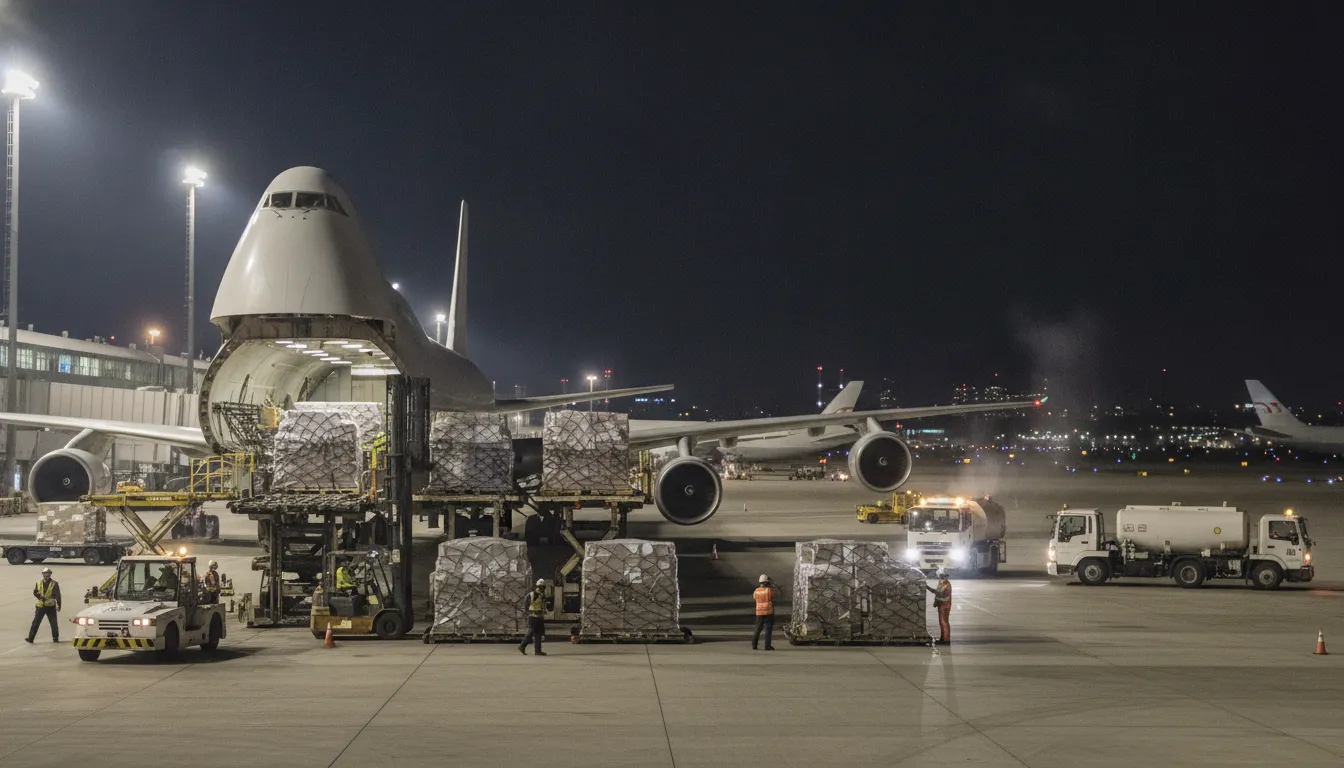
An air cargo charter is a dedicated private flight that moves time-critical freight outside the schedules of commercial air networks. Unlike standard air freight that shares space on passenger planes, a charter gives the shipper exclusive control over the aircraft, route, and timeline. This service is essential when supply chain disruptions, production emergencies, or natural disasters close traditional shipping lanes. Load One combines air charter services with ground expedite to deliver seamless door-to-door logistics across North America.
> Book Your Air Cargo Charter Now — Get a Free Quote in Minutes
Deciding when to move freight from ground shipping to air charter requires a clear understanding of speed thresholds, cargo dimensions, and cost-to-risk tradeoffs. Logistics professionals evaluate factors including distance, urgency, weight, and the cost of production downtime versus transport premium. This guide walks through each decision point so you can act fast when every hour counts.
What Is an Air Cargo Charter?
An air cargo charter is a dedicated flight that moves freight requiring a custom departure time, a specific route, or access to airports that commercial cargo networks do not serve. The shipper leases the entire aircraft, which eliminates the sorting delays, hub transfers, and capacity constraints of standard air freight. This model gives logistics managers direct authority over the departure window, flight path, and ground handling at both ends.
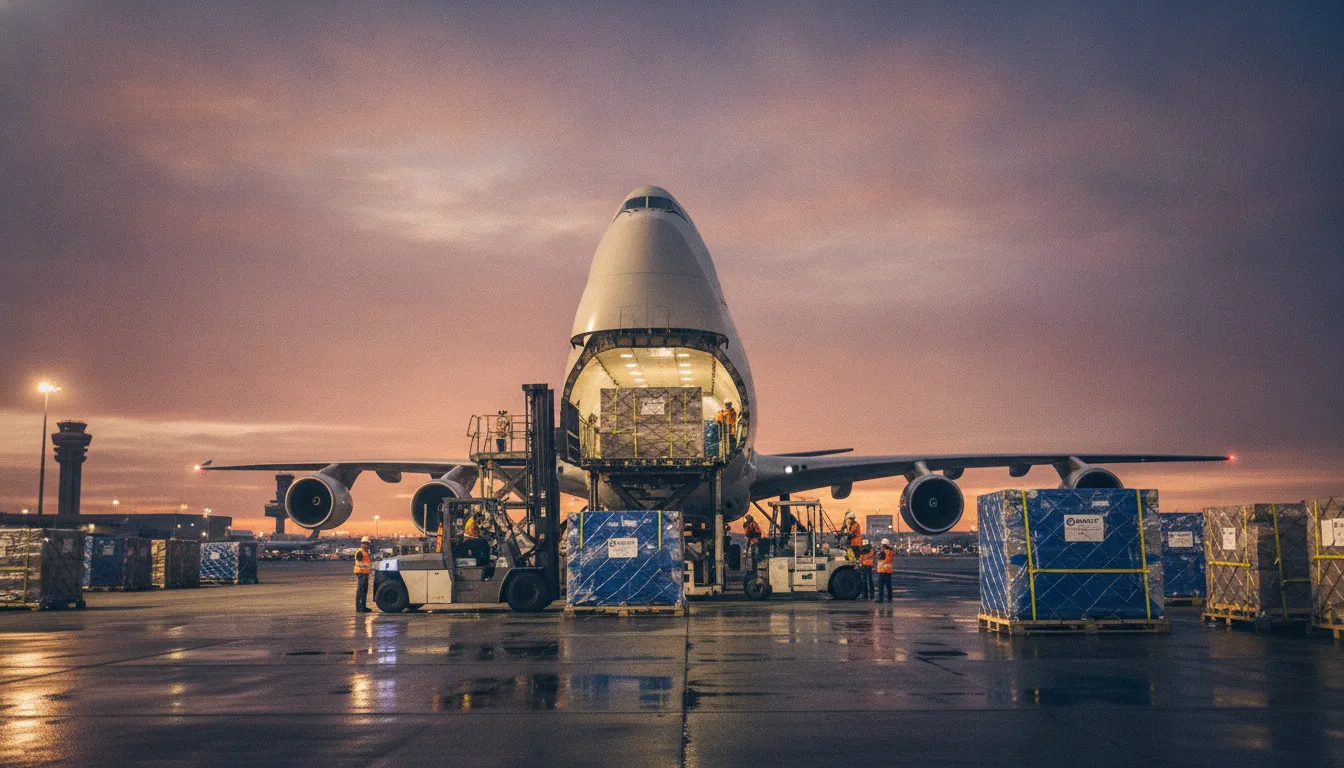
Load One operates as the largest privately held, asset-based expedite carrier in the United States. Our fleet includes multiple aircraft types so each charter is matched precisely to the shipment’s weight, dimensions, and timeline. A small turbo-prop may carry a single pallet of urgent aerospace parts, while a wide-body freighter can move full production-line tooling across the country in hours. Every charter includes GPS-based real-time tracking so the receiving plant knows the exact arrival window from takeoff through final delivery.
Dedicated Aircraft for Time-Critical Freight
A private charter eliminates the operational risks of shared cargo space. When freight moves through commercial hubs, it passes through multiple sorting facilities where mishandling, temperature excursions, or simply being left on the tarmac can cause damaging delays. A dedicated flight moves directly from the origin airport to the destination airport with no intermediate stops. For manufacturers whose supply chains depend on just-in-time delivery, this direct routing removes the unpredictability that makes commercial freight unsuitable for mission-critical parts.
Load One’s air charter coordinators stay available 24/7/365. An emergency request at 2 a.m. receives the same response as a midday booking. The team evaluates available aircraft within the network, selects the optimal airframe, and begins route planning within minutes of the first call. Combined with more than 400 years of collective transportation management experience across the organization, this responsiveness is what separates a true logistics partner from a broker.
Flexible Equipment and Payload Ranges
Air charter aircraft ranges span light utility planes for small high-priority parcels up to wide-body freighters for palletized industrial loads. This variety ensures the shipper pays for the capacity they need rather than subsidizing unused space on a commercial flight. Each aircraft type carries specific ceiling, range, and payload specifications that the Load One logistics team factors into the routing decision.
Specialized cargo types including hazardous materials, temperature-sensitive pharmaceuticals, and oversized industrial equipment require specific handling certifications. Load One’s operations team pre-qualifies every aircraft and crew for the cargo class before departure. This compliance check prevents the customs holds and safety violations that can sideline a shipment at the last minute.
Comparing Charter to Commercial Air Freight
| Factor | Air Cargo Charter | Commercial Air Freight |
|---|---|---|
| Schedule control | Shipper sets departure time | Fixed airline schedule |
| Route flexibility | Direct point-to-point, any airport | Hub-and-spoke network |
| Capacity guarantee | Full aircraft reserved | Space subject to passenger luggage |
| Handling complexity | Single provider end to end | Multiple ground handlers |
| Cost structure | Premium per pound | Lower per pound, volume limited |
| Best use case | Production emergencies, AOG, cross-border urgency | Routine, non-urgent freight |
Commercial air freight works well for predictable, non-urgent cargo where a two-to-three-day transit window is acceptable. When the shipment carries a production-critical part or the delay cost exceeds the transport premium, air charter delivers the speed and certainty that standard freight cannot match.
When Do Supply Chain Disruptions Require Air Charter Solutions?
Supply chain disruptions come in many forms: labor strikes at ports, weather events that close highways, supplier production failures, and geopolitical events that shift trade routes. Each type of disruption creates a window where standard shipping cannot deliver on time, and the cost of waiting exceeds the cost of flying.
Load One’s air charter solutions are designed for precisely these scenarios. The logistics team assesses the disruption type, the shipment’s criticality, and the available ground alternatives before recommending air charter. The decision framework rests on a single question: can the freight reach its destination within the required window by any other mode? If the answer is no, air charter is the appropriate escalation.
Just-in-Time Manufacturing Risks
Just-in-time workflows eliminate warehousing costs by scheduling parts deliveries to arrive moments before they are needed on the line. This efficiency creates fragility. A single missed delivery stops production. Automotive plants, for example, carry inventory measured in hours, not days. When a tier-two supplier in a different state misses a shipment due to a weather closure or equipment breakdown, the receiving plant faces a shutdown decision within the same shift.
In these situations, an expedited logistics response via air charter can put the parts on the plant floor within four to six hours of the initial call. The cost of the flight, while significant, is typically one to two orders of magnitude less than the cost of an eight-hour production stoppage. Load One dispatches ground expedite vehicles to both airports simultaneously, one to meet the inbound freight and one to deliver the outbound, compressing the ground transfer time at each end.
Global Events and Natural Disasters
Natural disasters and global events create capacity crunches across all transport modes simultaneously. When a hurricane closes a major port, the ships queued outside can wait weeks for berth space. During the COVID-19 pandemic, commercial cargo capacity collapsed as passenger flights were grounded, and the remaining freight space was bid up to spot rates that exceeded charter pricing. In these conditions, air charter provides guaranteed capacity that is independent of the commercial network’s health.
Load One’s cross-border logistics expertise is especially valuable during these events. The Laredo cross-border facility provides a dedicated gateway for shipments moving between the United States and Mexico. When natural disasters disrupt primary crossings, Load One routes freight through this facility to maintain delivery timelines for manufacturers on both sides of the border.
Managing External Shocks
External shocks require rapid escalation. A supplier declaration of force majeure, a sudden raw material shortage, or a regulatory hold on a shipment all create situations where the standard procurement-to-delivery cycle fails. Air charter procurement follows a compressed timeline: assessment, aircraft sourcing, regulatory check, and departure within a single shift.
- Identify the critical part or material that is holding production.
- Call Load One’s 24/7 dispatch with the pickup location, destination, weight, and dimensions.
- Receive an aircraft option and cost estimate within one hour.
- Confirm the booking and receive the first live tracking update within 30 minutes of confirmation.
- Track the shipment in real time from pickup through departure, flight, and final delivery.
Why Do Production Line Emergencies Require an Air Cargo Charter?
When a production line goes idle, the financial impact compounds by the minute. Beyond the direct cost of halted production, downstream effects include late penalties to customers, lost market share from missed delivery commitments, and the administrative cost of rescheduling the entire production run. Air charter is the fastest way to break this chain.
The decision to charter an aircraft during a production emergency follows a clear cost-benefit calculation. Logistics leaders estimate the total cost of downtime per hour, then compare it to the fully loaded cost of the charter flight. In most manufacturing environments, the breakeven point falls within the first two to four hours of a stoppage. Any delay beyond that makes air charter the financially responsible choice.
The Real Cost of Idle Production
Downtime costs vary by industry, but the components are consistent. Direct labor continues whether the line is running or stopped. Fixed overhead including facility costs, equipment depreciation, and utilities does not pause. Revenue from the output of that line is deferred or lost entirely. Contract penalties for missed delivery dates add another layer of liability.
For a mid-sized automotive parts plant, a single production line running two shifts can generate downtime costs exceeding USD 50,000 per hour. A cross-country air cargo charter with ground expedite on both ends typically costs a fraction of that figure. The first hour of avoided downtime covers the transport cost. Every subsequent hour of recovered production is a net positive to the bottom line.
Immediate Response for Urgent Logistics
Load One maintains a 24/7/365 dispatch operation specifically for these scenarios. When a production emergency call comes in, the team immediately checks available assets in the network: ground expedite vehicles near the pickup point, aircraft within range of the origin and destination, and crew availability. This coordinated asset check happens in parallel, not sequentially, so the initial quote and aircraft option reach the customer within one hour.
After confirmation, the ground team dispatches to the pickup facility while the flight crew prepares the aircraft. This simultaneous execution shaves two to three hours off the total transit time compared to a sequential process where ground and air assets are booked one after the other.
Real-Time Tracking and Visibility
When a production line is down, silence from the logistics provider costs credibility. Load One provides GPS-based tracking that updates the shipment location at every waypoint from pickup to final delivery. The receiving plant’s logistics manager receives automated notifications at each milestone: freight picked up, cargo loaded, aircraft departed, aircraft landed, cargo unloaded, and final delivery confirmed.
This visibility enables the plant manager to make informed decisions about shift scheduling. If the tracking shows a delay at any waypoint, the team can adjust in real time rather than waiting for the scheduled arrival and discovering the delay only after the window has passed.

Air Cargo Charter vs. Ground Expedite: Choosing the Right Mode
The choice between air charter and ground expedite depends on distance, urgency, and the cost of delay. Both modes are essential tools in an expedited logistics program, and the optimal choice often involves using both in sequence.
Speed and Distance Factors
For distances exceeding 1,000 miles, air charter is the fastest option by a wide margin. A coast-to-coast shipment that takes three to four days by truck can be delivered by air charter within eight to twelve hours including ground pickup and final delivery. For shipments under 500 miles, ground expedite with team drivers and dedicated equipment often matches or beats the air option when airport transfer times are factored in.
expedited freight solutions provides the advantage of true door-to-door service with no mode transfer. The freight loads once and does not move again until it reaches the final destination. For fragile or sensitive cargo, the reduced handling translates to lower damage risk. Load One operates an asset-based ground fleet including straight trucks, cargo vans, and tractor-trailers to match the shipment size to the right equipment.
Capacity and Cost Balance
Ground shipping delivers the lowest cost per pound for shipments that fit within the distance and time constraints. Air charter costs more per pound but provides capacity certainty that ground cannot match during peak periods. When a plant shutdown is on the line, the cost of the charter is evaluated against the cost of the stoppage, not against the cost of ground shipping.
Load One manages both modes under a single operational umbrella. This structure eliminates the coordination overhead of working with separate air and ground providers. A single dispatch call activates both the ground team at the pickup point and the flight coordinator sourcing the aircraft. The customer receives one quote, one set of tracking data, and one invoice regardless of how many modes the shipment uses.
Blended Air-Ground Solutions
The most efficient solution for long-distance urgent freight often uses both modes in sequence. Ground expedite moves the freight from the shipper’s dock to the departure airport. Air charter flies it to the destination region. A second ground expedite vehicle completes the delivery to the final address. This blended model delivers the speed of air travel with the door-to-door convenience of ground service.
Load One executes blended shipments daily through its integrated network. The same company that dispatches the ground vehicle also coordinates the aircraft, which means there is no communication gap between modes. The freight moves from one tracking system to another within the same operational infrastructure.
How to Book an Air Cargo Charter in 5 Steps
When a supply chain disruption hits, there is no time to learn the charter booking process from scratch. Knowing the sequence in advance allows logistics managers to act decisively.
Assess your freight requirements. Gather the shipment weight, dimensions, piece count, and any special handling needs such as hazmat classification, temperature control, or fragile cargo. Note the pickup location, final destination, and the required delivery window. The more precise these details, the faster the dispatch team can match an aircraft to the load.
Contact Load One dispatch for an immediate quote. Call the 24/7 dispatch line or submit a request through the Load One website. Because air charter pricing depends on aircraft type, distance, fuel costs, and urgency, there are no fixed rates. A logistics specialist reviews the cargo specs and matches them with available aircraft to produce a competitive quote.
Aircraft selection and route planning. Based on the freight size and timeline, the coordinator selects the right aircraft type from the available fleet. Options range from light cargo planes for small urgent parts to wide-body freighters for palletized loads. The route is planned for the most direct path, often bypassing commercial cargo hubs. For cross-border shipments, customs documentation is prepared during this phase so the cargo is cleared before departure.
Pickup and airport coordination. A ground expedite team arrives at the shipper’s facility to collect the freight and transport it to the departure airport. Load One uses its own asset-based fleet for this leg, so there is no third-party handoff. The freight is tracked in real time from pickup through loading onto the aircraft.
Final delivery coordination. When the aircraft lands, another ground expedite team meets the cargo and delivers it to the final address. The same dispatch team that managed the pickup stays with the shipment through proof of delivery. End-to-end visibility continues through the final mile with GPS tracking and milestone notifications.
Load One’s integrated truck-air model eliminates the delays and risks of multiple carrier handoffs. A single provider manages the entire move from the first phone call to the signed delivery receipt. For pricing tailored to your shipment, contact the Load One air charter solutions team.
Which Industries Benefit Most from Air Charter Services?
While any industry with time-critical freight needs can use air charter, three sectors generate the highest volume of urgent air shipments due to their production economics and supply chain structures.
Automotive and Heavy Equipment
Automotive manufacturing runs on tight inventory buffers. A typical assembly plant carries two to four hours of parts inventory for high-value components. When a supplier disruption hits, the plant must either find an alternative source within the shift or begin shutting down stations sequentially. Air charter provides the bridge: a parts shipment from a distant supplier can reach the plant floor within the same day, keeping the line running while the primary supply chain recovers.
Heavy equipment manufacturers face similar risks with the added challenge of oversized components. A transmission or hydraulic system that fails quality inspection may need replacement from a plant hundreds of miles away. Load One’s air charter services accommodate these oversized loads with aircraft configured for industrial cargo.
Healthcare and Life Sciences
Medical devices, surgical instruments, and pharmaceutical compounds have finite shelf lives and strict handling requirements. A replacement device for a scheduled surgery must arrive by a specific time or the procedure is canceled, affecting patient outcomes and hospital revenue. Temperature-controlled air charter ensures the shipment stays within its required range throughout the journey.
Load One coordinates the ground-to-air-to-ground cold chain for these sensitive shipments, maintaining temperature documentation at every transfer point. The tracking system records each temperature reading so the receiving hospital has a complete chain of custody.
Aerospace and defense
An aircraft on the ground (AOG) due to a missing part generates costs of USD 10,000 to USD 150,000 per hour depending on the aircraft type and operator. Every minute the part takes to arrive compounds the loss. Aerospace logistics teams use air charter as the standard response to AOG events because the cost of the flight is always lower than the cost of the grounded aircraft.
Load One manages AOG parts movement across North America with dedicated crews who understand the security and handling protocols required for aviation components. The same real-time tracking that supports manufacturing logistics provides the visibility aerospace maintenance teams need to schedule repair shifts around the expected arrival time.
Seamless Door-to-Door Delivery: How Load One Integrates Air and Ground
The highest-risk segment of any expedited shipment is the transfer between modes. Every handoff introduces the potential for delay, damage, or loss. Load One eliminates this risk by managing both the ground and air legs under a single operational authority.
Single-Provider Control
When a single provider coordinates both the ground expedite vehicle and the air charter, there is no communication gap. The ground driver and the flight coordinator operate within the same dispatch system. If the pickup runs late, the flight coordinator adjusts the departure time immediately. If weather diverts the aircraft, the destination ground team repositions to the alternate airport without needing a separate notification chain.
This integrated model delivers faster total transit times and fewer service failures compared to broker-mediated shipping, where information passes through multiple and often conflicting systems. Load One’s logistics platform provides a single view of every shipment regardless of mode.
Cross-Border Expertise
Cross-border shipping adds customs documentation, duties calculation, and regulatory compliance to the logistics challenge. Load One’s Laredo facility serves as a dedicated cross-border gateway with on-site customs brokerage. Shipments moving between the United States, Mexico, and Canada are processed through this facility to clear customs before the freight reaches the border, eliminating the inspection delays that can hold line-haul trucks for hours or days.
For urgent cross-border shipments, the air charter can land at a facility near the border while customs clearance is completed by the Load One brokerage team. By the time the freight is unloaded and transferred to a ground vehicle, the documentation is already cleared. The ground vehicle crosses the border without stopping for inspection, saving two to four hours compared to standard cross-border freight.
Frequently Asked Questions
How much does it cost to charter a cargo plane?
Air cargo charter pricing depends on aircraft type, distance, fuel costs, and urgency. There are no fixed rates because each shipment has unique specifications. Load One provides competitive quotes within one hour of receiving the shipment details. Request a quote through the Load One air charter services page for pricing tailored to your specific freight requirements.
How quickly can an air cargo charter be arranged?
Load One can have an air cargo charter in the air within hours of the initial request. The timeline depends on aircraft availability near the pickup location, the shipment’s weight and dimensions, and any special handling requirements. The dispatch team provides an estimated departure window during the initial quote call.
What are the benefits of using an air cargo charter service?
Air cargo charter provides guaranteed capacity, schedule control, direct routing, and access to airports that commercial cargo networks do not serve. For time-critical shipments where production uptime is at stake, air charter delivers the speed and certainty that standard shipping cannot match, often paying for itself in avoided downtime costs within the first few hours.
Does air cargo charter help with cross-border shipping?
Yes. Load One coordinates customs documentation and clearance as part of the charter booking process. The Laredo cross-border facility provides a dedicated gateway for US-Mexico shipments. Customs clearance is completed before the freight reaches the border so the ground vehicle crosses without delay after the air leg lands.
How does Load One track air charter shipments in transit?
Every Load One air charter is tracked via GPS from pickup through flight and final delivery. Milestone notifications alert the receiving party at each stage: freight picked up, cargo loaded, aircraft departed, aircraft landed, and delivery confirmed. This real-time visibility lets plant managers adjust shift schedules based on the actual arrival window.
Ready to protect your production uptime with air cargo?
Supply chain disruptions and production emergencies demand fast action. Load One’s air charter solutions combine dedicated aircraft, ground expedite integration, and 24/7/365 dispatch to keep your freight moving when every hour counts. Our team has the experience, fleet, and infrastructure to handle your most urgent shipments across North America.
Contact the Load One air charter dispatch team for a quote on your next time-critical shipment. Describe your freight requirements, and we will match the right aircraft and routing to meet your deadline.