Heavy Equipment Transportation: Best Practices Guide
Get a custom quote for your specialized freight needs today. Shipping industrial machinery demands absolute precision to protect your production uptime. You cannot afford transport delays, permit errors, or unsafe loads when moving expensive, high-value assets.
Successful heavy equipment transportation relies on matching your machinery weight and dimensions to the correct specialized trailer. The process demands meticulous route surveys, state-by-state permit management, and strict compliance with cargo securement regulations to ensure safe transit. Working with an experienced logistics partner like Load One streamlines these complex steps by managing escorts, route restrictions, and driver coordination. This systematic approach eliminates transit delays, protects high-value industrial assets from damage, and keeps your manufacturing facilities running without interruption.
Selecting the right setup is the first major step in planning your shipment. Let’s look at What Type of Trailer Is Right for Your Heavy Equipment Load? to find the safest option for your next haul.
Heavy Equipment Transportation: What Type of Trailer Is Right for Your Heavy Equipment Load?
Choosing the correct trailer is a vital step in safe specialized flatbed services for heavy equipment. The weight and size of your load will dictate the trailer you need. Motor carriers must follow federal FMCSA cargo securement rules for all commercial motor vehicles in interstate commerce. Using the wrong trailer can lead to high costs or severe safety risks during transit.
Removable Gooseneck and Double-Drop Trailers
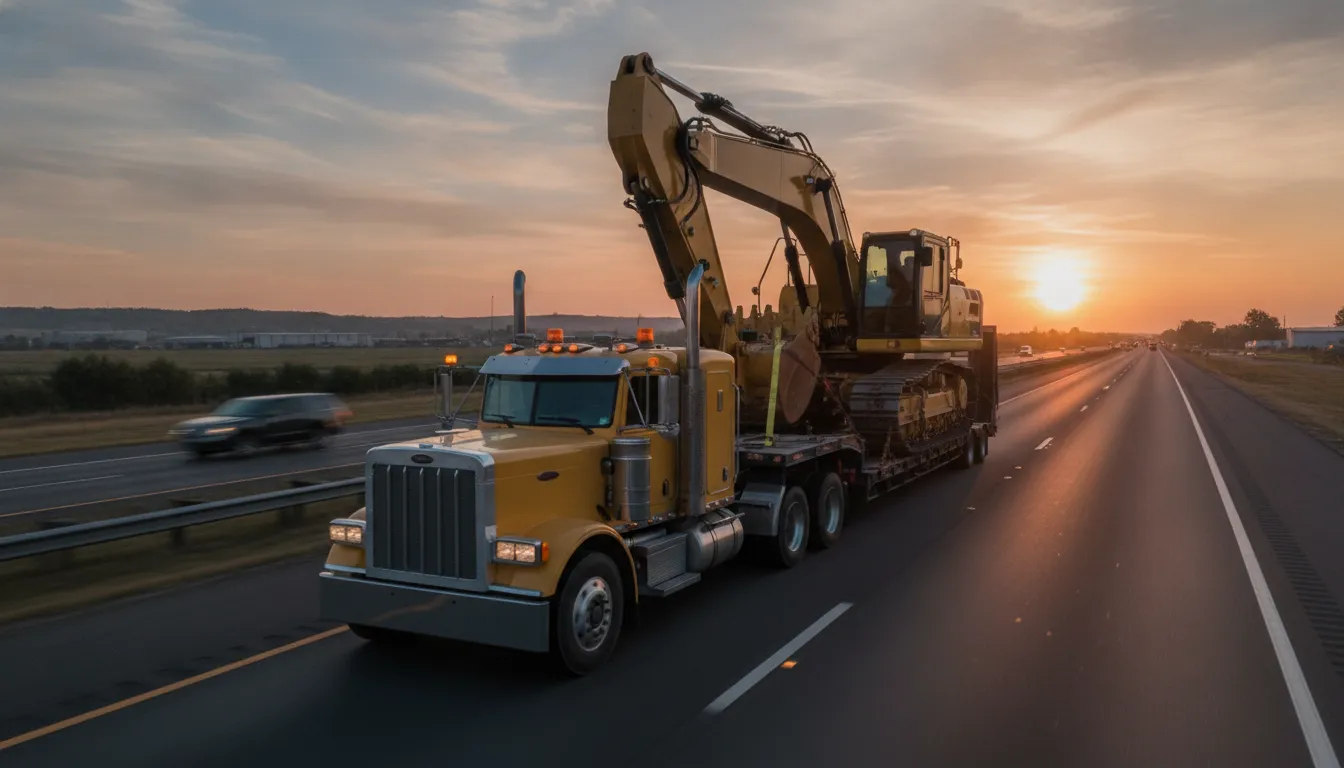
Removable Gooseneck (RGN) trailers are ideal for hauling tall or self-propelled machinery. The front of the trailer detaches so equipment can drive directly onto the low deck. This design makes loading simple and quick. Double-drop trailers also feature a low deck to keep tall loads within legal height limits. These units are highly effective for tall machines that do not require a front-loading ramp.
Stepdeck and Conestoga Trailers
Stepdeck trailers feature a raised front deck and a lower rear deck. They are highly useful for tall machines that do not need an RGN. For cargo that requires protection from road debris and bad weather, Conestoga trailers are the best choice. These trailers feature a sliding tarp system over a flatbed frame. To find the right fit for your cargo, you can review our Conestoga trailer options online.
Your Plan with Load One
Selecting the right asset is easy when you work with an expert partner. Load One has a modern fleet of RGN, stepdeck, flatbed, and Conestoga trailers. We support your business with elite specialized shipping services. Our team manages your heavy equipment transportation from start to finish. We secure your freight properly to meet all federal safety standards.
| Trailer Type | Best For | Max Height Advantage | Loading Method |
|---|---|---|---|
| RGN | Tall self-propelled machinery (excavators, dozers) | Low deck height | Drive-on via ramp |
| Double-Drop | Tall loads that do not need front loading | Low deck, no RGN needed | Crane or forklift |
| Stepdeck | Mixed-height cargo | Lower rear deck | Ramp or lift gate |
| Conestoga | Weather-sensitive or high-value equipment | Flatbed with tarp system | Overhead or side loading |
| Flatbed | Standard heavy equipment within legal limits | No height reduction | Crane or forklift |
How Do You Navigate Permit Requirements for Oversized Cargo?
Shipping large machinery across state lines is complex. Moving these massive loads legally requires deep planning. Every state has its own set of rules, and missing a single permit can halt your shipment and cause costly delays. Managing these rules is a vital part of preparing for heavy equipment transportation.
Understanding permit nuances is critical. Some states issue annual permits for frequent shippers, while others require single-trip approvals. Permit fees vary widely based on weight, width, and distance traveled. A heavy load crossing five states might need five separate permit applications with different lead times and fee structures. Working with a carrier that handles this paperwork internally saves days of administrative work.
Secure the Right State Permits
Each state and city has unique standards for wide or heavy shipments. According to federal guidelines on cargo rules from the Federal Motor Carrier Safety Administration, carriers must follow specific safety laws during transport. Beyond securement, you must obtain a separate permit for every state your route crosses. These papers detail exactly when and where a truck can travel. Some areas restrict transport to daylight hours, while others ban travel during holiday weekends entirely.
Run Thorough Route Surveys
You cannot guess if a major road can handle large freight. Transport teams must perform detailed road checks before the truck departs. These route surveys find low bridges, weak crossings, and sharp turns that can block oversized trucks. Finding these road blocks early lets you plan a safe path. It prevents expensive detour delays and keeps your cargo moving smoothly toward its destination.
Coordinate with Local Utility Teams
Very tall cargo presents unique risks on public roads. When a load is too high, it can hit overhead wires or traffic lights. Transporting this cargo often requires direct coordination with local utility companies to lift or move power lines safely. Teams like Load One handle all of these complex tasks. They offer full permit management, detailed route surveys, and utility planning to keep your heavy shipment safe and on schedule.
Why Are Escort and Safety Vehicles Essential for Heavy Hauling?
Transporting extremely large machinery requires more than a strong truck and trailer. When you ship oversized loads, pilot cars and escort vehicles act as your primary line of defense on the road. These safety teams guide the main truck through tight spaces, warn other drivers, and prevent major accidents during heavy equipment transportation.
How Pilot Cars Manage On-Road Hazards
Oversized loads face strict rules to keep the public safe. Under federal guidelines, truck drivers must use proper towing devices that are structurally adequate for the load weight (FWS Policy 243fw5). For wide loads, trucks must also have mirror extensions to maintain clear rear visibility. Escort vehicles watch these blind spots and warn the main driver of close obstacles, low bridges, or sudden traffic stops.
Regulations typically require one pilot car for loads over 12 feet wide and two escort vehicles for loads exceeding 14 feet. Some states mandate a lead vehicle to warn oncoming traffic and a rear vehicle to protect the following lane. These requirements change at state borders, so checking each jurisdiction before departure is essential. A carrier experienced in heavy haul logistics handles these variations automatically.
When Do Escort Vehicles Face Road Restrictions?
State laws often restrict oversized loads to daylight travel only. Drivers must display clear warning signs and flags to alert nearby motorists of the large cargo. Severe weather conditions, such as high winds or heavy rain, can also threaten the stability of these massive shipments. Escort drivers monitor these conditions in real time. They can halt the trip if the weather becomes too dangerous for safe travel.
How Do Safety Teams Stay in Touch?
Constant contact is the most critical part of a safe heavy haul. The truck driver, pilot car operators, and dispatch must talk constantly to coordinate lane changes and turn maneuvers. Load One uses advanced communication systems and real-time tracking to keep all parties connected. This teamwork ensures your high-value equipment arrives at its destination without delay, protecting your production uptime.
How Do You Prepare Heavy Equipment for Safe Transport?
Planning is key to a smooth shipment. You must secure your gear and handle paperwork before the truck leaves. Safe heavy equipment transportation demands a clear process on the ground.
Inspect Your Tiedown Gear
First, look over your securement tools. Load securement devices such as chains and binders must be inspected for wear, rust, or damage before each use. Chains used for securement should be rated for the specific load and comply with industry standards for Working Load Limits. If you spot a cracked link or a bent binder, swap it out. To meet Federal Motor Carrier Safety Administration rules, verify your tiedowns on fmcsa.dot.gov. Using edge protectors on tiedowns also helps prevent damage to both the cargo and the securement equipment.
Secure Attachments and Balance the Load
Next, focus on the machine itself. Securing specialized attachments separately from the main piece of equipment is often necessary to comply with securement regulations. Lower all booms, buckets, or blades to the trailer deck. Loading heavy equipment should be done on stable, level ground to ensure the trailer and equipment remain balanced throughout the process. Proper load distribution ensures that the weight of the equipment is evenly spread across the axles of the trailer to comply with legal bridge formulas.
Complete Your Paperwork and Check Site Access
Finally, confirm your site rules and cargo details. Documentation, including the Bill of Lading, must be accurate and complete before the equipment leaves the site to avoid delays. Reviewing paperwork prevents confusion at state borders. At the same time, look at your route start and end points. Effective planning for heavy equipment transport includes verifying site access constraints at the pickup and delivery locations. Check for tight gates or low trees. Reviewing these common mistakes in heavy equipment transport will help you avoid costly delays on moving day.
Steps to Prepare Your Equipment
- Park on flat ground: Find a level, hard dirt or concrete surface to park the trailer. Load the heavy machine safely.
- Inspect all securement tools: Check your steel chains and binders for rust or wear, and verify their Working Load Limits.
- Secure loose parts: Lower all blades, buckets, or attachments to the deck, and tie them down separately to prevent shifts.
- Apply edge guards: Place heavy duty protectors on the corners of the machine to keep your steel chains from tearing.
- Complete the Bill of Lading: Write down all machine specs, weight, and serial numbers, and sign the official shipping forms.
- Confirm site gates: Call the pickup and drop-off managers to make sure the specialized trailer has enough physical room to enter.
Frequently Asked Questions
What makes a trailer right for heavy equipment transportation?
Choosing the right trailer depends on the size and weight of your machinery. Removable Gooseneck trailers work best for tall machines to ease loading. You must also follow FMCSA rules to secure the load properly against shifting forces.
When does specialized cargo require route surveys and permits?
Any load exceeding standard legal limits needs state permits. This transport often requires a route survey to find low power lines, tight turns, or narrow bridges. You may also need to coordinate with utility companies to move overhead wires safely along the path.
How do escort vehicles improve safety for oversized cargo?
Escort or pilot cars help drivers stay aware of road hazards. Clear radio communication between the truck driver, pilot vehicles, and dispatch is vital. These loads also face travel limits and must run during daylight hours with bright warning signs.
How should you prepare heavy machinery before transport?
You must load the machine on flat, level ground. Secure any loose parts or attachments separately to meet legal rules. Use strong, rated chains with edge protectors to shield the tie-downs and the cargo from rub damage during transit.
Ready to Ship Heavy Equipment?
Delaying specialized freight transport risks project delays and expensive equipment downtime. Moving oversized cargo safely requires immediate planning, proper trailers, and precise state permit management. Partnering with a reliable transportation expert guarantees your machinery arrives on time and fully secured. Load One provides asset-based capacity, route surveys, and experienced drivers to handle your transport safely across North America. We focus on protecting your production uptime so you can avoid costly operational disruptions.
Ready to get a quote for heavy equipment shipping? Contact our team now to schedule your specialized run and protect your project timeline. Our logistics leaders are ready to support your heavy hauling needs 24/7. We handle the permits, route planning, equipment selection, and securement so you can focus on running your business.